
The rocky geology of the Kimberleys is the source of character for its enormous landscapes. There are complicated foundations of ancient limestone and sandstone ranges including the King Leopold range, the Cockburn range and Mitchell Plateau. These have folded and eroded over the millennia to provide a distinctive region of formations and river systems flowing to the north, west and north-west before the sands of the Tanami desert border to the south.
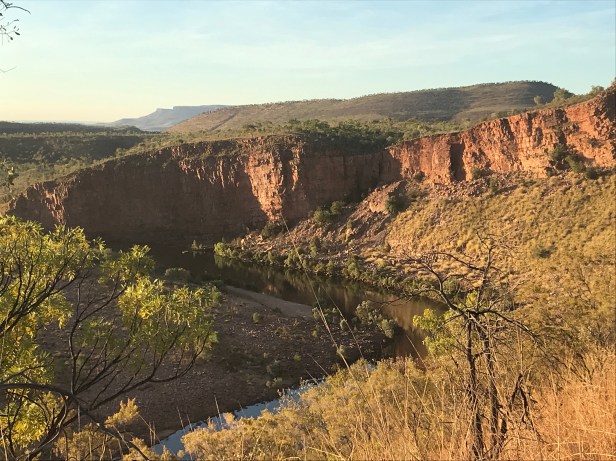
El Questro landscape 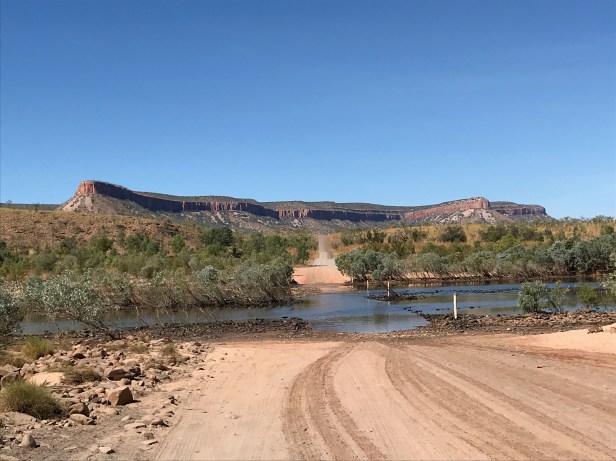
Cockburn Range, Pentacosta Crossing
The rocky, often barren thinly soiled country has been cut into by its waterways. With its extremes of the wet and dry seasons there is great erosive power at work during the wet seasons. There are many waterways and these waterways often form gorges as the erosive processes cut into the layers of rock in channelling their paths to the ocean. Where these gorges are narrow and have sufficient depth, there is a profusion of life different from the tough plant and animal life of the unprotected savannah country of much of the Kimberleys.
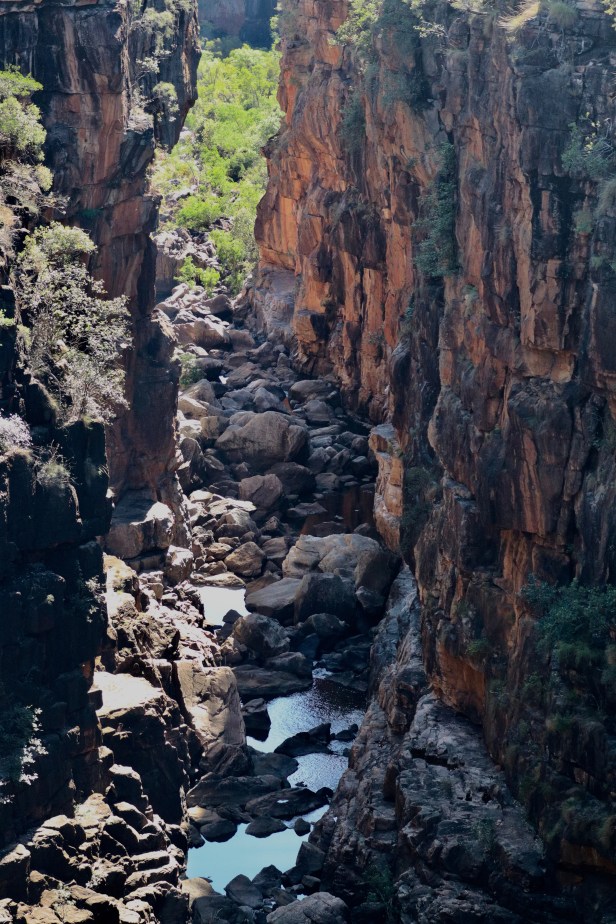
Lower Merton Falls Mitchell Plateau 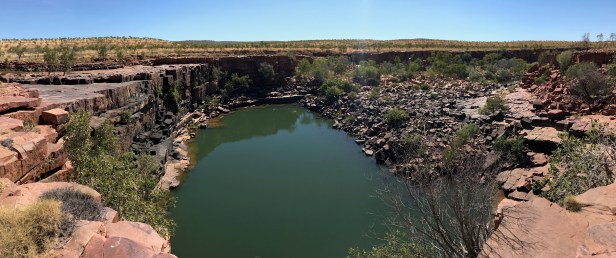
Home Station waterway
The vegetation varies from grassy savannah thinning in its coverage where rocks and stone outcrops dominate through to treed savannah with tough eucalypts, acacias and other species over the grass understorey. There are also more specialist landscapes where palms grow in the wetter or elevated areas and even rainforest patches in its deepest gorges.
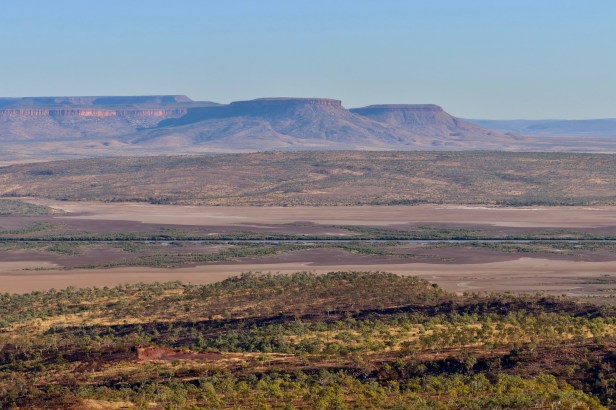
Cockburn Ranges 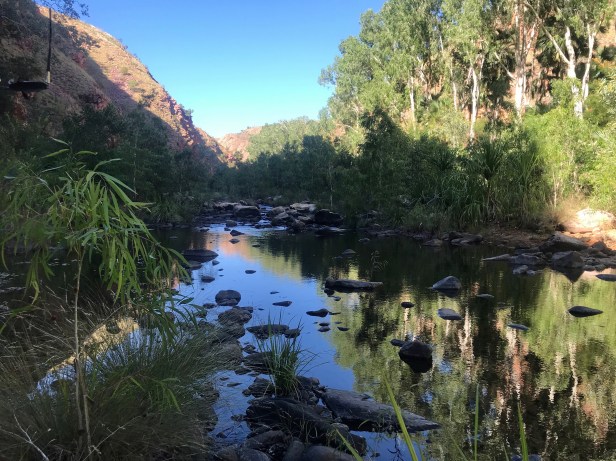
Moonshine Gorge, El Questro
There are distinctive trees which provide character to the rocky landscape in places. There are magnificent boabs, with their individual profiles from slender bottle shapes, to the wizened girth of rotund old men. They have an upsidedown appearance during the ‘dry’ losing all their leaves and just having fruits on their branches. There are kapok trees that have beautiful yellow flowers at this time of year and few leaves. There are eucalypts (including orange flowering Darwin woolybutts) and acacias many of which are blossoming at this time attracting birds and activity. Palms dominate for parts of the Mitchell Plateau where the presence of moisture and generally low fertility allows. The wildflowers are beautiful in the dry season too with the landscape adorned with flowers particularly the colourful round Bachelor’s buttons ranging from white to pink.
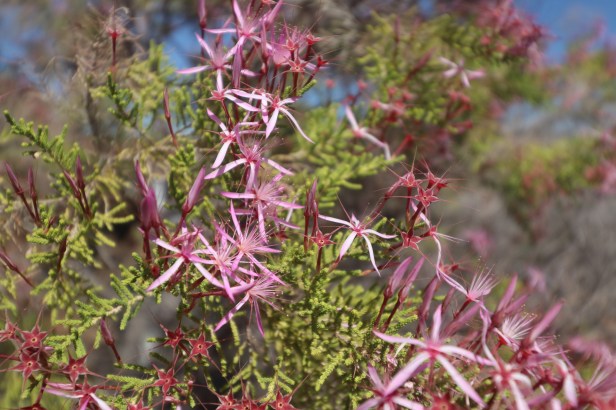
Turkey bush 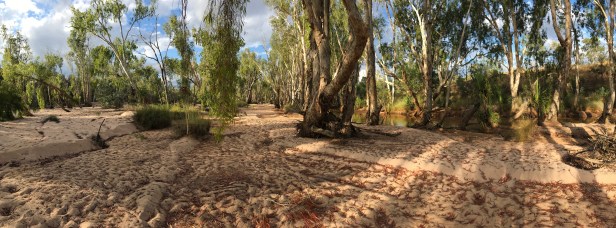
Paperbarks
Fire plays an important role in the landscape too bringing new life for some species while destructive intense late season fires leave a scorched landscape devoid of living trees and presumably take a great toll on wildlife in many summers. Controlled burning which is less destructive is widely practiced. Evidence of recent or older burning are apparent when you travel any distance. This can range from the reshooting of grasses and trees or where the fires have been more severe, the total loss of the canopy layer with the dead stumps only remaining.
With its extremes of seasons and temperatures, many of its animals are nocturnal with few animals visible during the day apart from some birds and the occasional lizard. Termites are interestingly considered an important herbivore of the savannah.
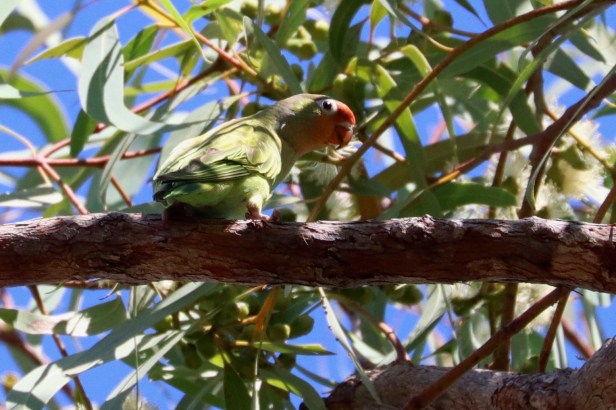
Varied Lorikeet – one of the cutest birds imaginable 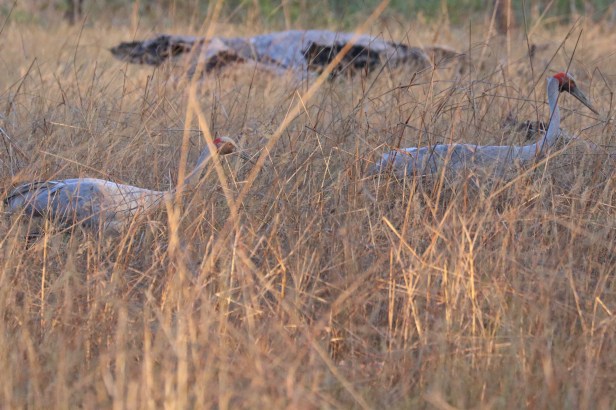
Brolgas, walking near campsite, Mitchell Plateau
The national highway which circles Australia traverses the area from the northern town of Kununurra close to the Northern Territory border through to Broome, 700km to the east. The Gibb River Road (GRR) is a northern alternate road corridor for the region. It was constructed in the late 1950’s to assist pastoralists with the movement of cattle. These roads formed our loop route for visiting the Kimberleys.
The GRR provides access to many of the attractions of the Kimberley and is a magnet for visitors from around the country. It is suitable for 4wd vehicles only but a range of facilities along the roadway cater for the array of visitors to the region. For some rural properties, the opportunities of tourism have become an important source of revenue. They seek to capitalise on the special landscapes of their properties. Several offer accommodation, camping, fuel and services including helicopter flights. Internet access is very limited.
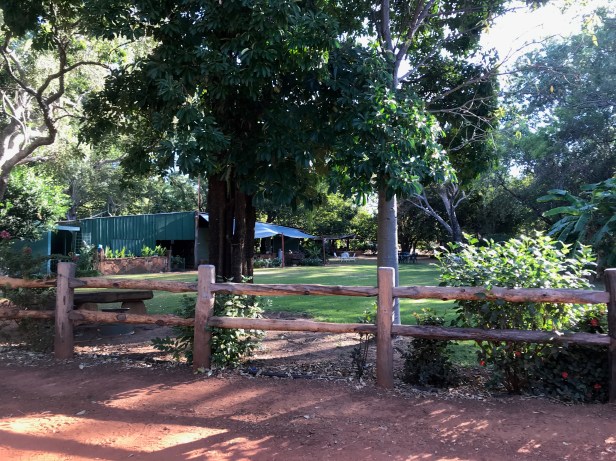
Ellenbrae Homestead, known for its scones 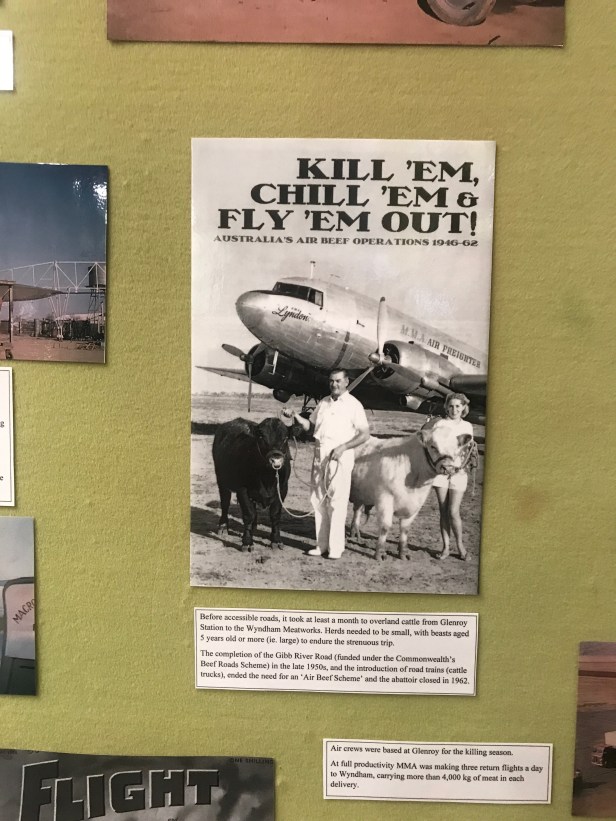
An early beef industry initiative
Many of the pastoral properties suffer from degradation. Often along the fencelines, visible along major highways, a lack of soil and vegetation on the pastural holding relative to the road reserve is clearly evident. Many native species are challenged by the degradation of these thin soils of the region from hard hoofed animals. The area is unsuited to grazing due to its thin, dust like soil.
El Questro, at the eastern end of the GRR was the original tourism facility of the region. It has a series of gorges which are quite wild and spectacular and challenging for many visitors. It offers exclusive tourist offerings separate to its more mainstream options with a boutique property in a gorge setting.
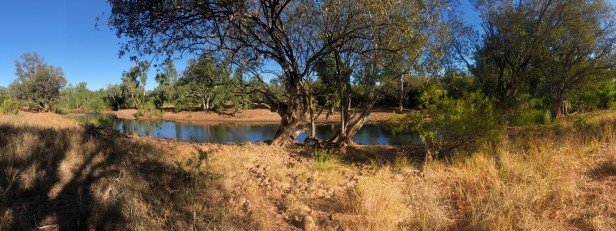
Private campsite El Questro 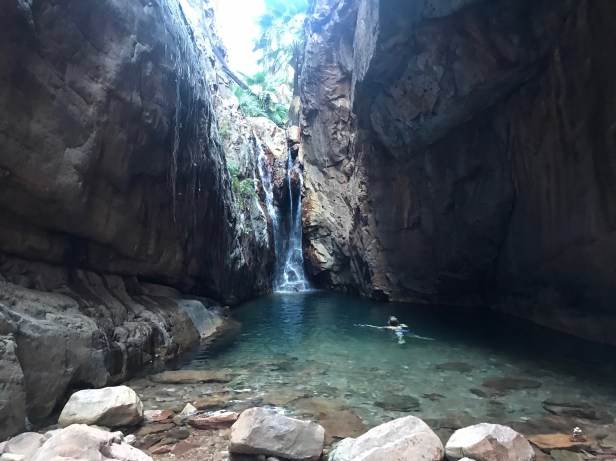
Top pool of El Questro Gorge
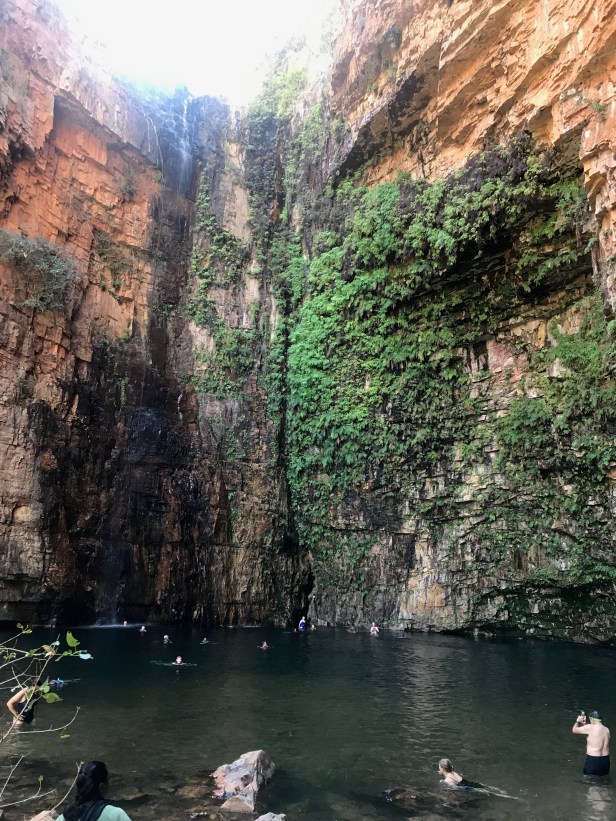
Emma Gorge, El Questro
The region has many varied and beautiful gorges. For visitors they often offer the opportunity for swimming in beautiful waterholes, upstream away from the presence of saltwater crocodiles. These idyllic waterholes are so at odds with the harshness of the surrounding landscape. Most other gorges had straightforward access but rocks, ranging from small to large dominate on most walking paths. Manning Gorge is a magnificent gorge with its first challenge being a swim for visitors across a creek. Apart from Manning Gorge, my favourites of the eastern gorges were El Questro Gorge with some access challenges along the way, and those of Mitchell Plateau.
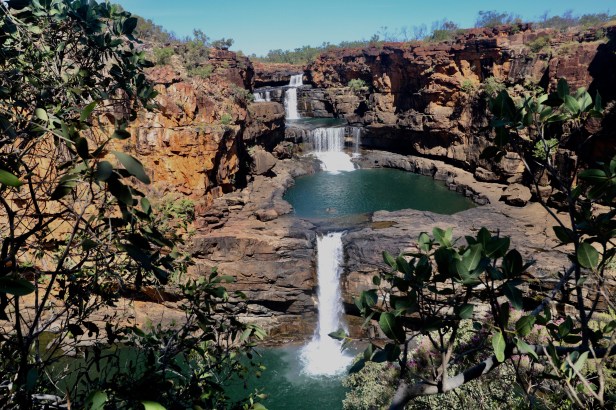
Mitchell Falls 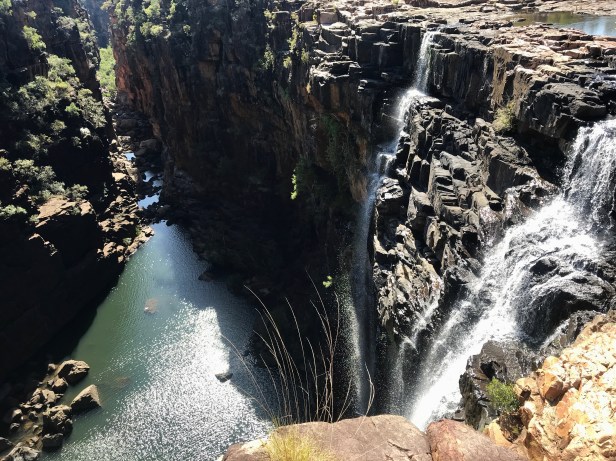
Lower Merton Falls
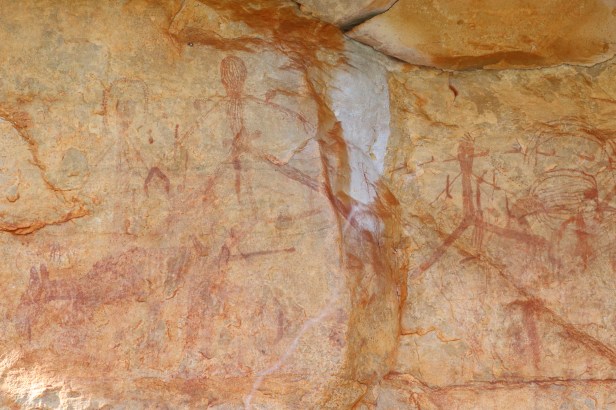
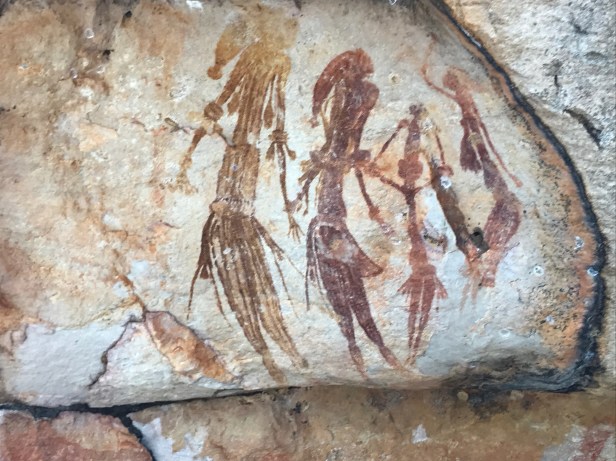
Distinctive figure Gwion style – from 6000-18000 years ago
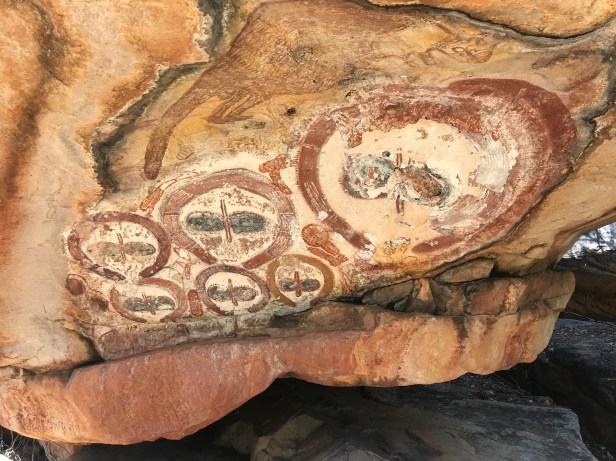
Wanjina figures 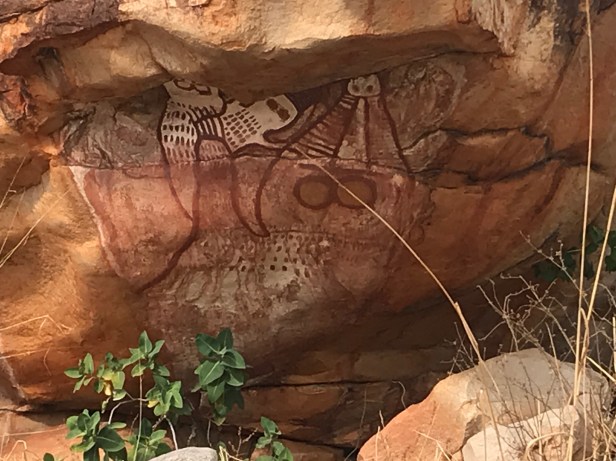
Rock art features in many places. Several types of varying ages have been defined with dating ranging up to 30,000 years ago. Wherever rock art has survived, it is easy to imagine people spending time in these sites sheltering during the wet or from the heat over the millennia passing the time with their art works. The sites are places where shelter and food was relatively abundant in the rock formations of this harsh landscape. The Kimberley region is a very special and ancient place.
 Marian's Travel Blog
Love the photos. Great blog Marian.
LikeLike