
A slower pace of life rules in the south. The balmy conditions and blazing sun make excessive effort a waste of time. Things happen but not from frenetic exertion. People rise early and there many folk on the streets but few are working. Getting breakfast or a cup of tea before 8am on a Sunday morning proved impossible in Kochi.
This area has long evidence of settlement with the history of rulers and the changing regimes dominating Tamil Nadu known back to 100BC. This is a state with great pride in its language also with Tamil predating Sanskrit. Ancient temples and great sculptural walls to the south of Chennai date from sixth century Pallava rulers. 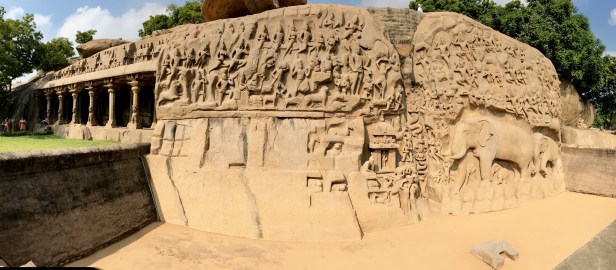
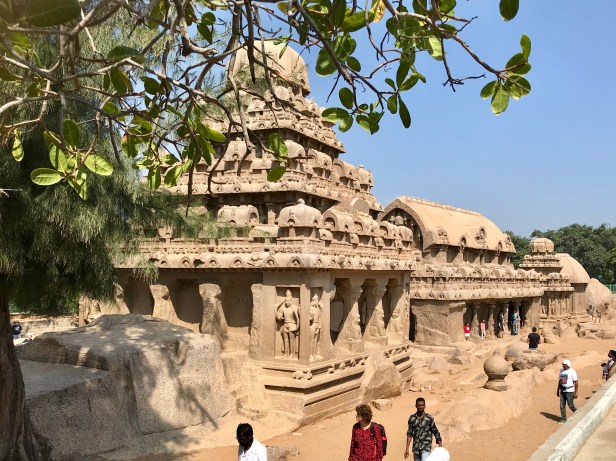
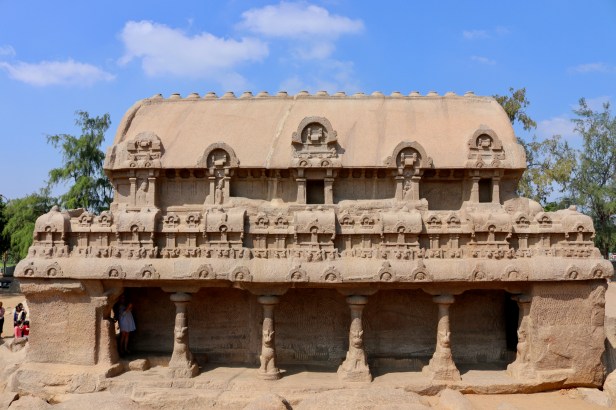
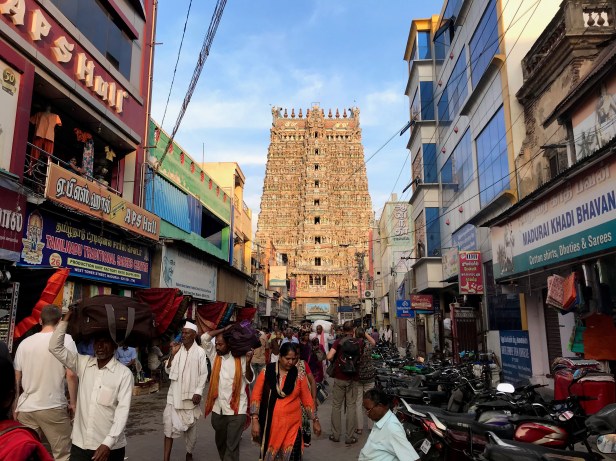
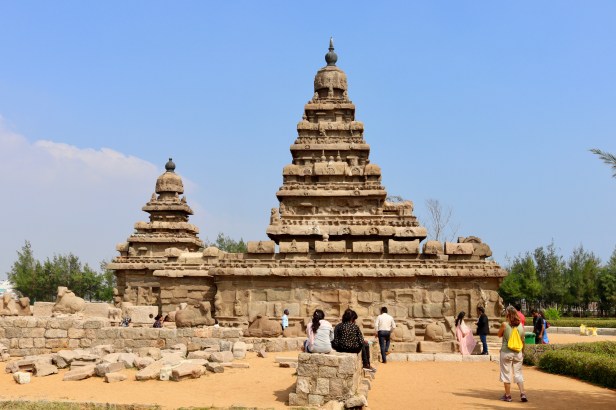 These builders were then displaced by a series of dynasties. Inland, the enormous Meenakshi temple of Madurai is one of national significance. Its immense pillars each decorated with countless figures of characters of the Hindu faith tower over the city. The immediate area is pedestrianized and the streets are filled with temple visitors and temple related activity. Much of the temple can be visited by non Hindus but unfortunately no cameras were allowed inside.
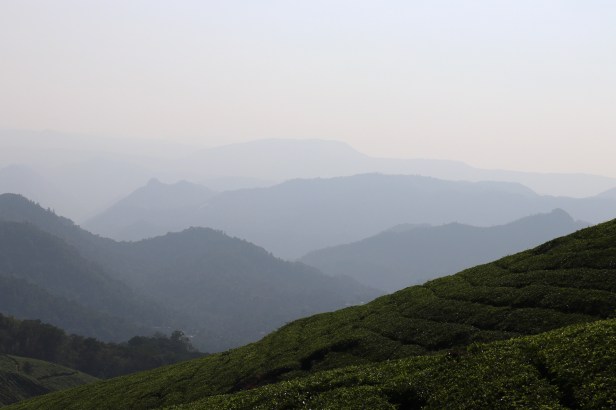
 The high country is a stark change from the coastal plains with a different climate and a twisted series of ridges and valleys extending over several hundred kilometres running parallel to the west coast of Kerala, extending into Tamil Nadu and states to the north. The Western Ghats are a major mountain range and contain the highest peak south of the Himalayas. These mountains are lush and verdant. It takes a lot of driving to ascend to their heights, twisting around torturous roads dodging motorbikes, trucks and buses. Then travel within the range is similarly challenging as the roadways climb up and down the contours of mountainous terrain to access its towns and settlements and cross waterways. It takes a long time to get anywhere and the road travel is tiring, taking a surprising toll on the body.


The condition of roads must be an enormous responsibility for the respective governments. On our journey from Madurai (in Tamil Nadu) over a pass into Kerala, on a secondary main road, the neat continuous two lane bitumen tarmac climbing an immense height stopped at the border pass. In Kerala, the bitumen road was immediately replaced by dirt and corrugations with myriad road works and a half-baked bitumen road the pattern for the mountains. The mountain roads were hazardous featuring roadworks with enormous piles of gravel and empty tins for bitumen stacked at the sides of the road, enormous t-shaped concrete works constructed or underway to the sides of the roads at corners to provide additional stability against subsidence and then vertical concrete slabs to support the sides of roads elsewhere. Scattered works crews were a sight virtually every kilometre. Despite the volume of roadwork going on for the Kerala side (as opposed to none on the Tamil Nadu side with their immaculate finished tarmac), the road conditions were very poor. We only saw one steam roller in the whole of our time viewing several hundred worksites where roadworks were underway. There is a very big task ahead of the mountain road builders. Their labours were also probably not helped by the recent flooding in Kerala, with subsidence visible at times on major roads blocked off by bitumen barrels or otherwise marked to keep people safe.
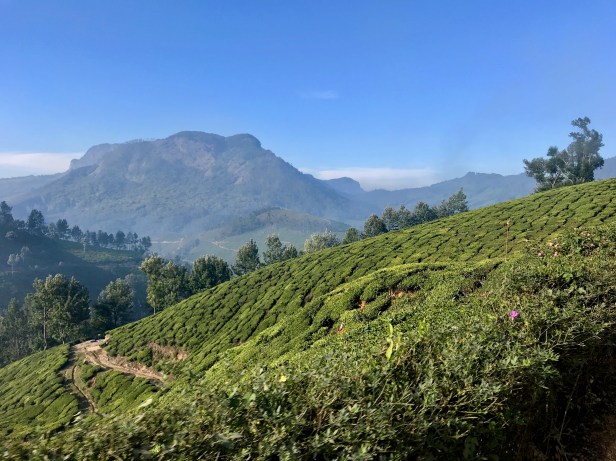
Tea plantations are a picturesque feature of the high country landscape with slopes between 30 and 45 degrees used for the growing of tea (according to the tea factory museum at Munnar). These plantations extend up and down the contours of the landscape looking luxurious in the misty terrain of the higher altitudes, while smaller bushes tend to look dusty close to the roadside in more marginal terrain. Irrigation is undertaken and chemical treatments are used apart from organic plantations, of which we saw a couple. Green tea and black tea it turned out come from the same plant and the health benefits of green tea are particularly spoken of.


The tea plantations are a beautiful backdrop to the landscape, however they also provide some scope for militancy. The tea plantations have significant worker settlements. We were surprised to go through a tea plantation settlement that was on strike and see a large number of people milling around. A huge number of chairs were positioned adjacent to the main street and an empty podium awaited a speaker. We then passed a flag laden jeep with loudspeakers and blaring music and was described by our driver as Communists that would have been driving to the settlement.
We also heard another driver who drove us to the airport in Kochi referring to strikes as a feature of the Communists. Notwithstanding this, we saw numerous settlements and towns where strikes were underway as there was trouble at an important temple at Sabramala that reflected religious concerns. Two women had visited a temple and destroyed its sanctity by entering a place for Eunuchs’ according to James. In any event, unrest was widespread in Kerala and Travel Advisories had been issued by the UK and USA regarding avoiding unnecessary travel in Kerala. The Australian travel advisories were more pragmatic referring to avoiding demonstrations and keeping a low profile and exercising caution. We certainly saw numerous public meetings, with scores of seats set out in the centre of towns for large gatherings, addressed by speakers on podiums as well as long processions of supporters flag waving vehicles, featuring cars and tuk tuks (one of over 200 vehicles). All the local roads seemed to lead to Sabaramala too which was a bit disconcerting as it is signposted as a destination from every directions. Apparently 40 to 60 million pilgrims visit this temple annually ie. averaged – 150 thousand people every day!! The figures are hard to imagine, with visitors generally approaching on foot and dressed in pilgrimage garb. Hence, the logic of the signage from everywhere, as the destination is important to many, many travellers.
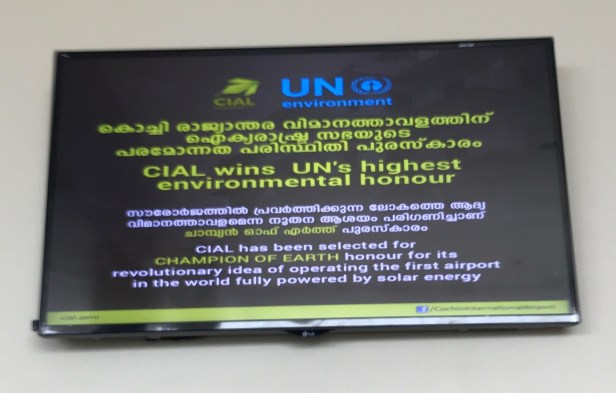
The politics of Kerala is very polarised with only two parties – Congress and the Communists according to our driver, who was from Tamil Nadu. They have five big political parties in Tamil Nadu apparently so things there are more complex. Our final driver in Kerala who drove us to the airport from our Kochi hotel grumbled about the Communists (State government) and strikes while crediting the significant recent public investment in infrastructure in Kochi to the Congress party (National government). These include an impressive new airport being the first in the world totally powered by solar power (and had received a United Nations award), a stadium and major freeways and a Metro under construction.


There has been enormous expenditure on infrastructure in Kerala in recent years with Japan being a source of some funding. The scale of India’s projects are enormous and they are making great strides for their cities. It makes me wonder why Brisbane can’t invest in manage its key road and rail systems better.
The birdlife of Kerala with its mountains and backwaters is prolific. National parks such as Periyar are well-organised and sensitively managed with guiding provided by tribal communities and local tribal people allowed access to the parks.


We were initially concerned to see people walking along the main access roadway given tigers exist in the area, but it turned out that the hazard from tigers was probably minimal. Local people seemed to be particularly accessing the park to undertake fishing or collecting certain plants at various times of the year. Our guide for a ‘nature walk’ explained various plants of interest. The real threats with walking in the park came from elephants, bison (like buffalo) and boars. We were instructed to stay at a distance (like 100m), perhaps take a photo and run.
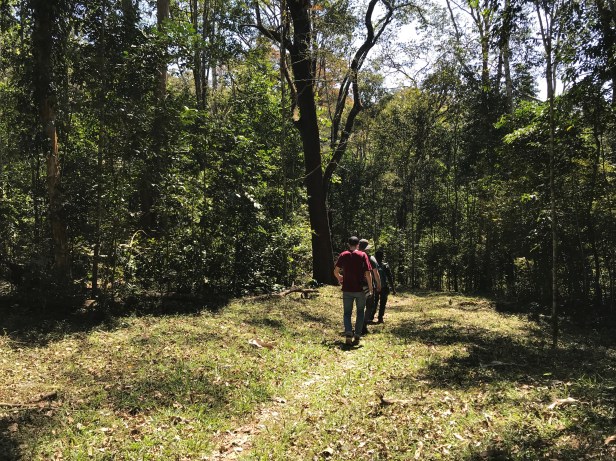


We were fortunate to stay at a national park operated Lake Palace Thekkady in Periyar National Park set on an isthmus in the park’s lake. A dam constructed many years previously formed the waterbody for this pristine reserve. From the lodge’s beautiful grounds you could observe wildlife in the late afternoon coming down to the water’s edge to drink. 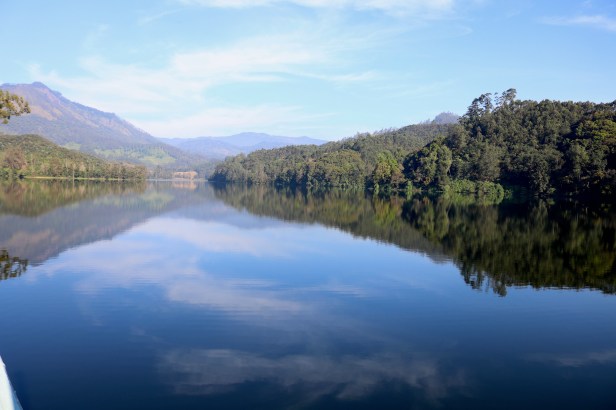
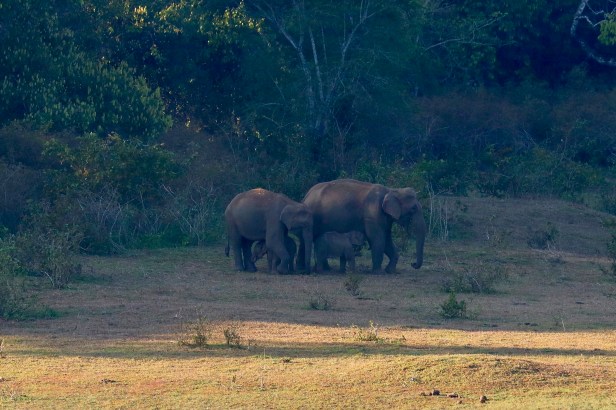
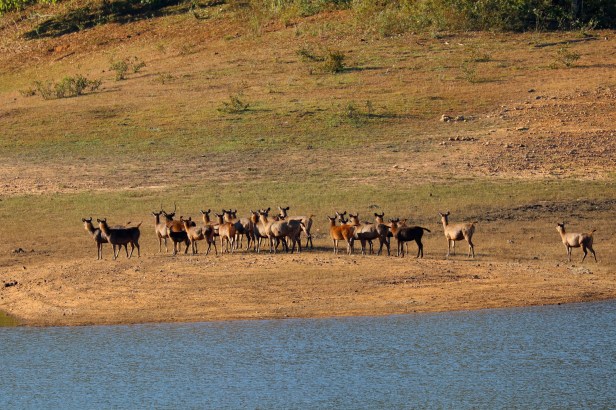


Boats also took visitors around the lake from the visitor centre with most sightings of animals at the water’s edge. We were fortunate to see considerable activity unfold with a pack of wild dogs harassing a herd of Sambar on the lake’s edge. The deer herd moved into the water and formed into a tight group as the dogs appeared, first a single dog, then more to eventually be a pack of nine animals. Two mother elephants and two calves were also threatened by the dog pack retreating to the forest from the grass on the lake’s edge as the dogs emerged. The dog pack moved at a great pace inspecting the deer, presumably seeking out animals that looked weak and strangely were totally ignored by the grazing bison. We saw the pack a little later on an adjacent isthmus before they return for a final inspection of the deer herd before they again disappeared at speed into the forest.
National Parks are a reserve for many rare creatures. Tigers are very rarely seen as they are largely nocturnal and live in large territories. To protect residents, the lodge area was separated from the adjacent park by a big ditch and fencing within the ditch area. However, this had proved inadequate to the attentions of a mother elephant and calf that had broken in a couple of evenings before our stay to sample the lodge’s vegetable garden. A wide trail of squashed plants showed their path.


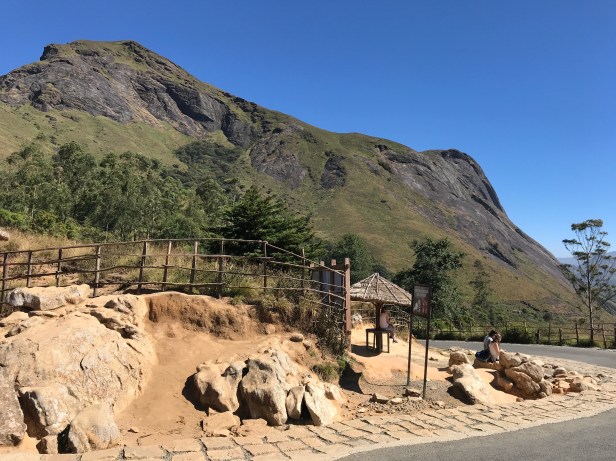
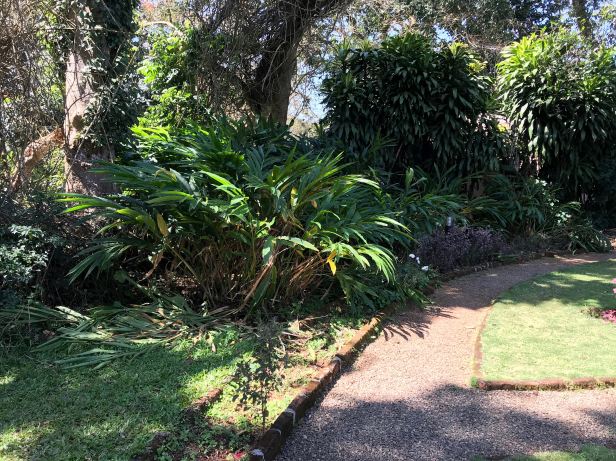 Our experience visiting Eravikulam National Park near Munnar, was rather disappointing. The spectacular park which features India’s highest peak south of the Himalayas is a refuge for half of the world’s remaining population of Nilgiri goats (tahr). However, there was no scope to spent any time there or try to see any wildlife really due to the access arrangements within the park. Following a bus ride from the headquarters, the only activity available to visitors was to walk along a short out and back road (10-15 minutes walking slowly). This road also served as an access road for an adjacent tea plantation. You got attractive views of the surrounding tea plantations and mountain scapes and it was set in spectacular rocky country, but a short walk along a tea plantation road was a very limited visitation option for paying visitors. More effort to provide a visitor experience such as a pedestrian only path away from the tea plantation road would be appropriate. The national parks personnel’s opportunity to engage their visitors in the Nilgiri goat and other conservation issues was rather lost in the disappointment of the road walk. I do acknowledge they ran a good bus service given there were a very large number of vehicles parked at the visitor centre, but more for the visitor experience please. We were disappointed to pay $32 for our visit which turned out to be mainly a bus ride.
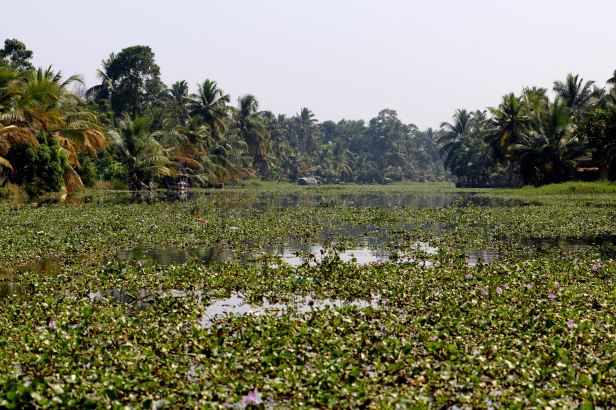
 The backwaters of Kerala are a delightful haven for the myriad bird species that live and migrate to this delightful area of freshwater waterways in proximity to the Coast. The network of waterways vary in width from narrow passages allowing the passage of a couple of canoes to expansive channels and lake areas covered in lotus plants. Some are free of plants while others are overgrown and boats push aside plants to slide silently along the waterways. Houseboats plie these waters providing a unique view of rural life in this tranquil landscape of rice fields, bund walls and waterways. The range of watercraft are fascinating too reflecting local technologies using timber and cane from narrow canoes through to enormous houseboats.


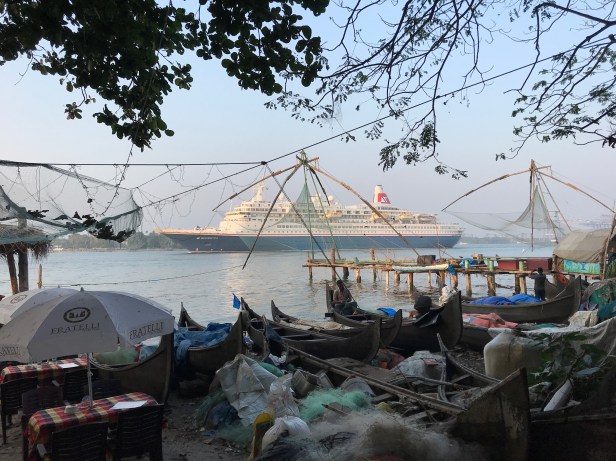
Kochi meanwhile has its relationship to the sea as its reason for being. Fishing has been the traditional activity of many of its population and still today the traditional ‘Chinese’ style of enormous nets weighted by boulders are a feature of the waterfront. Seafood is available as a mainstay of its cafes and restaurants. We were surprising to see the enormous port opposite. Then an enormous cruise ship sailed past the main promenade.


We encountered another large cruise group at the church where Vasco de Gama was buried. He’d died in Kochi where his body remained for 14 years before its return to Lisbon. I was very disappointed to read of a particularly barbarous act for which he was responsible. It was the deliberate burning of a boat of 400 pilgrims. Those times were harsh. Trade has always been of importance from ancient times with extensive old warehouses and warehousing areas in proximity to the traditional port settlement. A sizeable Jewish community had resided in Kochi. Kerala has also featured a sizeable Christian community from ancient times. The state has the highest literacy rate in the nation. This town is a terrific place to revitalise after time in the high country.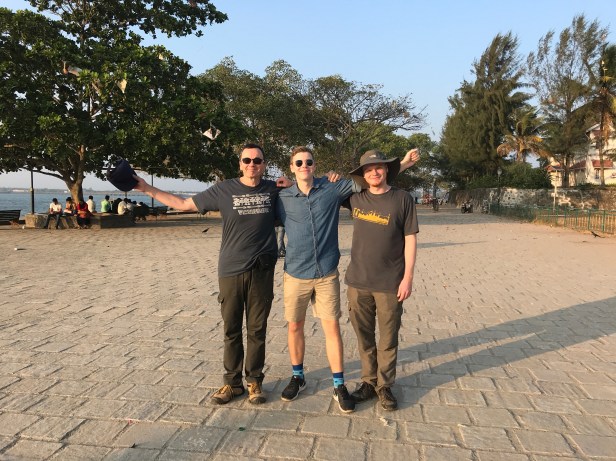


 Marian's Travel Blog