Quito is the world’s highest capital situated at 2800m. It lies on a plateau framed by gorges with high mountains rising above, including an active volcano. It is a spectacular setting. It has 2.2 million people and is Ecuador’s second largest city. In a few places housing extends up the hills like how, I guess, the favelas look in Rio de Janiero. Otherwise most of the hills were free of housing with a clear delineation between the urban area and the countryside above. Its outer suburbs extend to within 1km of the equator. (Cab drivers inevitably offer to take you to the ‘mitad’ – the equator monuments.)
The most interesting part of the city was its World Heritage listed ‘centro historico’. Quito and Krakow were the first ‘historic centres’ to be protected by such declarations in 1978. It was an intact area of about 3 square kilometres that had remarkably little intrusion of modern buildings. Buildings within the area were generally substantial in scale and detailing and constructed of stone. A great deal of work had gone into renovation and preservation works to protect and maintain the character of the area. It had many places of interest including the presidential palace, the city’s major formal squares, the cathedral and many churches and museums. These date from its time as an important Spanish colonial city from the 1530’s onwards. It was such an interesting area to wander around.
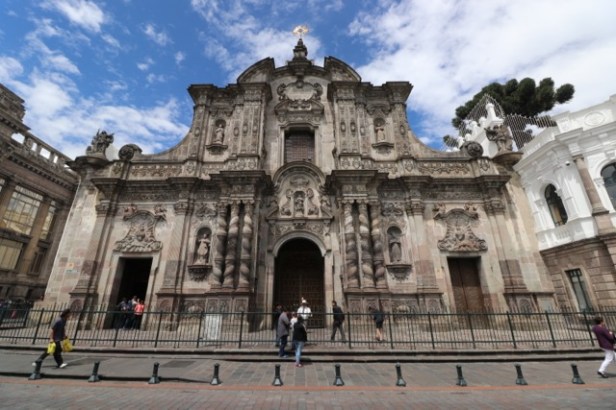
There many churches in the old city reflected the different clerical orders that had established in the country. (You weren’t able to take photos inside though which was disappointing).
There were also museums and other sights. Our favourite museum was the Quito City Museum. It had a terrific overview of the settlement of the valley explaining about the original peoples of the area, the evolution of cultivation and simple settlements, to pre-Incan and Incan times, to Spanish colonial times, through to more contemporary times and issues. It was situated in a former hospital building from the 1540’s! A lot was written in Spanish with separate language plates in Kichwa (the main indigenous language) and English in many rooms. The museum was very well-done.
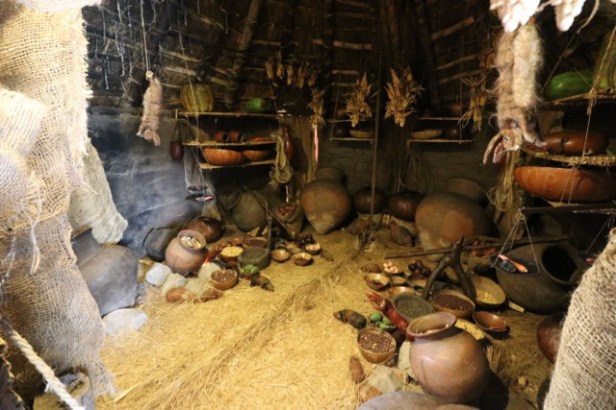
They had also just held the most recent United Nations Habitat conference so had some special exhibitions of particular interest (my Dad went to the first one in Seoul in 1975). We didn’t always manage to coincide with museum opening times though, given the siesta type hours of many premises.
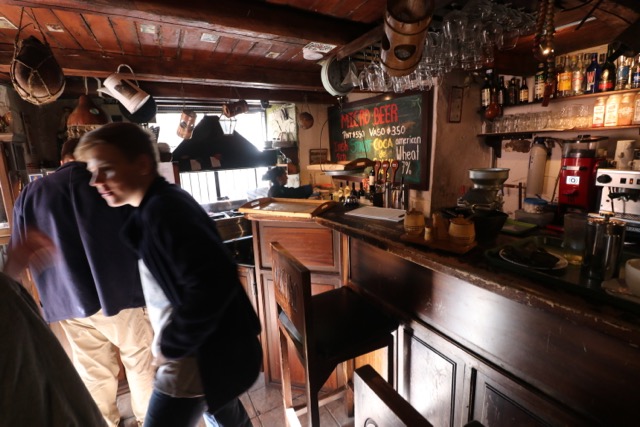
There were lots of little shops in the old town, which all tended to close by about 7pm and be shuttered behind metal pull down roller doors. There were very few glass windows so it was a bit dull on the streets once the shops shut. They had lots of strange specialist shops too like an aluminium gadgets shop, disposable plastic containers shops etc. There were quite a few art workshops premises reflecting the high calibre crafts traditions. The markets had lots of crafts using very specific materials like glass, weaving etc. There were lots of cafes too.
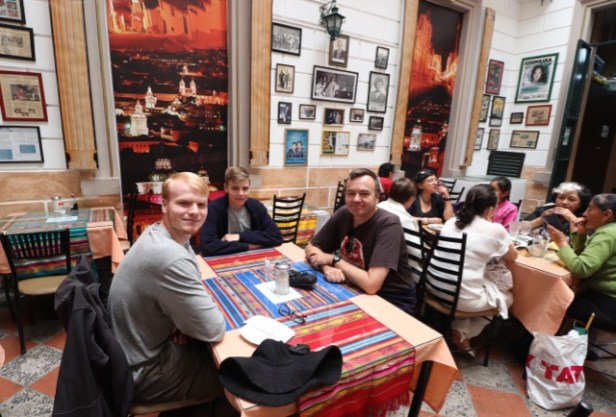
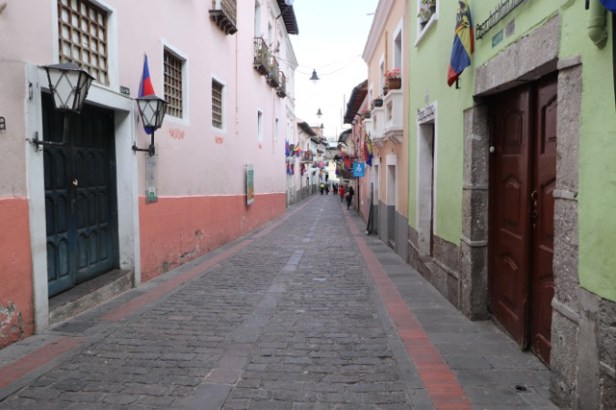
My favourite street was the Rondo, a former street of artisans. The whole street was renovated in 2005 and is now a pedestrian street of small tenancies, restaurants and artists workshops. It had such highlights as a chocolate establishment where you could do a class to learn about the qualities of chocolate, beautiful artist’s outlets and specialty music spaces. It was popular as an entertainment precinct during evenings and weekends.
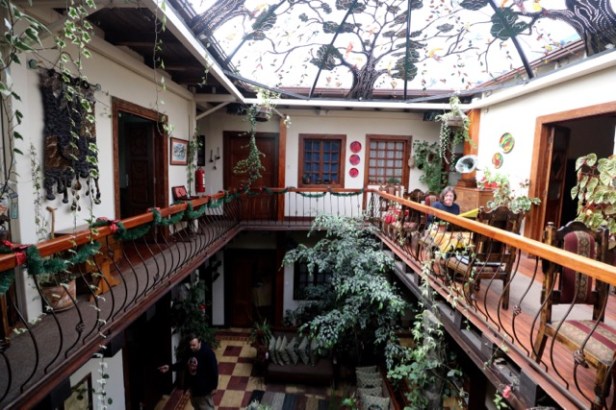
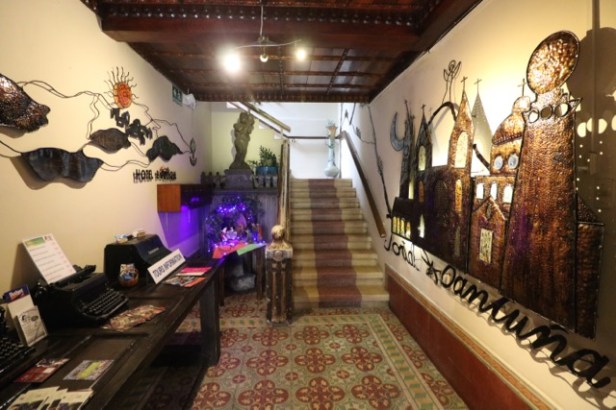
We stayed in a lovely old building set around an interior courtyard in the historic centre. It had a metal etched frieze at the roof level with inlaid coloured glass over the covered internal courtyard. It was a real artpiece reflecting the heritage design aesthetic of the premises and the old town more generally.
We went up the city teleferique that takes you to 3900m. You could hike from there for three hours up to a peak above. The trip up the teleferique provided a clear view of the mountains and canyons of the city. Beautiful green mountain vistas were visible against the city backdrop below.
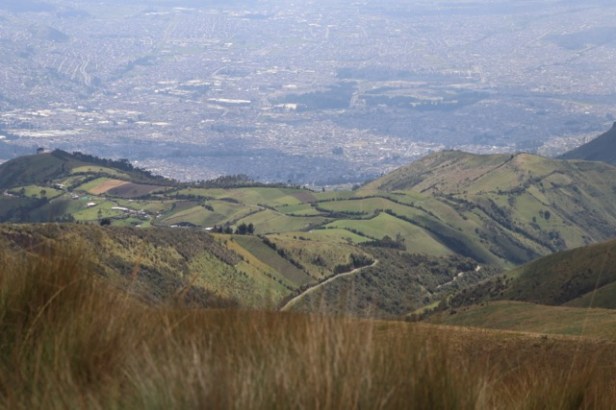
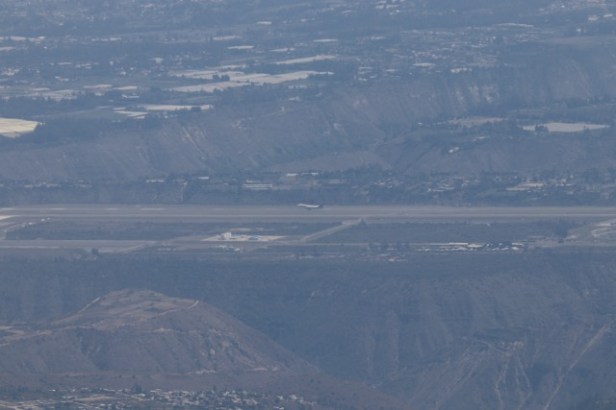
The new airport could be seen in the distance, which was isolated from its surroundings by canyons on either side making the road network to access the airport circuitous.
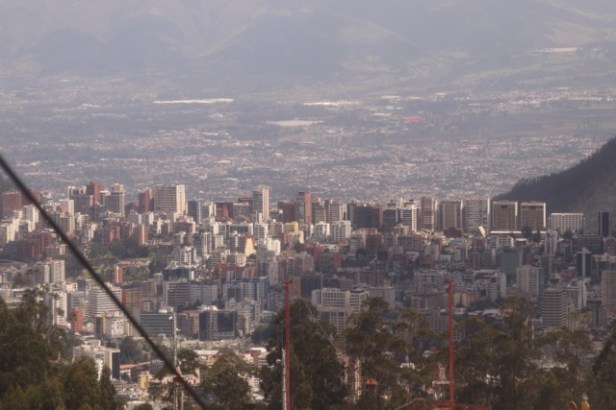
There was also an amazing row of skyscrapers on one edge of Quito overlooking a valley with one of the key city access freeways situated there. It was an outstanding view.
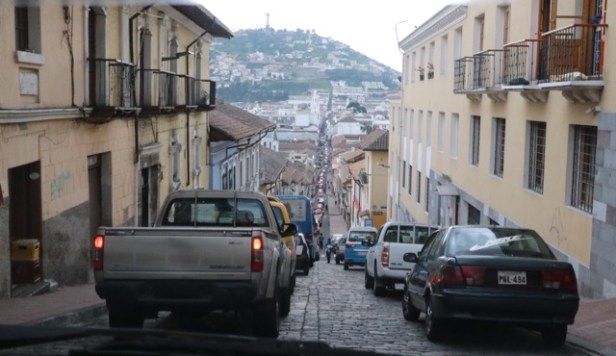
The geography presented problems for traffic circulation as did the old town. We were one street away from our ‘centro historico’ hotel when we arrived and it took another 15 minutes or so of travel to get to our destination – having been flung some 7 blocks in a different direction. We also got stuck in an appalling jam getting onto a freeway access road at one point. Our cabbie had avoided the tunnel toll (I think) and it took what felt like a half hour to get onto a freeway. They had lots of traffic police to assist with traffic circulation issues. We even saw some traffic officers on Segues which looked pretty cool. A Metro project is currently under construction running the full length of the city underground, but there are some big challenges.
I would like to have had more time there. We met a few older couples (one Swiss, one from the US) that had rented apartments in Quito for several months presumably as a retreat from the harsh winter of the northern hemisphere.
A Final Comment
In recent years, Ecuador has enjoyed a period of growing prosperity and stability under its current president Rafael Correa. He is nearing the end of his second 4 year term of office. The country has been one of the stand-out performers in recent years for its economic performance and stability. Elections are scheduled in February and the current president cannot run again. He is incredibly popular and has transformed the country introducing an era of change with oil revenues directed back into the national coffers rather than being exported to multinationals, allowing for major investments in infrastructure and social programs. Ecuador has impressive literacy and employment rates with its major economic problems now being debt management (including indebtedness to China – not a nation to provide resources with ‘no strings’ attached). It faces big public account issues into the future, no doubt, and the need to get the balance right between revenue and expenditure. Hopefully they will get another visionary president who can keep the country moving in a positive direction.
 Marian's Travel Blog
The whole of Ecuador looks like a tourists wonderland. You would have to be fit to keep up with the program! The old quarter going back to the16 th Century is very interesting.
LikeLiked by 1 person
Quito seems a city of marvellous vistas
Skyscrapers in a row….very different.
Loved your covered internal courtyard,so attractive.
LikeLiked by 1 person