
The Stuart Highway heads north from Alice Springs. Shortly after leaving the city we crossed the Tropic of Capricorn marked by a roadside monument. It was a surprise that Alice Springs is so far north. We also soon encountered enormous flocks of budgerigars in flight. For about ten kilometres, waves of birds were visible from the road crossing from one side to the other in enormous fast moving flocks darting up and down. It was magical, but frightening in the context of large trucks that would inevitably give rise to casualties. We heard later it was a phenomenon from a good breeding season in the Simpson Desert.
The Stuart Highway follows generally the original Overland telegraph route that was set up in Australia from Adelaide through to Darwin. It took 9 hours for a message from Adelaide to reach London in the 1870’s apparently. This seems remarkable in light of the harsh living conditions of many people at later times in the Northern Territory, particularly the gold mining settlement we’d just visited in the East Macdonnells from the 1890’s.
We’d visited the Alice Springs Telegraph Station previously in 2016. This trip we visited the Telegraph Station to the north of Devil’s Marbles (now Karlu Karlu). The standard of building for the residents was very civilised with a couple of large rooms in a brick home and surrounding verandahs. There were also storage buildings for food and provisions, including a cold store built into the earth and a large blacksmith shed. The Telegraph officer would have been responsible for maintaining at least one hundred and fifty kilometres of line, keeping it intact from all of the problems nature could throw at a continuous cable from one end of the country to the other. It would have been a lonely life but they were part of cutting edge communications technology of the time.
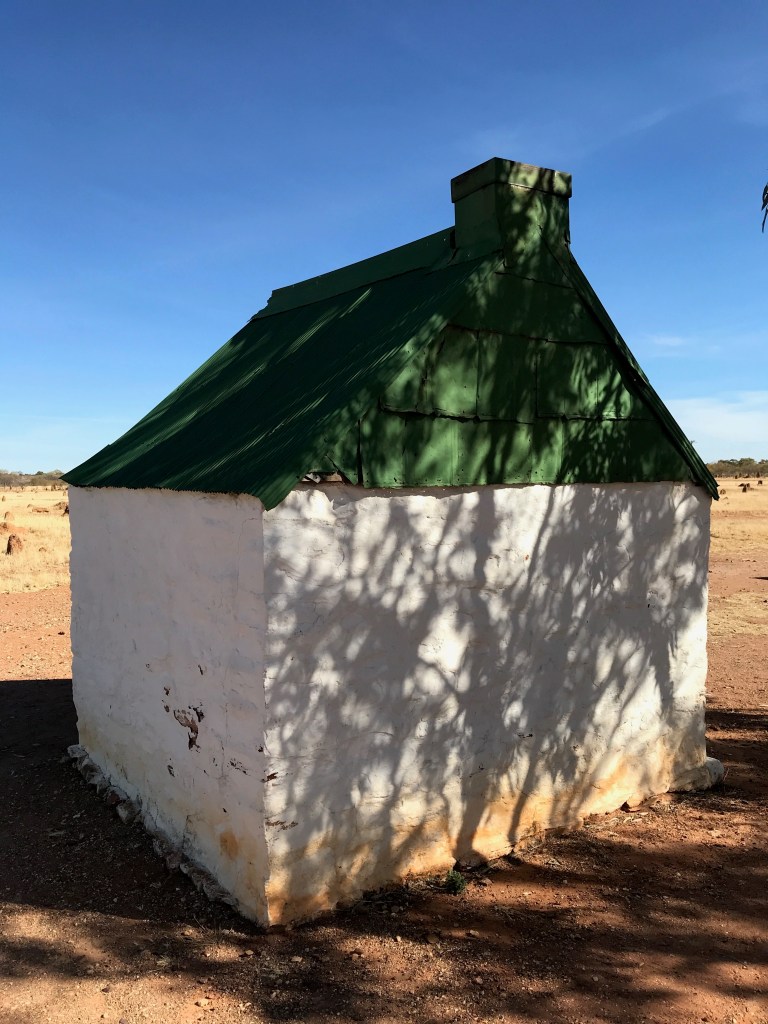
Cold Store 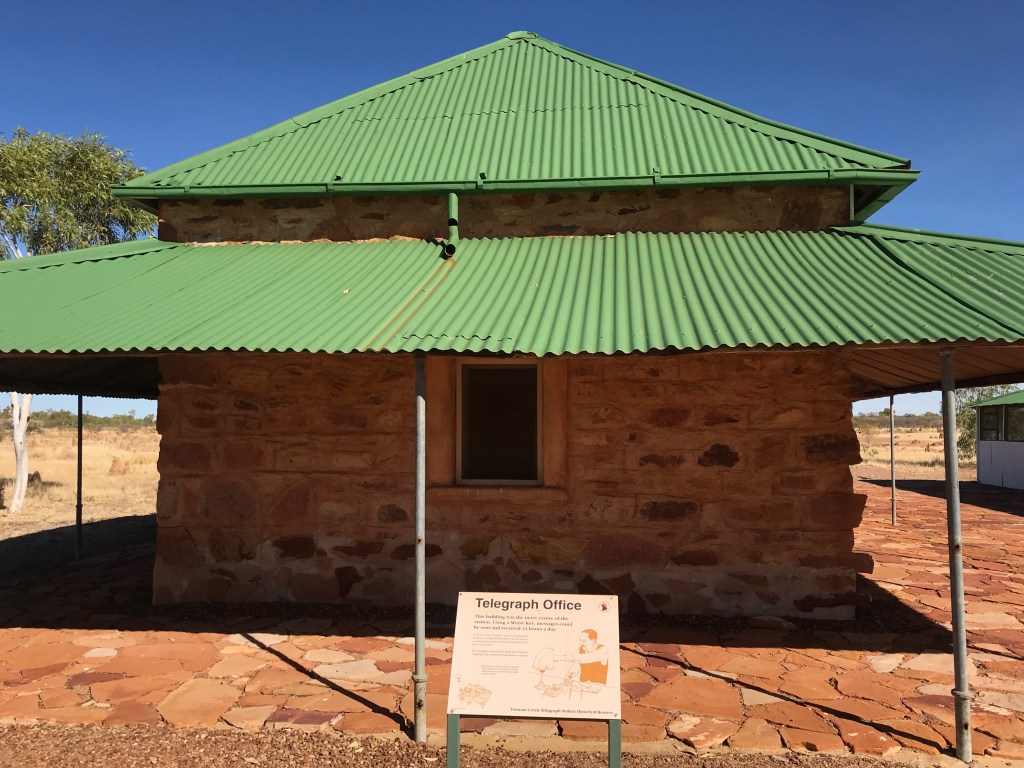
Main house
Karlu Karlu (the Devil’s Marbles) National Park was a delightful stop. This was in preference to our previous stop at Tennant Creek (an hour away) travelling south on the Stuart Highway. We stayed at a caravan park there that had three layers of fencing around it. Apparently there are security issues but I was quite rattled by three layers of separation from the outside world. Barrow Creek isn’t too far away from where the Falconio murder happened also fifteen years ago too. Multiple layers of fencing isn’t relaxing.
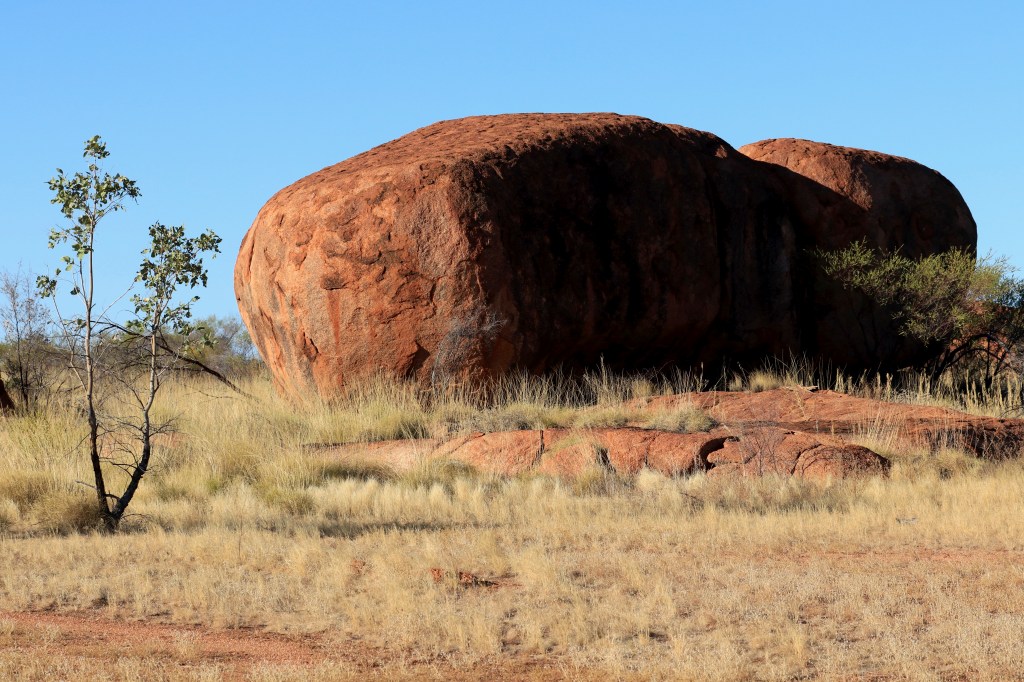
Karlu Karlu (the Devil’s Marbles) are an intriguing series of eroded rocks set in a stark, flat landscape of tufted grass and red soils adjacent to Stuart Highway. There are several walks to appreciate the landform.
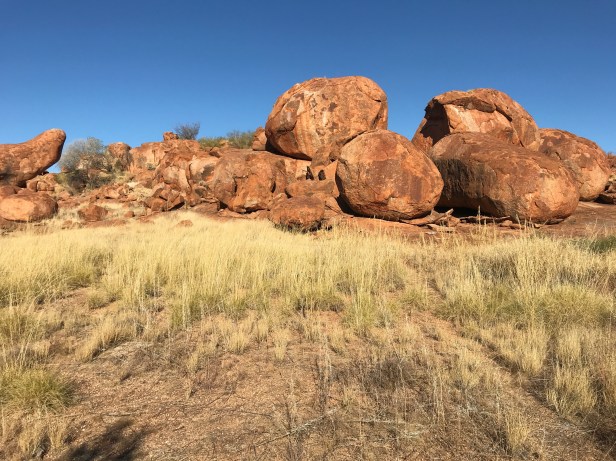
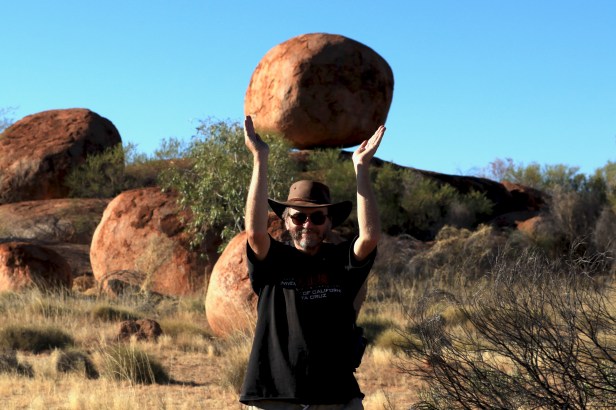
Getting a bit silly
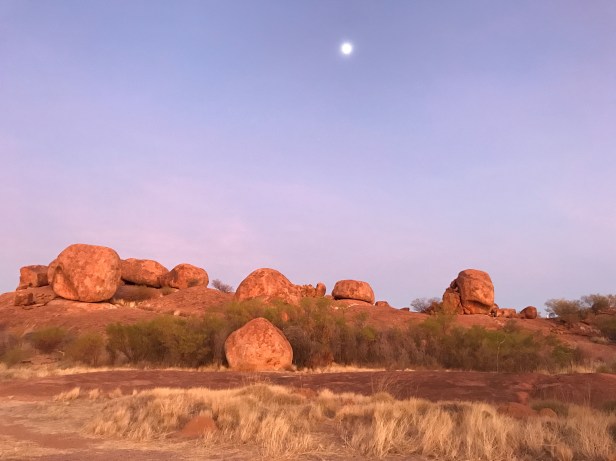
Moon rising
There is a very well set-up camping area available for vans and campers run by the Northern Territory parks service. There was a separate day use area that offered Wifi which was an unusual offering for the Parks service. We were also very lucky to co-incide with the fortnightly talks given by one of the two District Parks rangers. He gave a fascinating insight into some of the challenges faced by the park and also the activities undertaken by a Parks ranger. One of the main challenges for the reserve is buffle grass. This grass was introduced initially around Alice Springs due to campaigning by the airlines about the state of air quality (dust) around the airport that often raised operational issues. This voracious ground covering grass was introduced and farmers also took it up widely as it’s preferred by cattle. However, it’s not good for local wildlife, so must be kept out of the park. Other issues they face are feral animals with cats and donkeys a particular problem. He’d shot 460 donkeys last year, meanwhile his working partner particularly targeted feral cats. They look after four properties including the Telegraph stations at Barrow Creek and Tennant Creek and Davenport Ranges National Park. He also talked about the Perentie that lives in the area, the world’s fourth largest lizard. It’s basically a giant goanna. Apparently, it has fangs that are toxic to its prey, so it’s a pretty nasty customer. He said if you see one just run. You don’t want to be mistaken for a tree if you stand still and they are bad-tempered!
Graffiti on the Marbles is a particular problem too. They do lots of cleaning and sometime have to resort to applying covering paint. Apparently 150,000 visitors a year come to the site!
The Karlu Karlu site was of particular significance for the traditional owners in the area as a meeting place for different groups. There was also one area where photographs were not acceptable for cultural reasons. There was some wildlife around despite the arid surroundings. Apparently, the rocks help to store small amounts of water in fissures, though the landscape seemed entirely dry. We saw red winged kingfishers there that were a first for us.
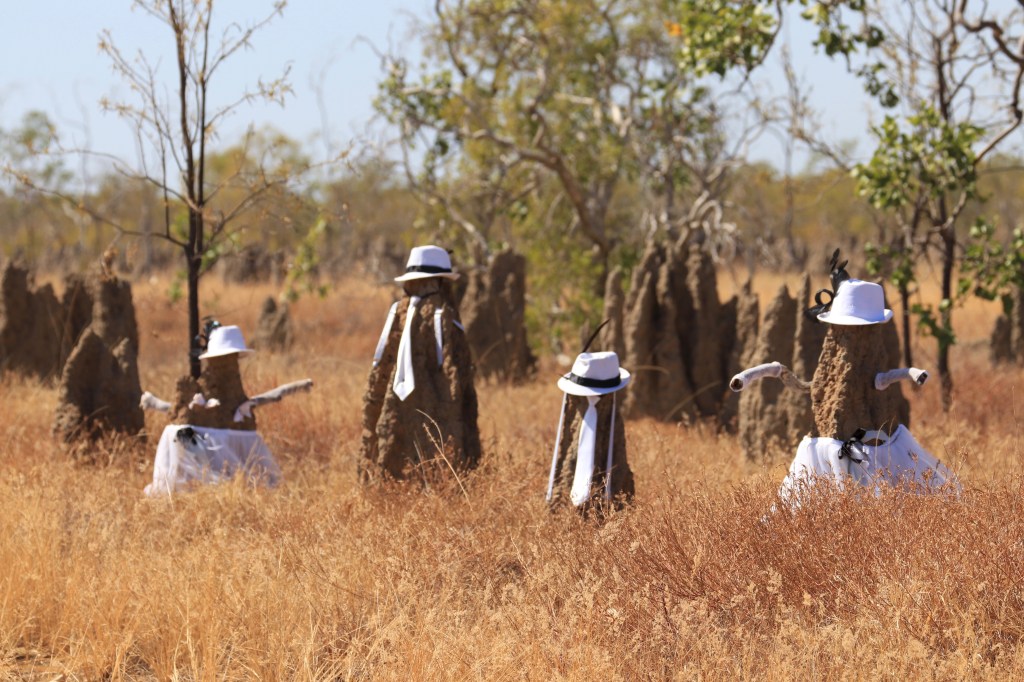
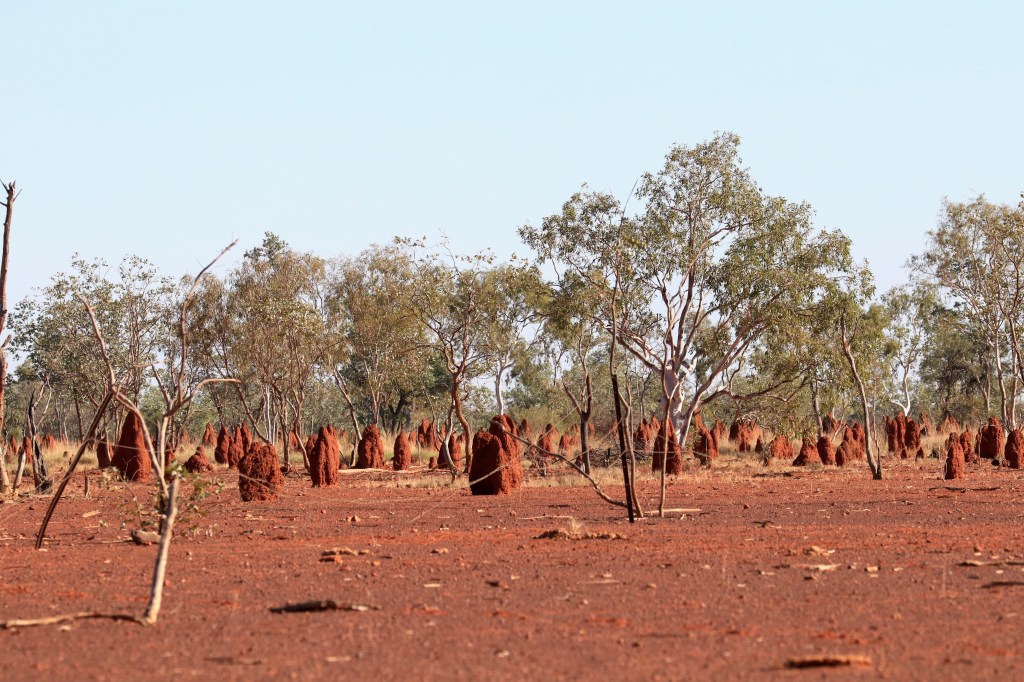
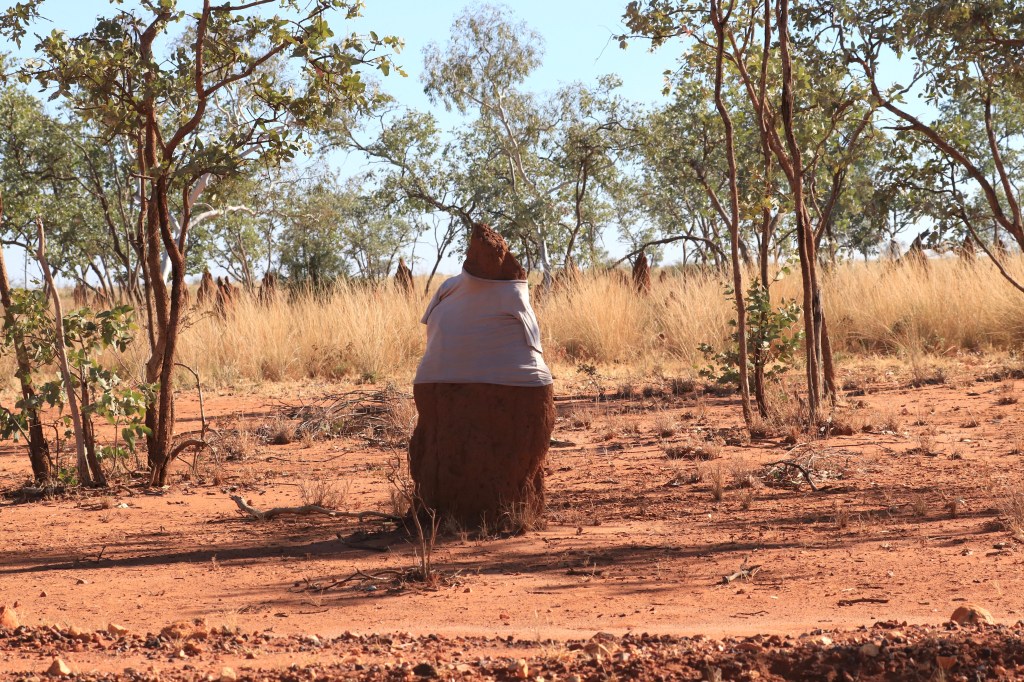
Along the Stuart Highway there is a particular enthusiasm for people to put clothes on the termite mounds. The clothes do fade over time, but efforts ranged from a Bunnings Trade singlet to accessorising with coloured feather boas. Termite mounds are extraordinary things and they vary in colour and size from landscape of short stubby grey mounds to expansive towering red mounds. Then some aspect of the geology changes and from mounds dominating the landscape, they become entirely absent.
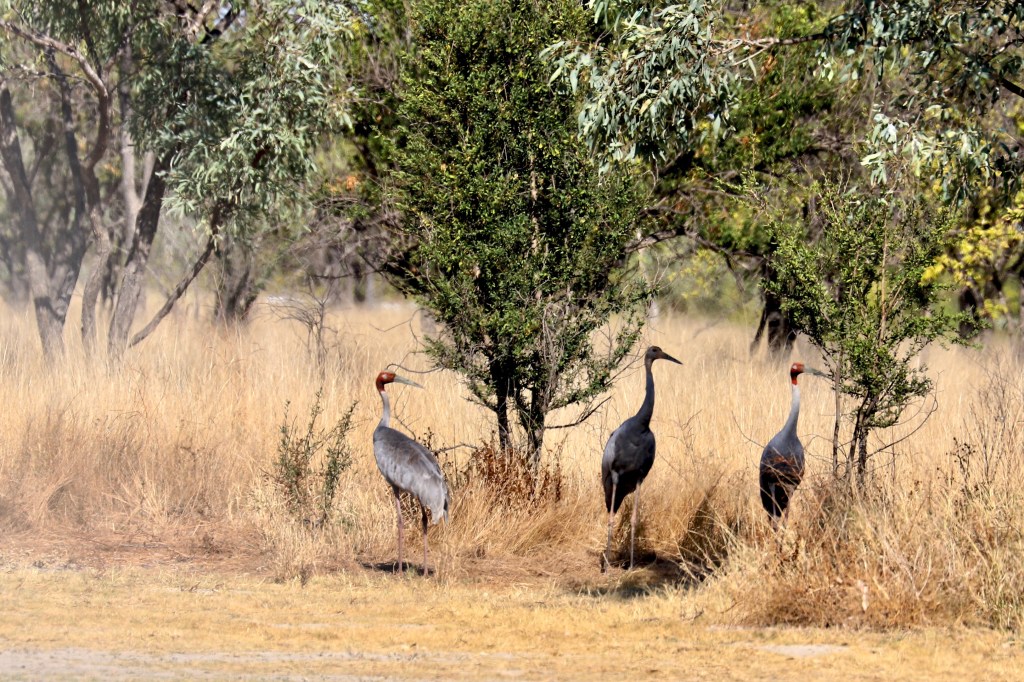
Back in Queensland, our next stop was Camoweal where we stayed behind the pub. It was a very pleasant place to stay. Another time, I would spend longer in Camoweal and go to see the caves national park nearby which has unfortunately had a roof collapse. However, we visited some lakes of the Georgina River near the town. We’d heard people talking about large numbers of people free camping at one of these, Lake Carellon so we wanted to see for ourselves. Anyway, there were a couple of hundred caravans set up at intervals along the shoreline of the lake. The lakes were a wildlife haven and attractive in this dry landscape. We saw several brolgas and lots of birds on the lakes and their surrounds.
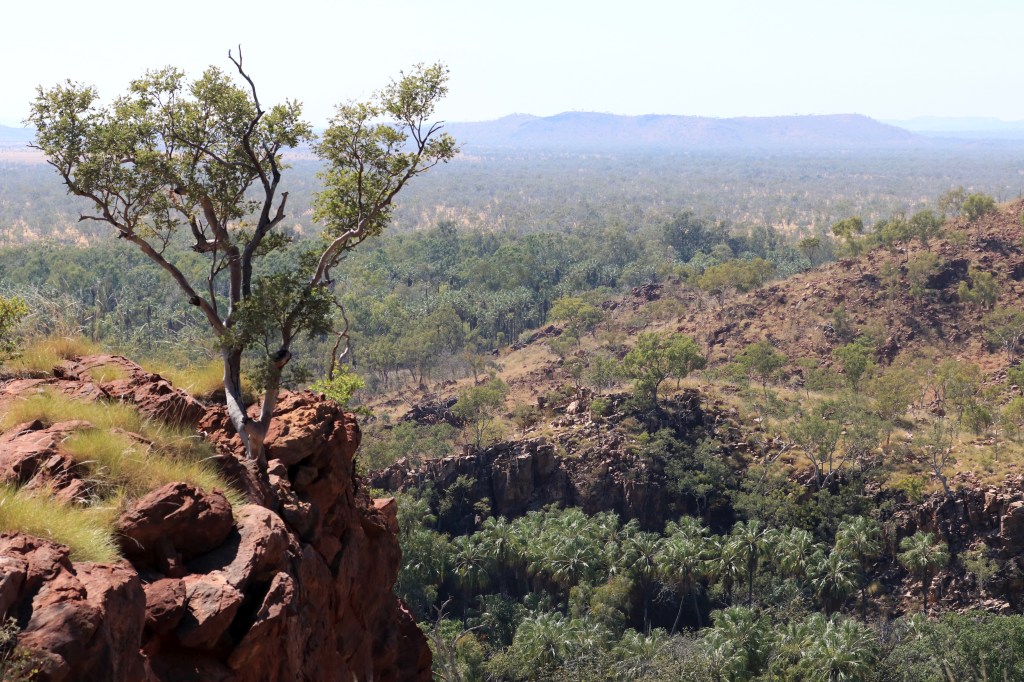
En-route to our next stop Lawn Hill National Park, Riversleigh Reserve is a world heritage listed fossil deposit area. It is significant for the array of species that have been identified from this site, particularly mammals. There were only a few examples at the site, being a crocodile type specimen about 5m long, a large bird species about 2.5m that they thought was most closely related to present day ducks. The site was a bit disappointing with little to see and an incredibly hot 800m walk on exposed rocky terrain. I also got bitten by a large wasp – ouch.
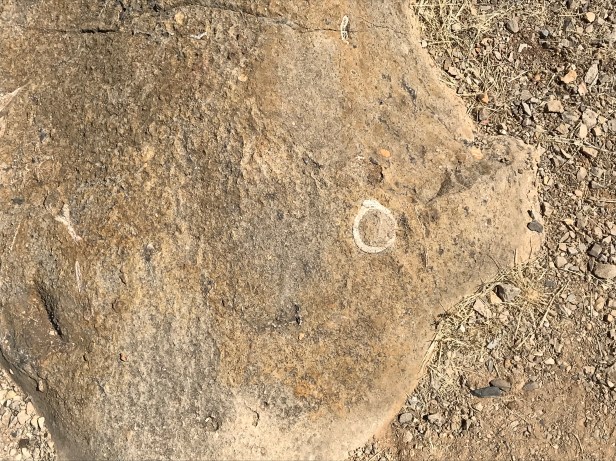
Crocodile bone, Riversleigh 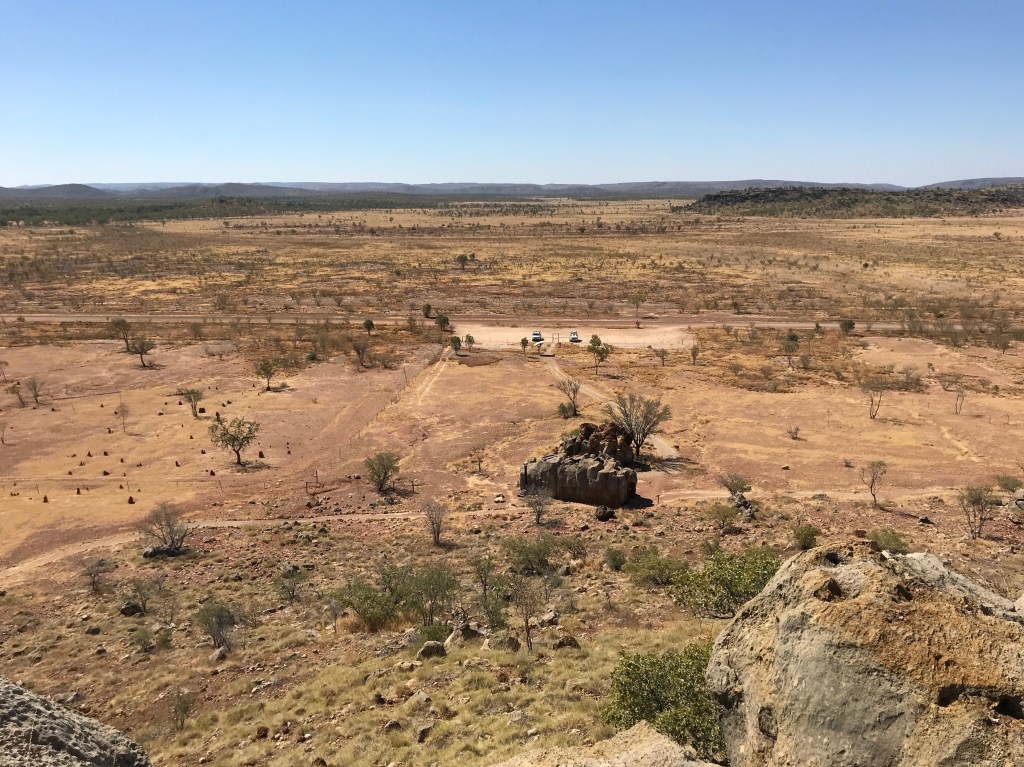
View from Riversleigh
At Lawn Hill we stayed at the nearby caravan and campground Adels Grove, which was a delightful place to stay. A clue to its charm was three creek crossings just before we reached the Riversleigh Mammal fossil site nearby. These creek crossings were extraordinary idyllic palm fringed green oases with rapidly flowing clear water, an aberration in the dry landscape of the degraded grazing country of the Barkley Plateau. After the baking heat of Riversleigh, the shaded Adels Grove campground was like Nirvana. We were very fortunate to secure a site fronting onto the palm-fringed river. The water was blue, clear and beautiful. After a few minutes, someone swam by in the deep idyllic water. It was such a beautiful spot. Then as we started to unpack the car, I saw a wren as I put our chairs in a nice position overlooking the river. I decided to sit and watch the wren with my camera at hand. It turned out to be a female Purple crowned fairy wren. Its mate turned up shortly thereafter. I had the most delightful half hour watching these birds. We didn’t see them again during our three day stay. At the national park up the road, seeing the wrens was described as one of the Park’s Top 6 – it was awesome. The nearby national park was excellent too, especially canoeing up the gorge.
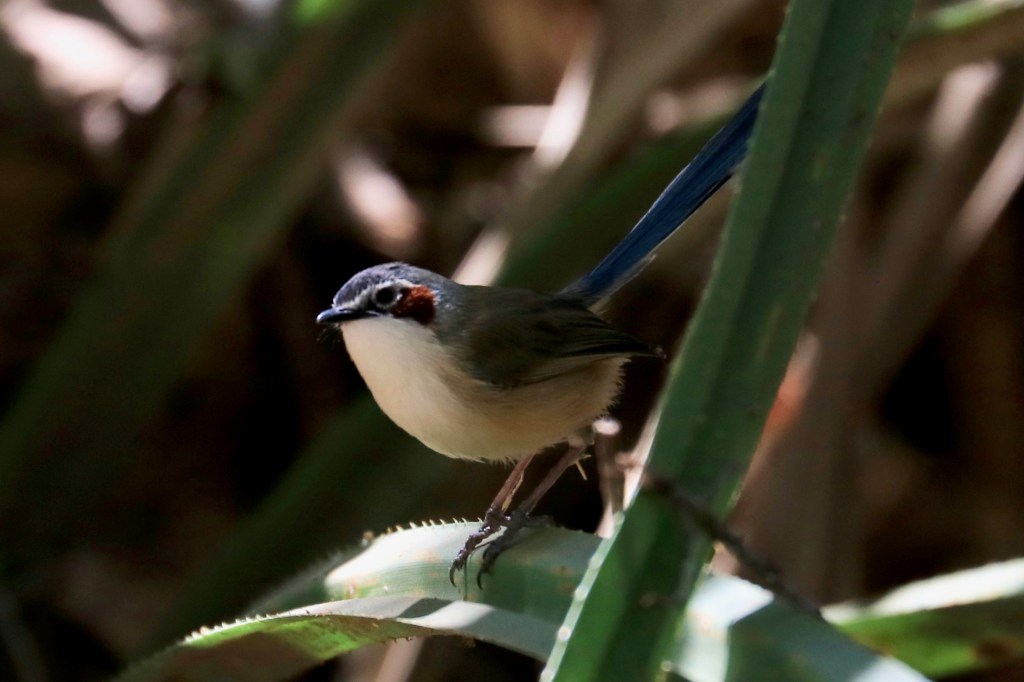
Female 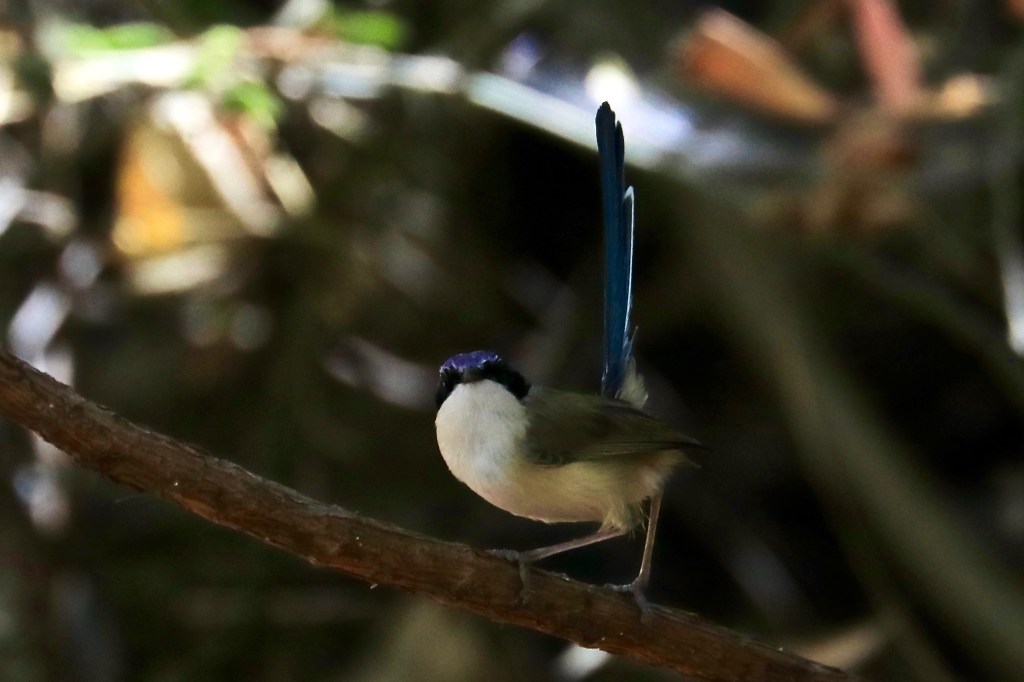
Male
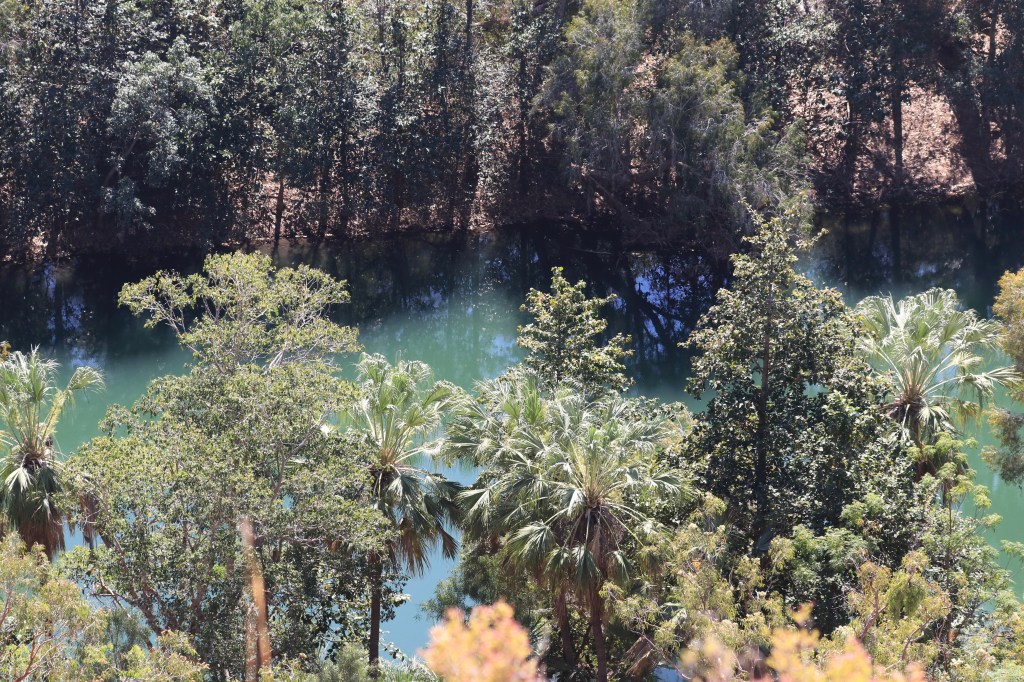
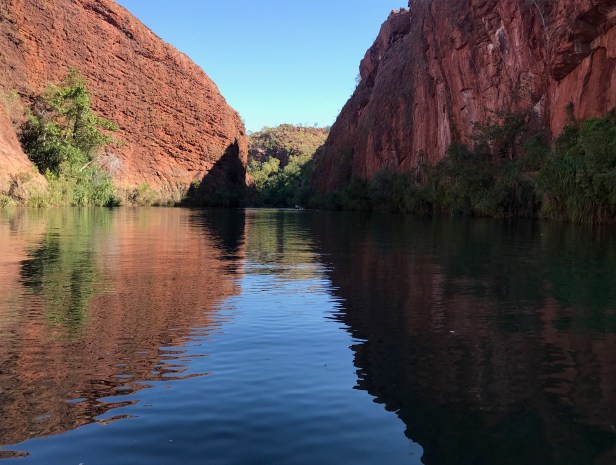
Lawn Hill Gorge 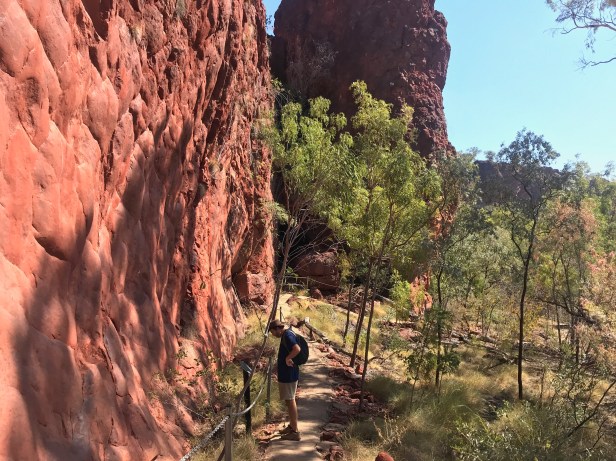
Rock Art
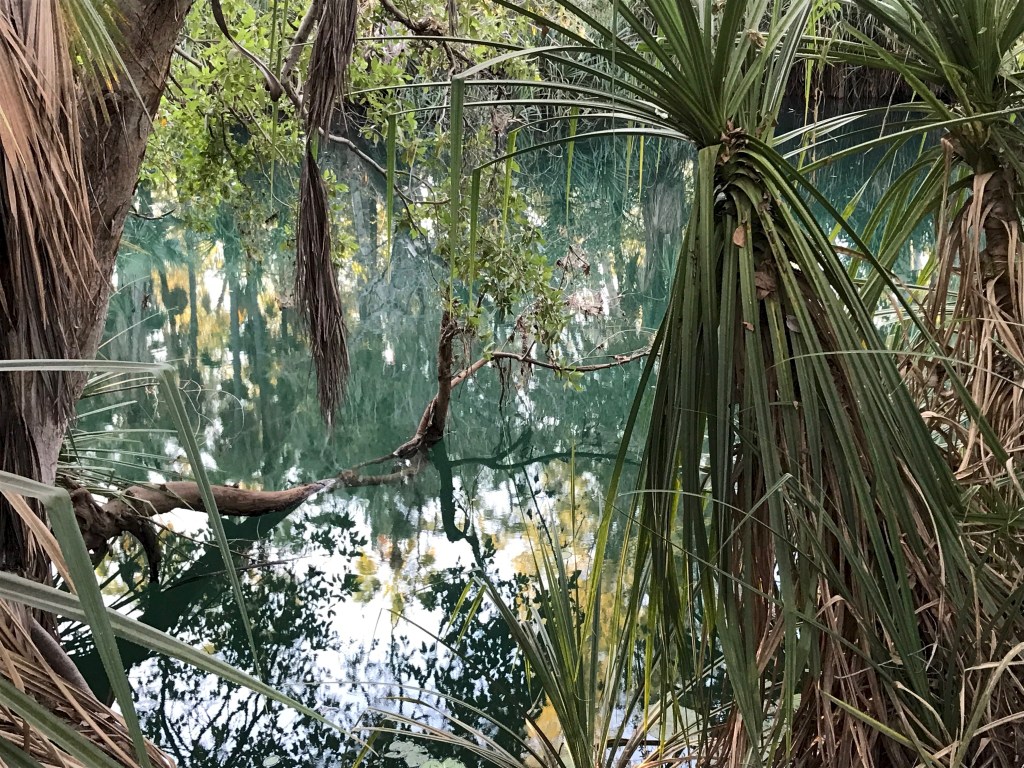
Lawn Hill creek from our campsite 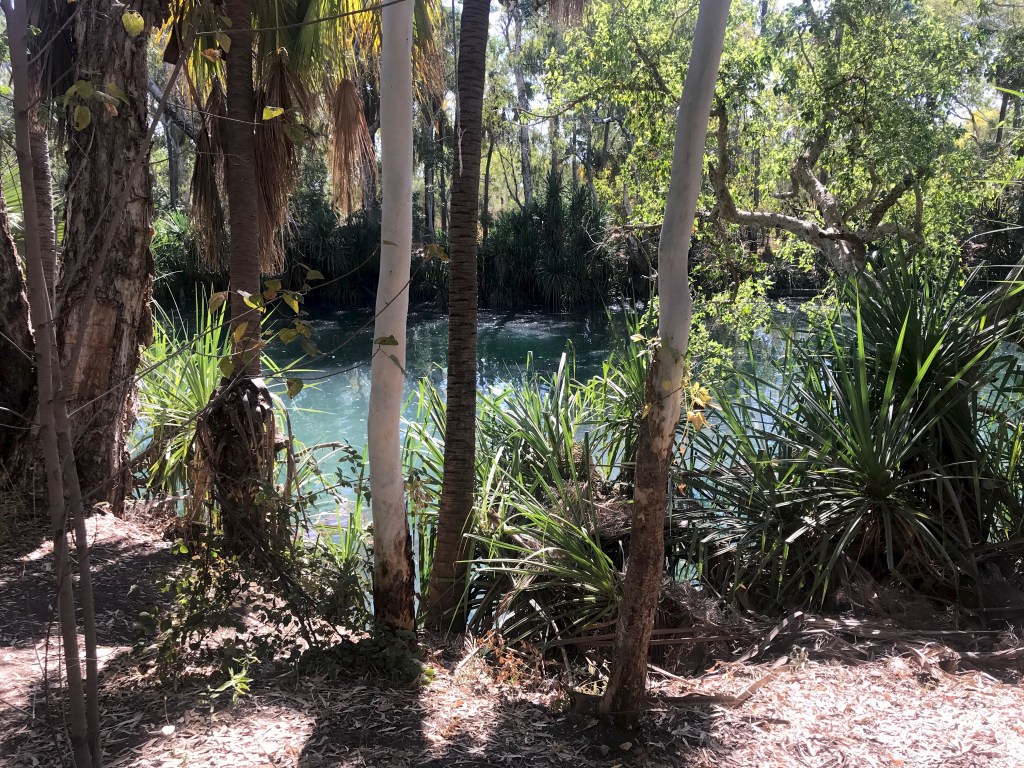
Such a lovely view
Normanton and Karumba were our next stops. We didn’t have a lot of time available for the Gulf country as we had bookings on the Atherton Tableland. The dry over-used savannah grazing country becomes more low lying and flatter close to the gulf. Lots of the area is cut off for long periods during the wet season. Normanton has a number of noteworthy historic buildings with its original Council building designed to look like a hotel. The Gulflander train is a highlight too reflecting the early days of Queensland and its strong connection with mining. This route linked the Gulf town with Croydon, a gold mining settlement to the west. There was a plan to link the railway service to Cloncurry too but that didn’t happen.
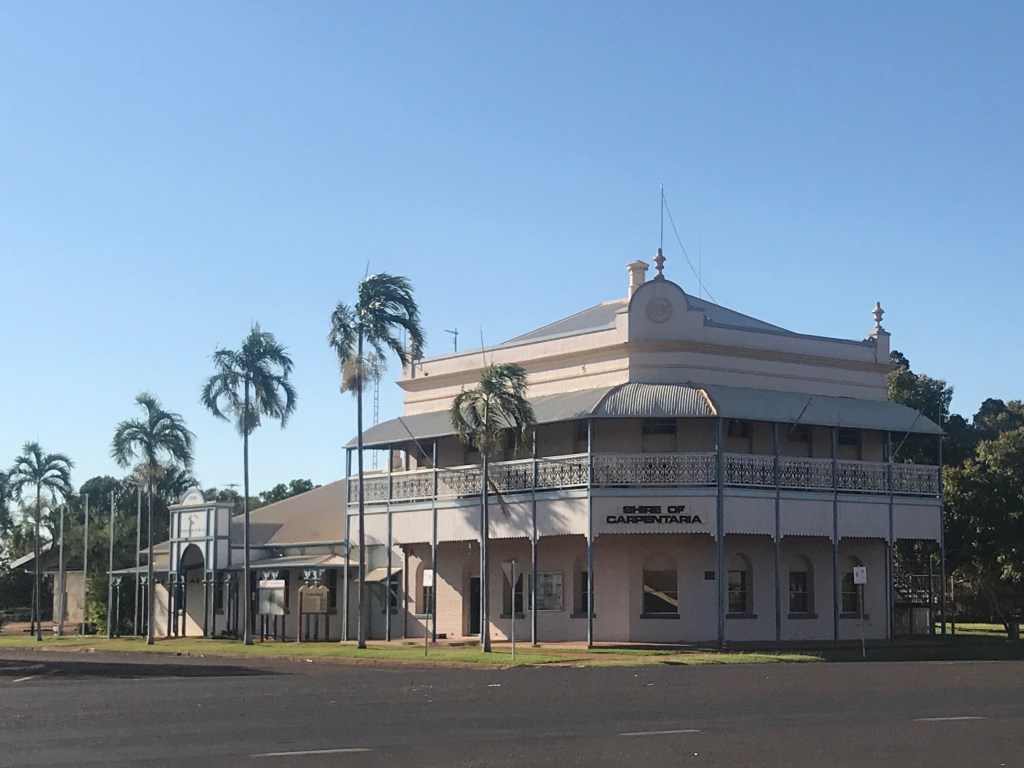
Council Building 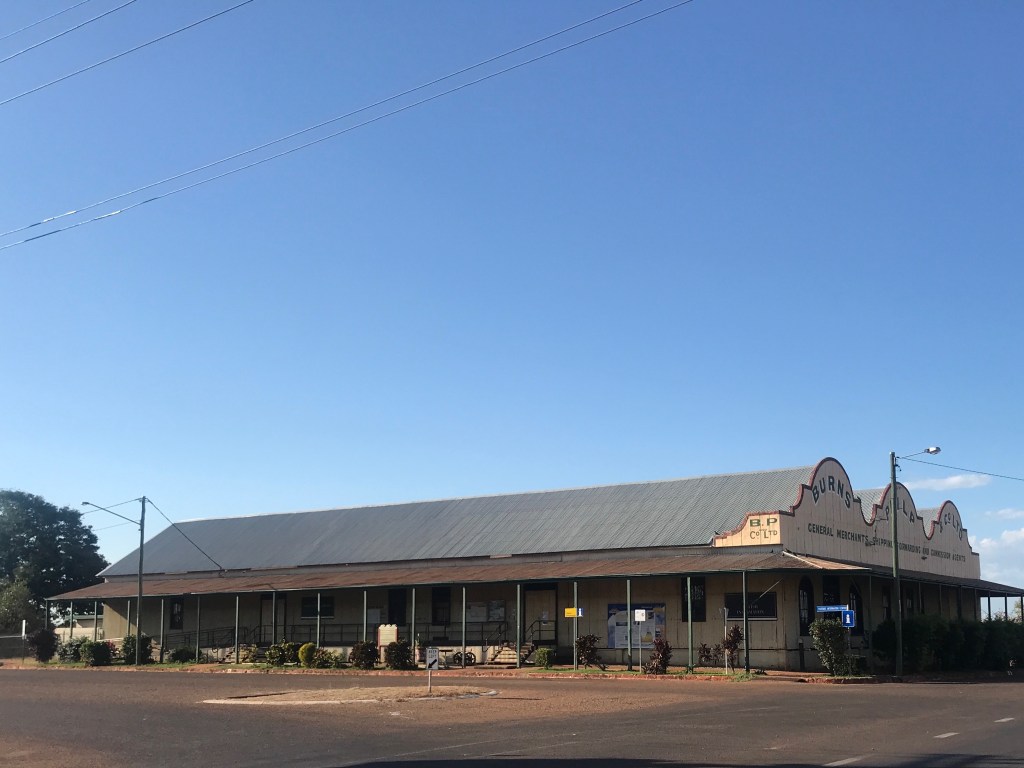
Burns & Philps Building
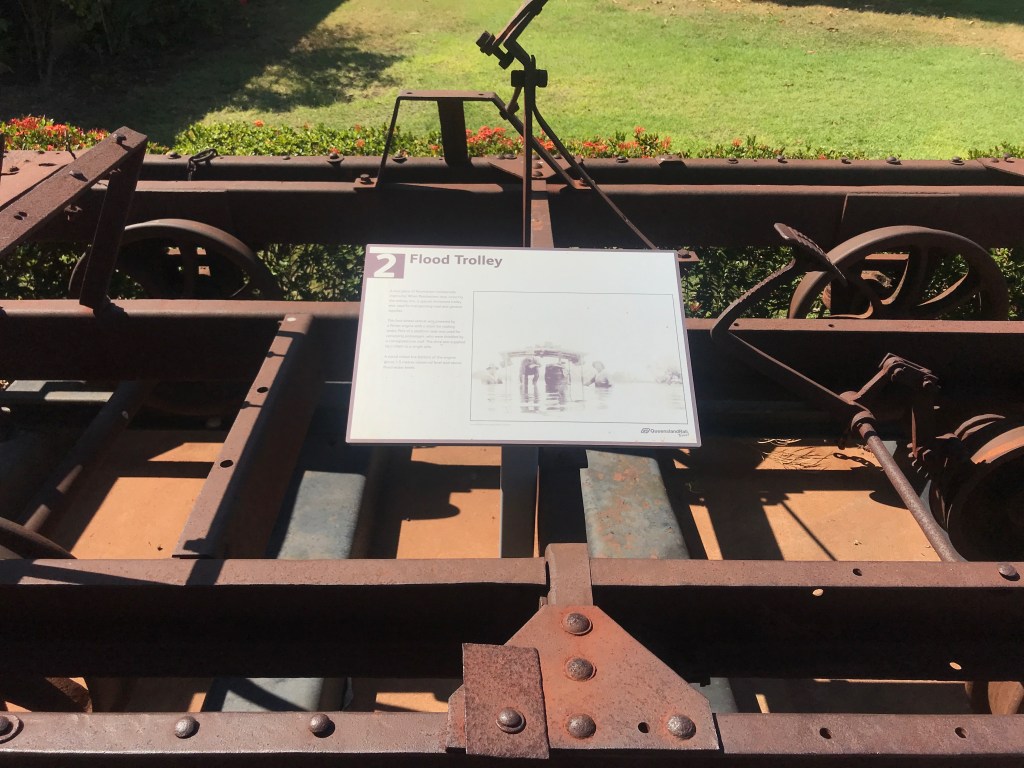
Special carriage for flooded times 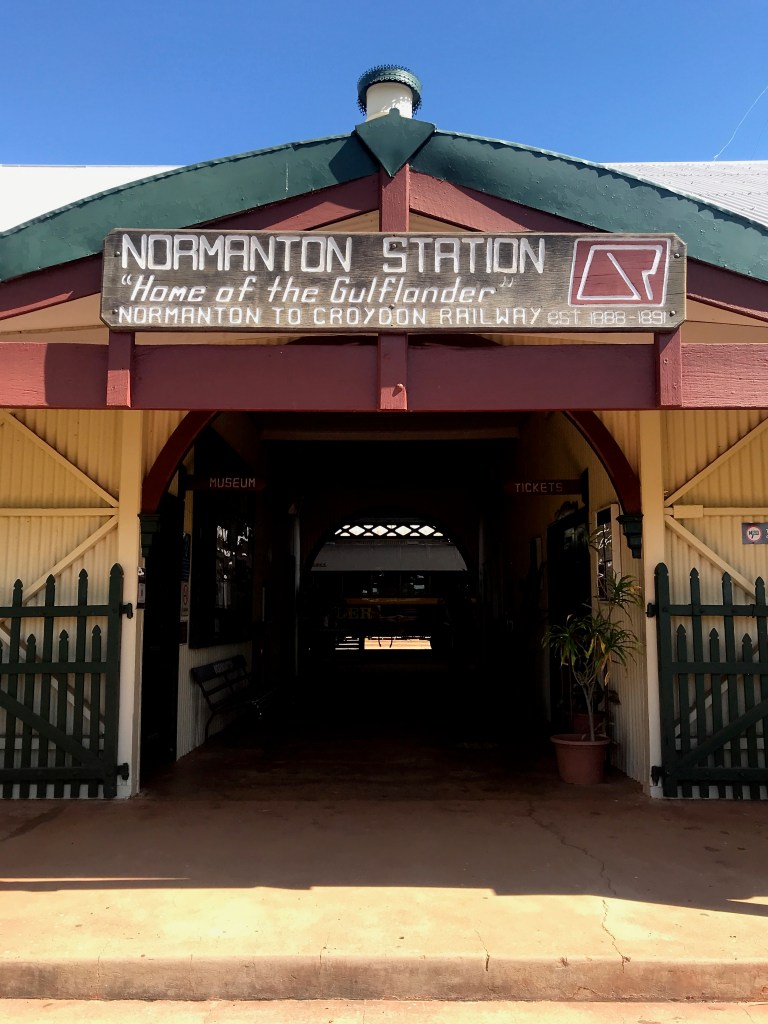
Main Entrance
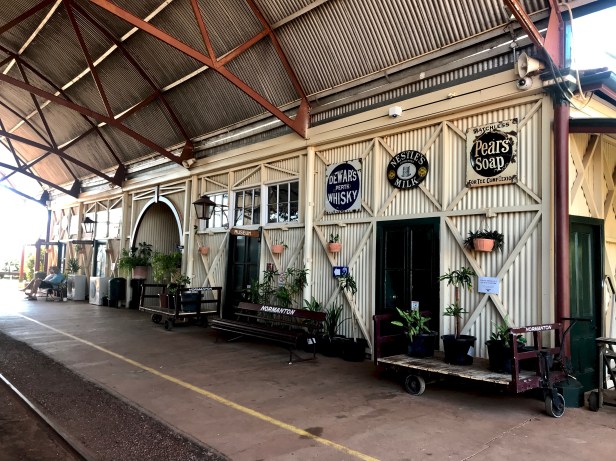
Platform 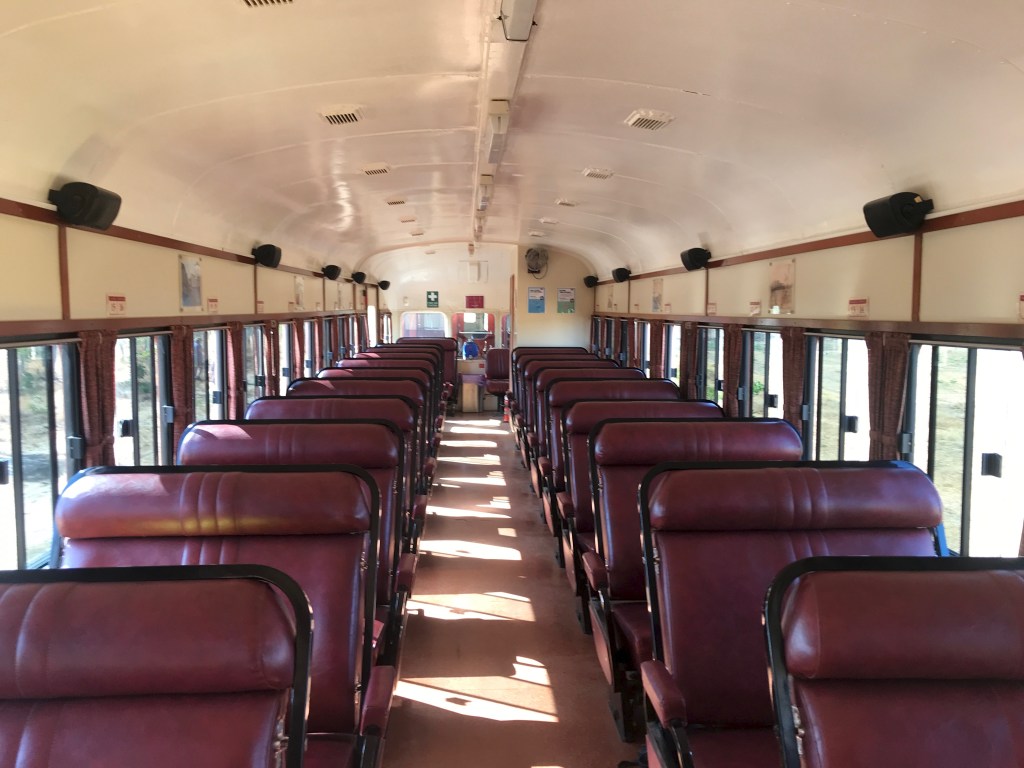
Inspectors carriage
The technological innovation of the Gulflander service was its construction on concave steel sleepers that were laid on the ground surface rather than on a created embankment. The rationale was that the construction was more practical for a railway which flooded regularly. The ballast of a conventional rail construction would be damaged with each flood event and require extensive maintenance. The approach was trialled near Ipswich and proved viable. The use of the service continues today now as a tourist enterprise. It has been in continuous operation despite the fortunes of Croydon fading as its gold mining dried up.
Karumba on the Gulf meanwhile has an active connection with primary produce from both the sea and land. Its fishing and prawning fleet are important contributors to the economy of the town. There is a sizable industry area within the town that caters for cattle export facilities and meat related works. Barramundi fishing has a particularly important association for the town for both amateur and commercial fishermen. Some enterprising locals in the 1970’s saw the stocks of barramundi diminishing and took it upon themselves to ensure a sustainable harvest for everyone with a restocking initiative for the local river systems. Barramundi have a complex life cycle spending the early part of their life in freshwater, then parts in saltwater. A large complex, known as the Barra Centre has resulted. This remarkable local enterprise grows barramundi stocks and provides an informing tourist experience for its many visitors. It relates primarily to barramundi but also features more broadly fishing and prawning in the Gulf. The free exhibition centre (tours of the fish growing areas are available too at a cost) is very well done and also showcases some local initiatives such as indigenous projects trying to collect discarded fishing nets in the gulf. Barramundi fishing is important for many visitors to Karumba and the Gulf.
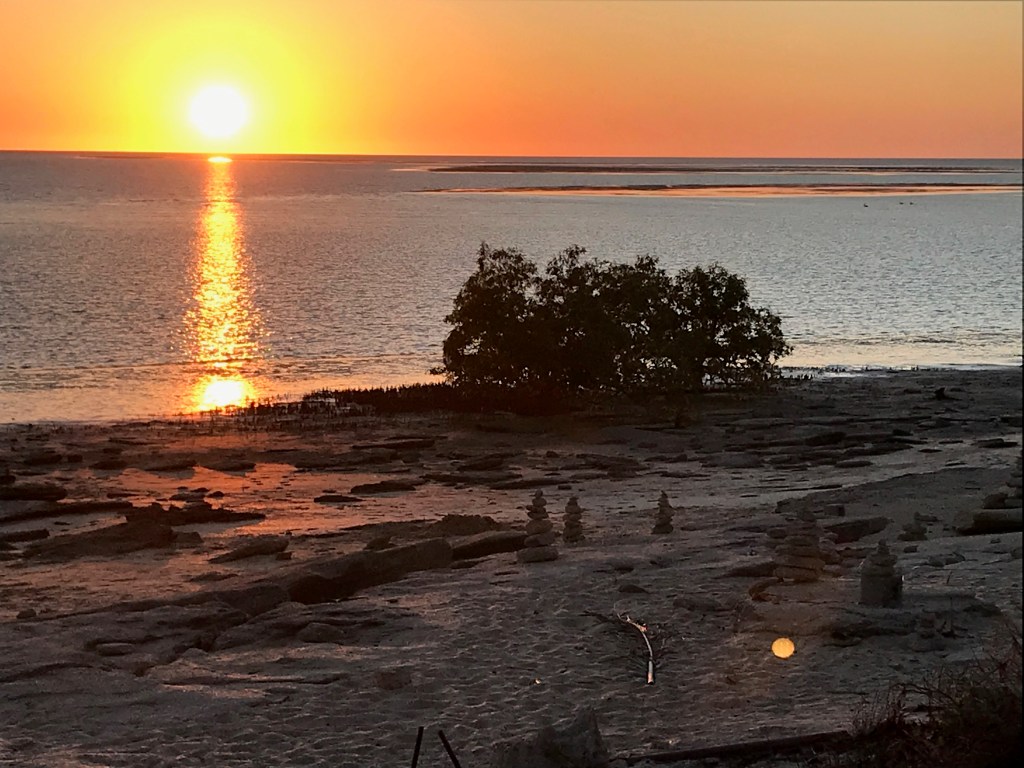
Karumba sunset over the Gulf 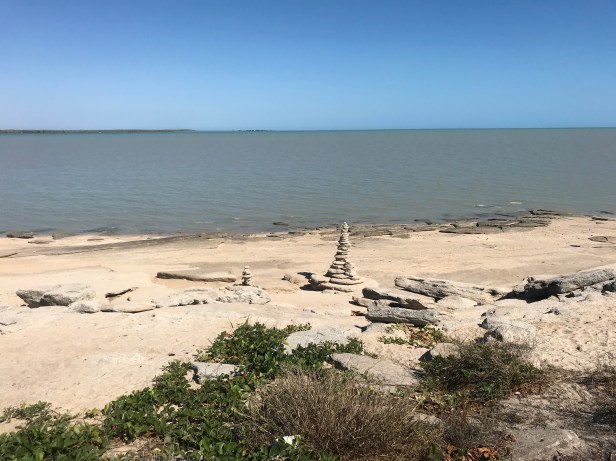
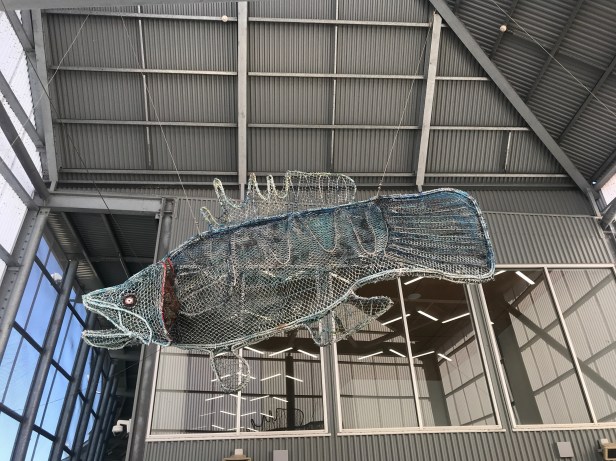
Artwork made from discarded nets at Barra Centre
We also heard about how the Gulf of Carpentaria has only one tide cycle a day unlike everywhere else that has two. It is due to the flow in and out of the gulf counteracting the effects of one of the tides. The Gulf is different!
We had some noteworthy wildlife encounters as we approached the Gulf too. Apart from lots of waterbirds, our best sighting was a flock of several hundred brolgas outside of Karumba. It was spectacular. We saw a couple of groups of Sarus cranes in the wetlands near to Normanton too and also several bustards – I’m a fan.
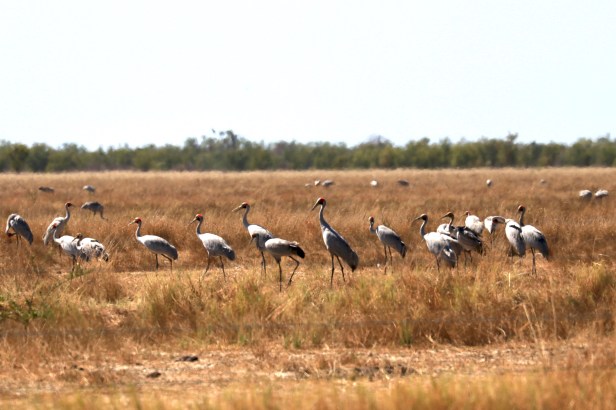
Brolgas near Karumba 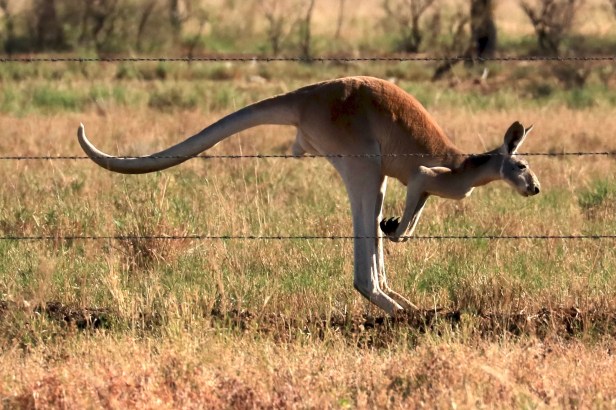
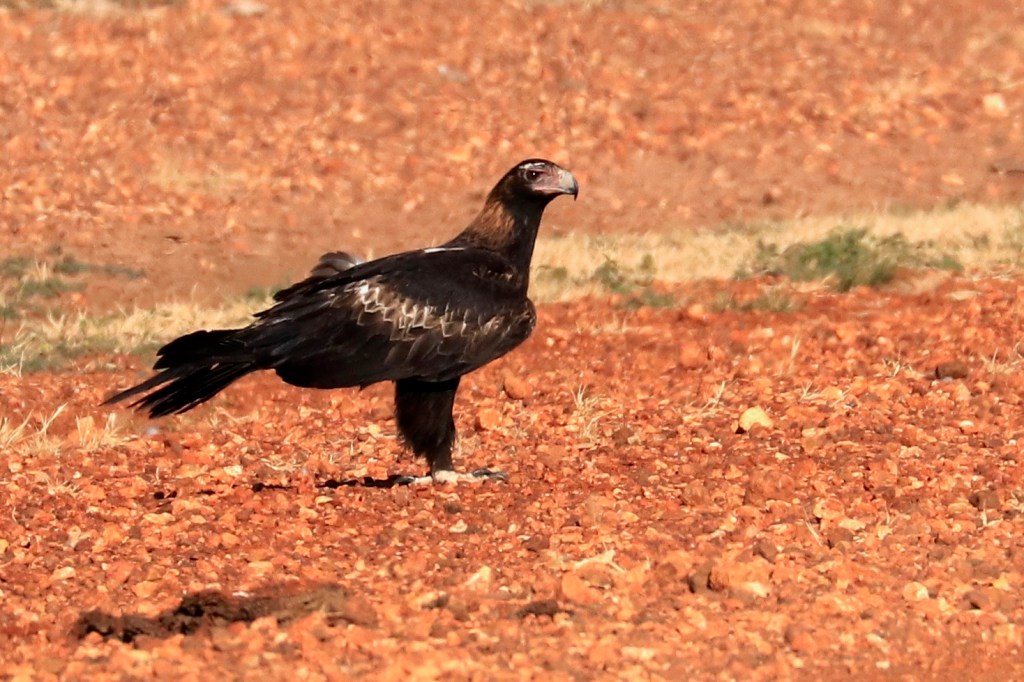
Wedge-tailed Eagle 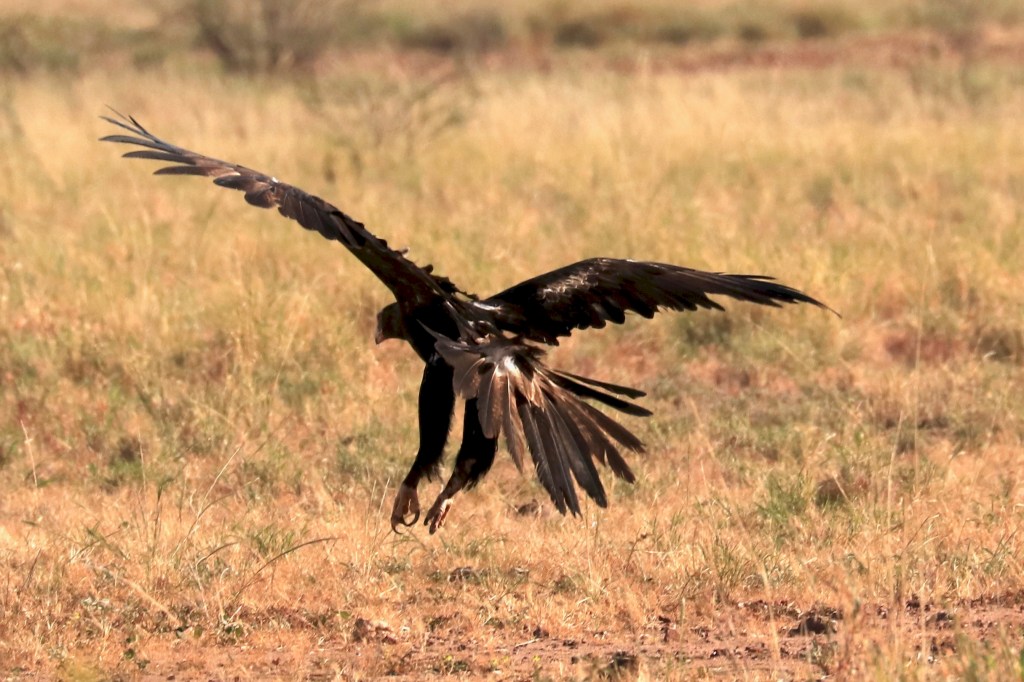
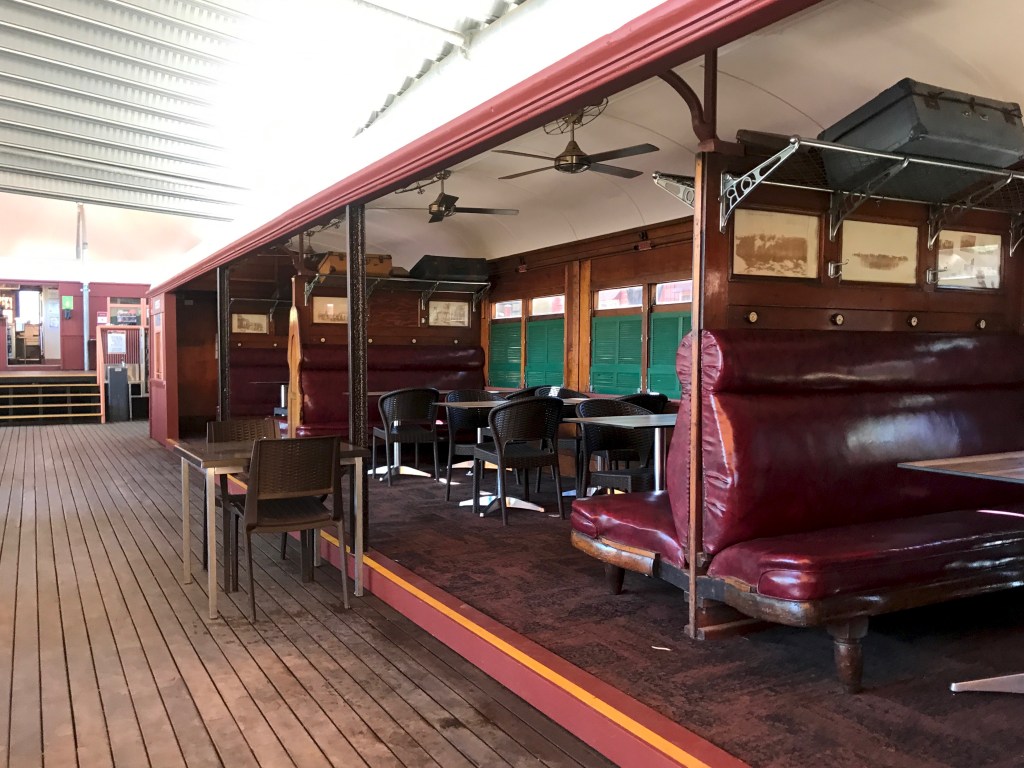
Undara HQ 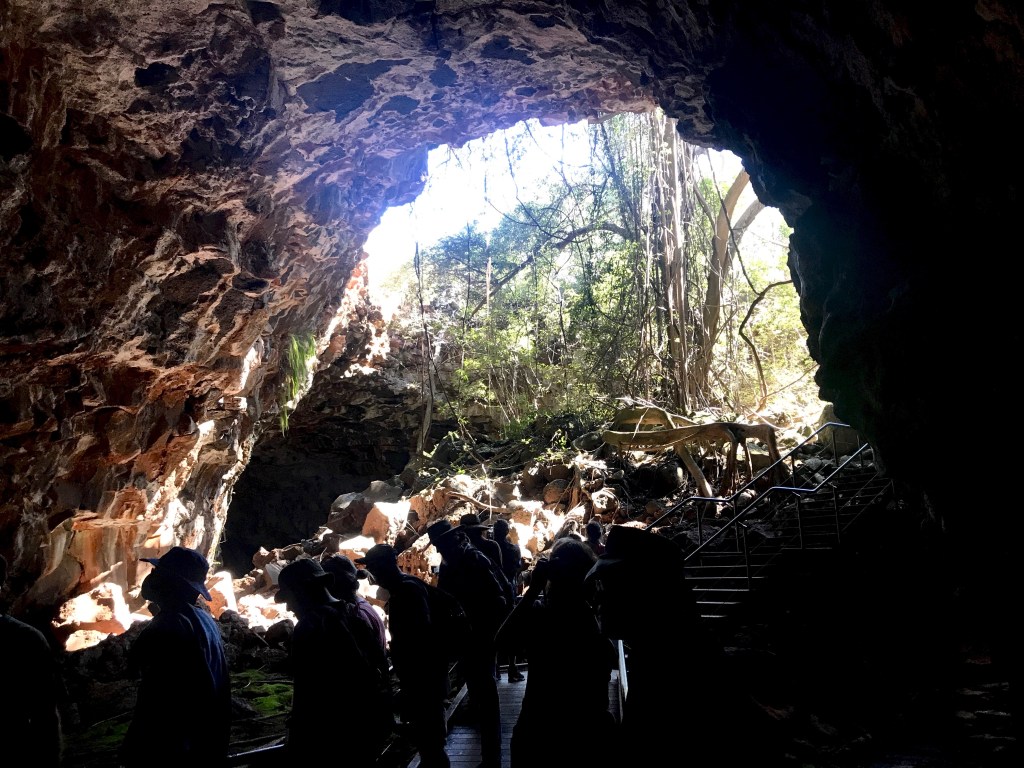
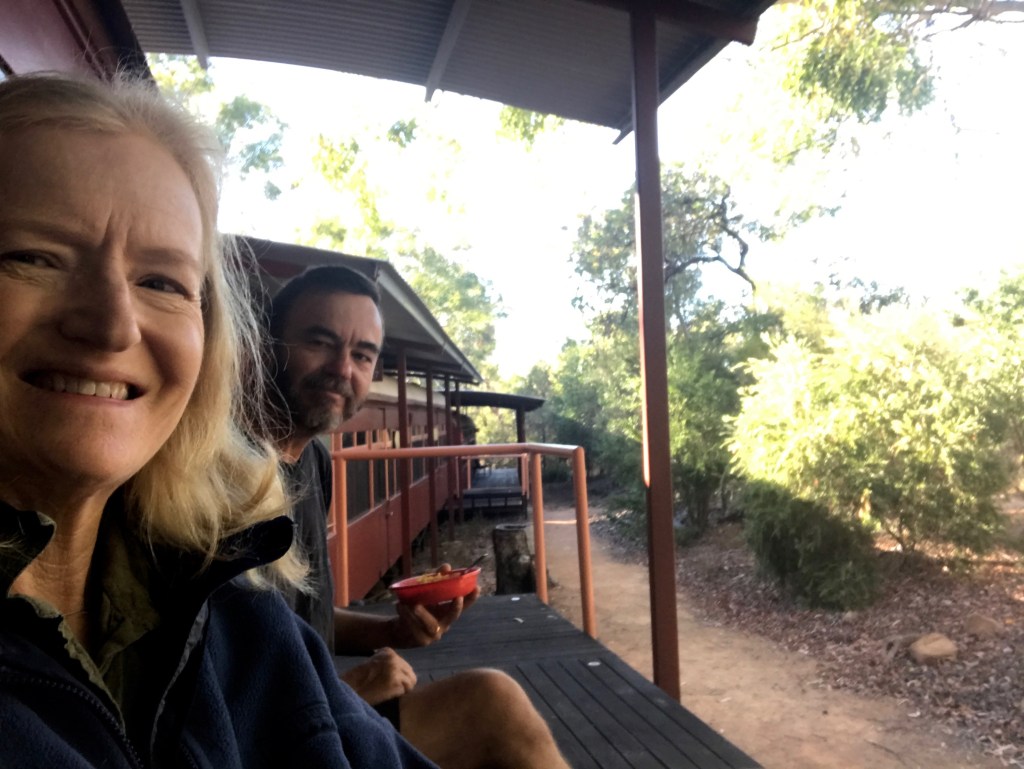
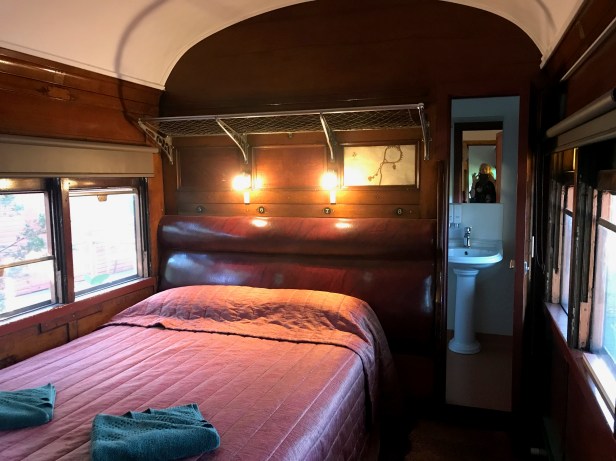
Great rooms
Our last stop en route to the Atherton Tablelands was Undara. Continuing a train theme, the accommodation option of train carriages was very special. We had a half carriage that comprised a bedroom, bathroom and small lounge. It was in exquisite condition and had the Queensland Rail features of the drop down windows etc. It was so well done. The lava tubes were really interesting too with only a small number of sections open for visitors. We visited 3 adjacent sections that had become caves as a result of roof collapses. The guides explained the uniqueness of the tubes as part of the world’s longest lava flow of 160km. I look forward to more time there at some stage. Our next stop would be the Wet Tropics.
 Marian's Travel Blog