
Kakadu has the spectacular Arnhem plateau in the east and is relatively flat, otherwise comprising the expansive wetlands of the East Alligator River and adjacent waterways and open scrub / savannah country. The Arnhem Plateau and outlying outcrops forms a magnificent backdrop for the landscape of the park. This plateau extends down to Katherine Gorge in the south and across Arnhem land.
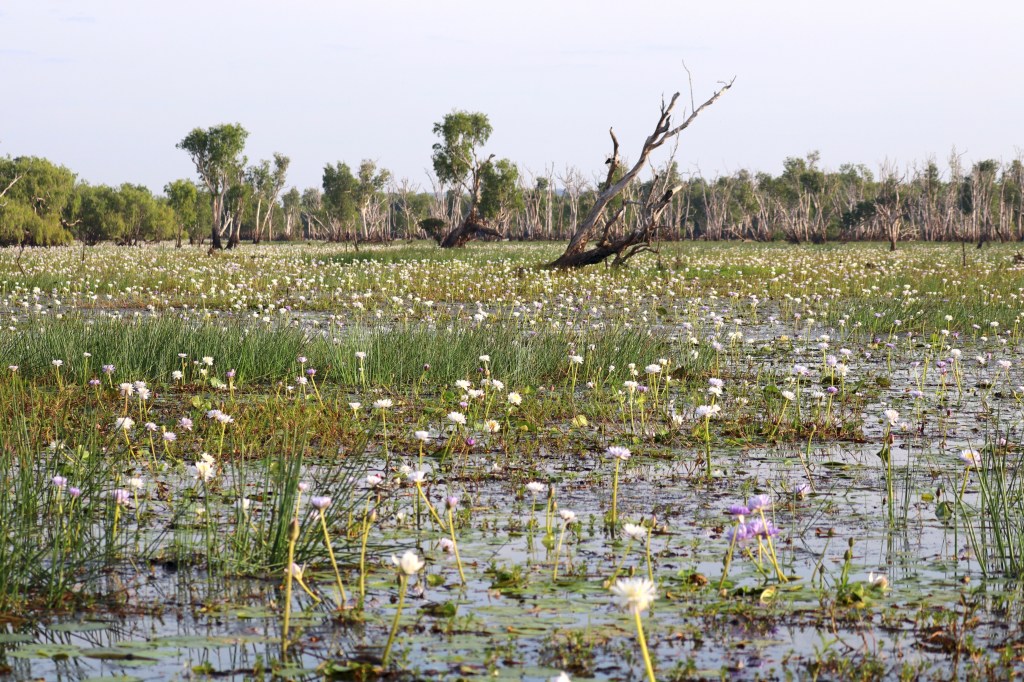
Sandy Billabong 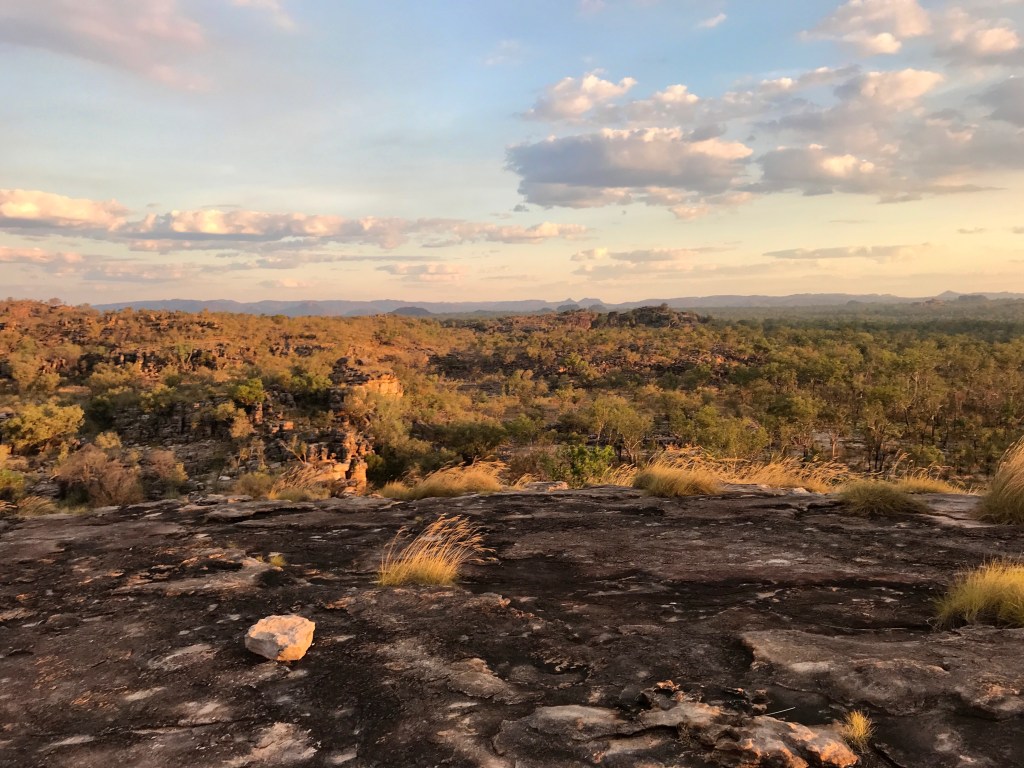
Looking south from Ubirr
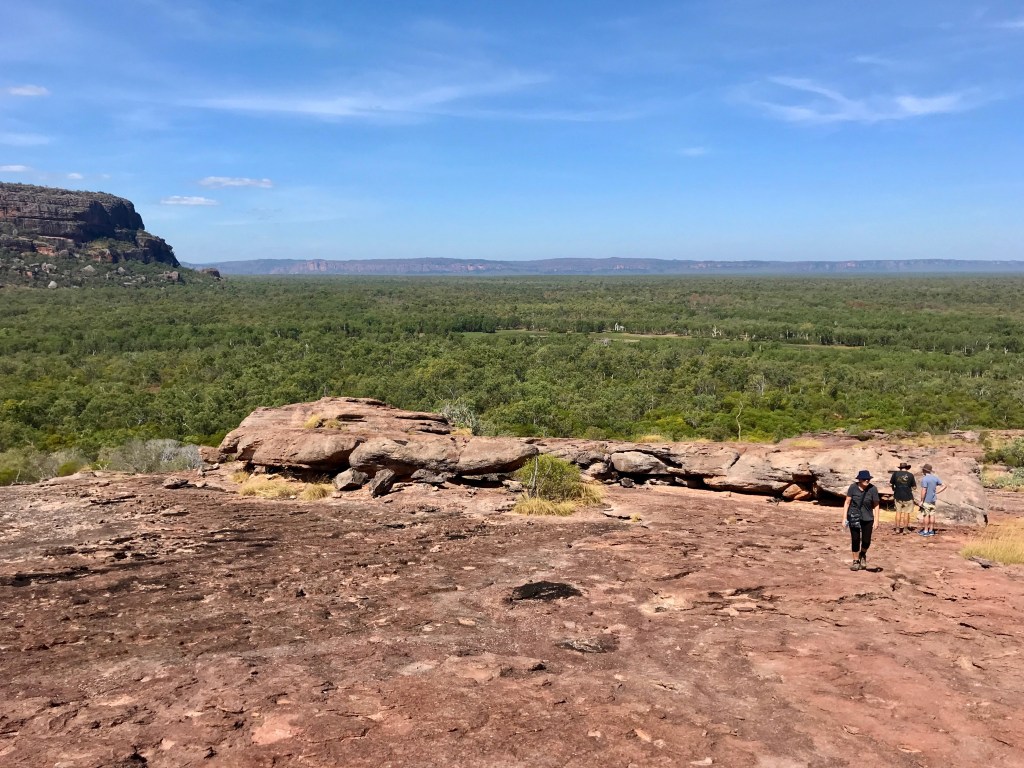
Lookout near Nourlangie 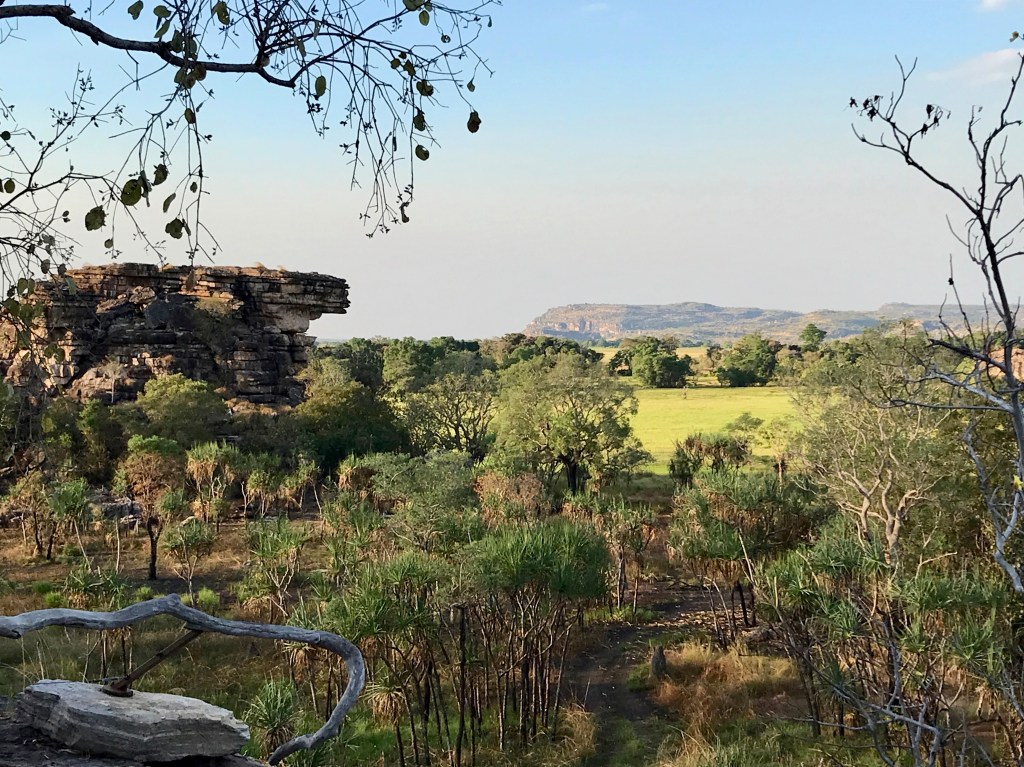
View towards Arnhem Land from Ubirr
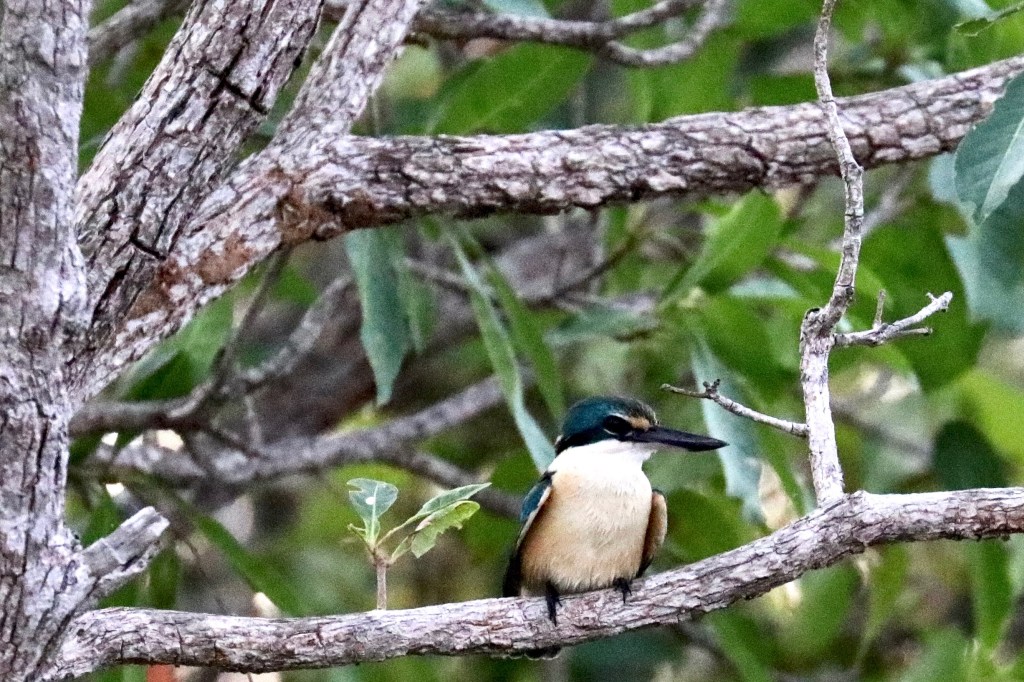
The wetlands are magnificent with lots of birdlife at this time of year. As the dry season continues, waterways and waterholes contract and birds congregate at the permanent wetlands. It is hard to comprehend the difference in the water level of the wet seasons and the dry and how much of the low lying landscape would disappear.
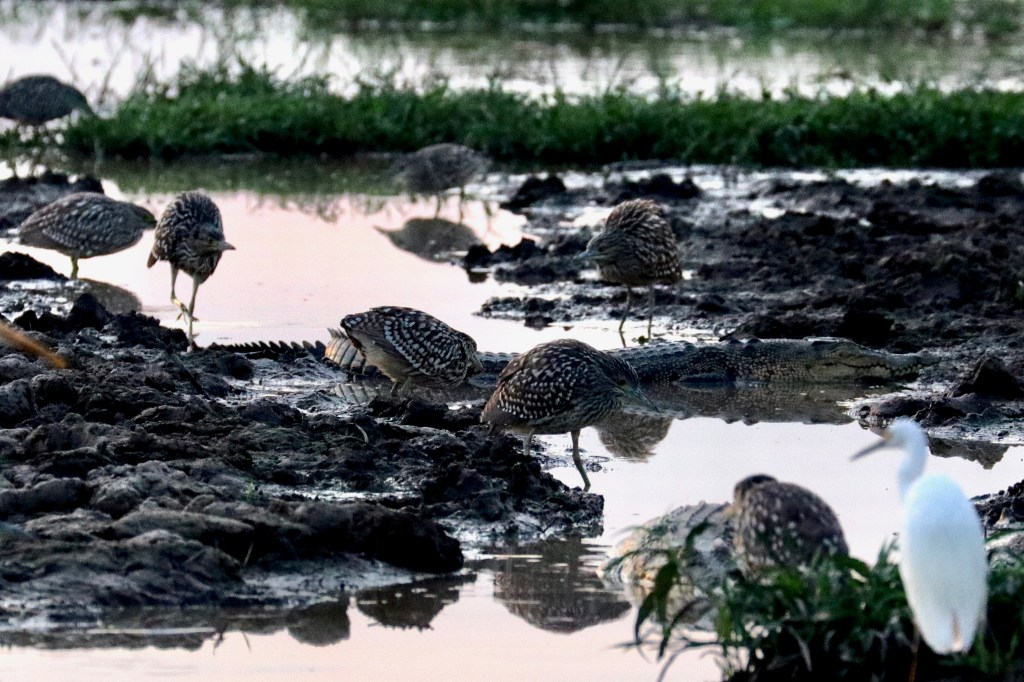
Two crocodiles lurking near juvenile Night Herons – one in foreground – won’t end well
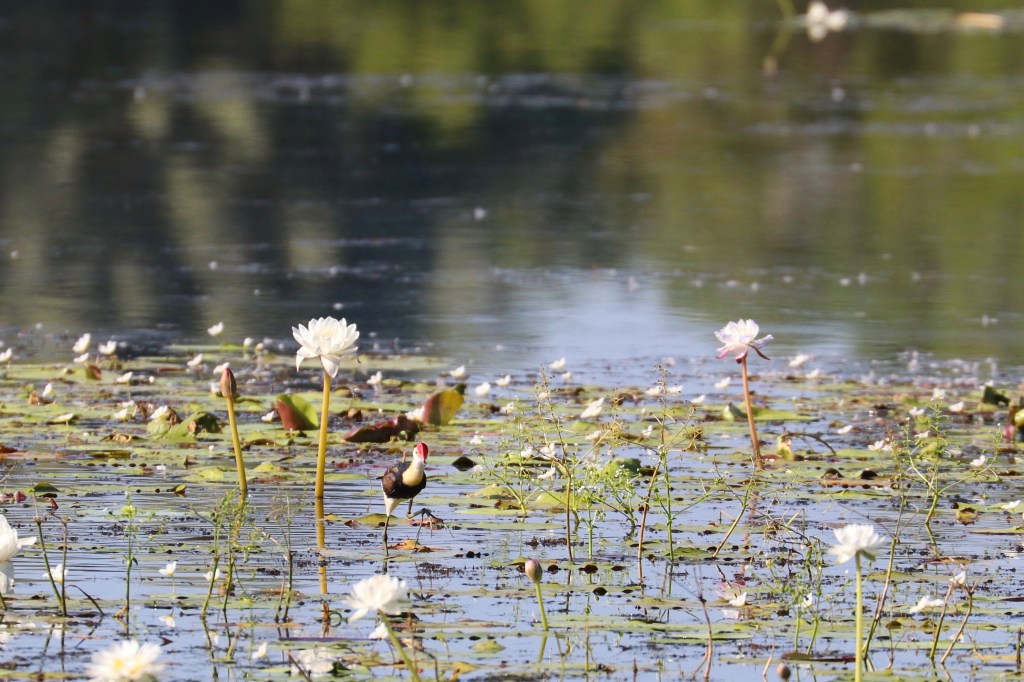
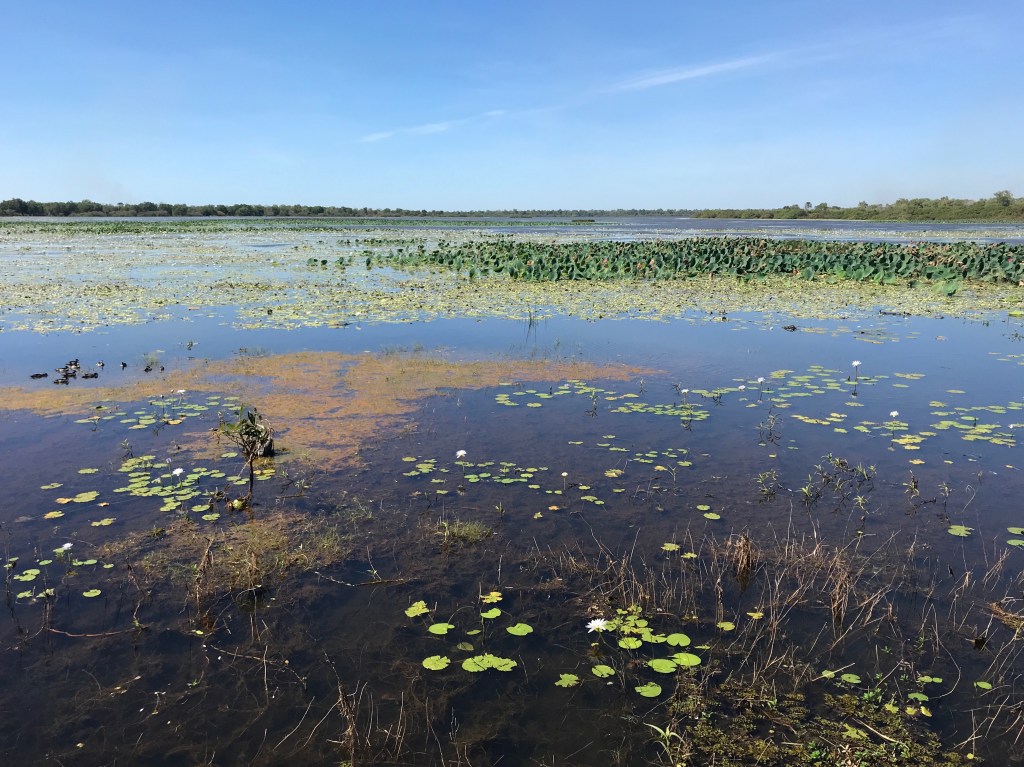
Mamukala Wetland
The heat and mosquitoes were less welcome. The heat is intense (resort pools are popular) and the mosquitoes near waterways are persistent and numerous. At our campground Merl in the north, we erected a bug proof shelter to enjoy cards and a retreat in the evenings. Outside conditions with the critters would have been intolerable.
The cultural heritage aspects of Kakadu are fascinating. The local indigenous communities participate in the management of the park and provide insights on the culture and array of rock art within the park in various ranger talks and activities. We were fortunate to attend talks at both Ubirr in the north and Nourlangie in the south. A picture of the dreamtime stories and their connection with the local landscape and the teaching of children to be a part of these complicated societies is evident. The complex notions of kinship and marriage rules were also fascinating with arranged marriage still considered an option for some locals. There are also interesting interpretative centres.
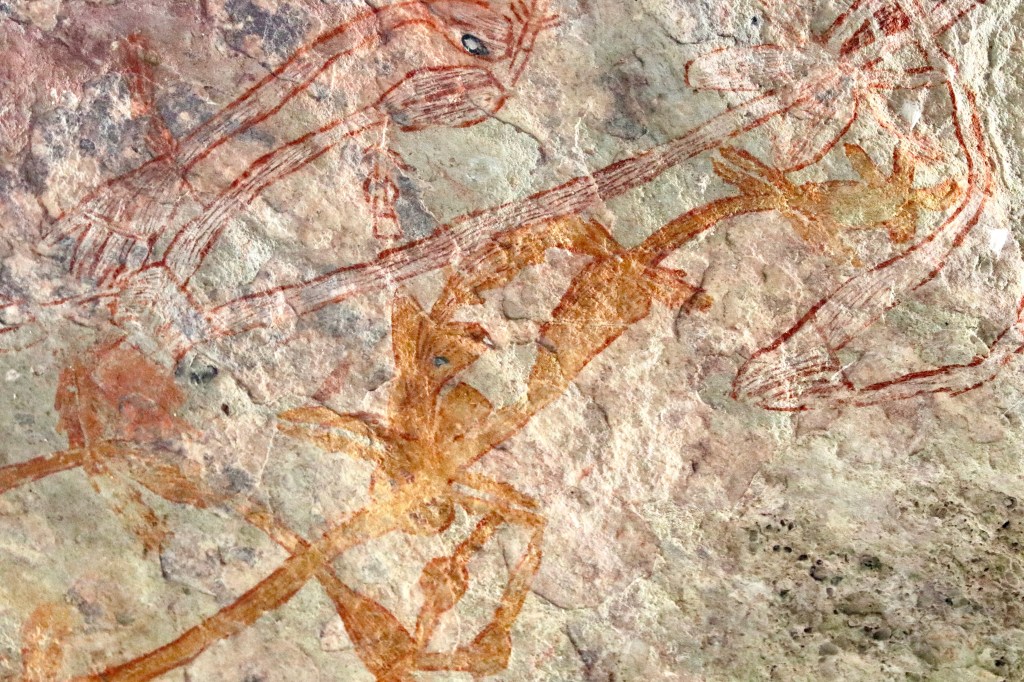
Ubirr 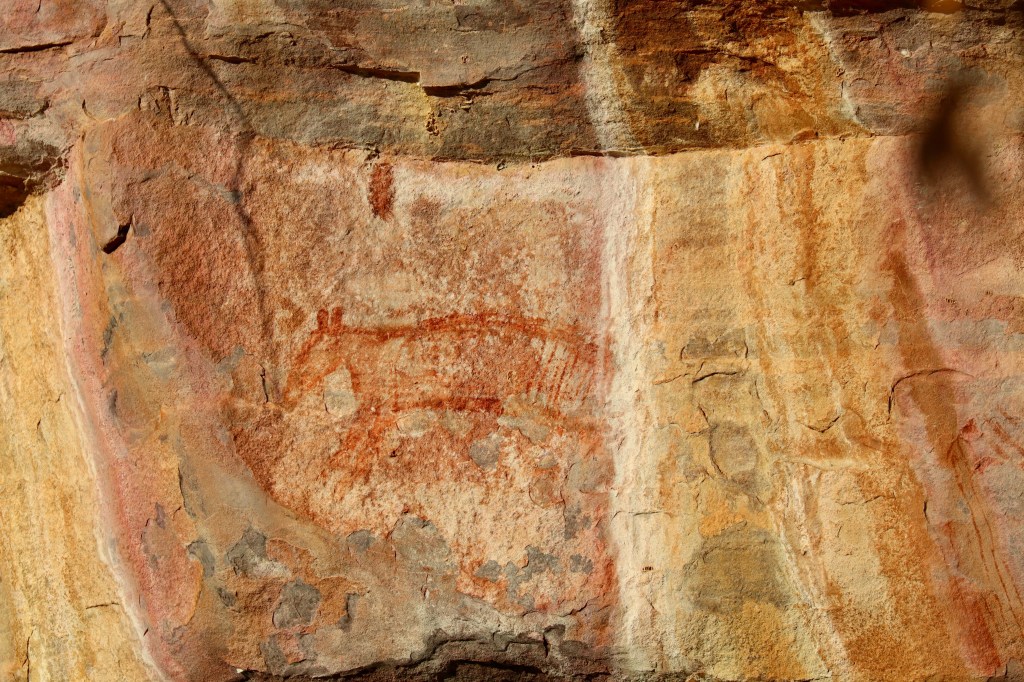
Thought to be a Tasmania tiger
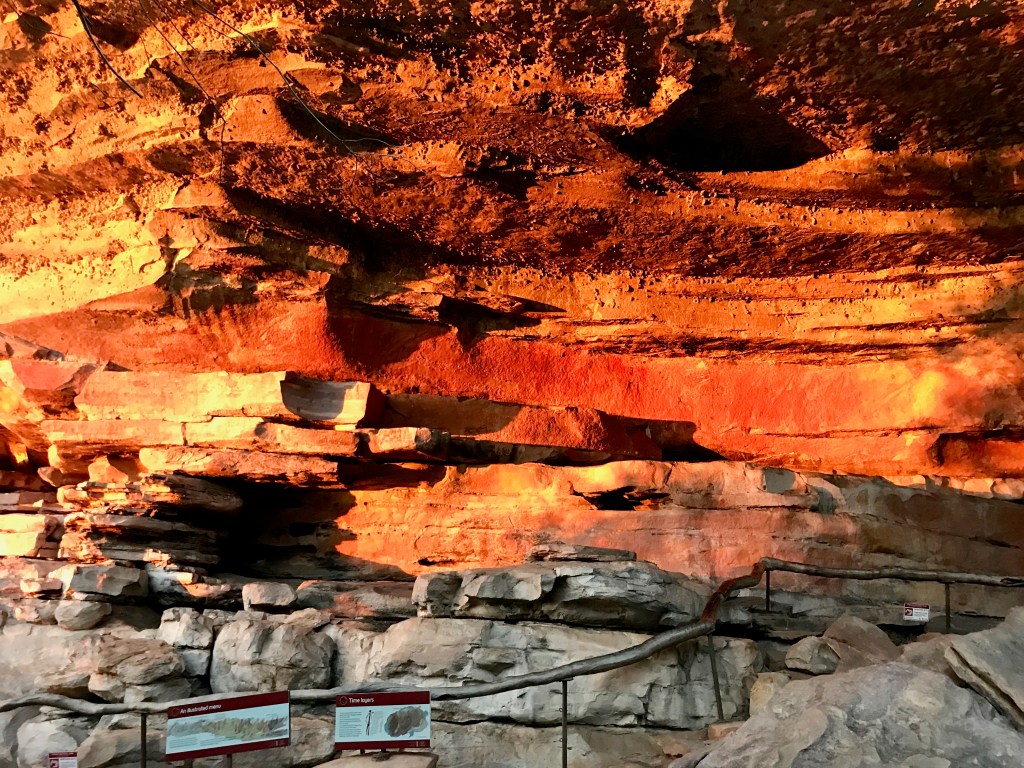
Sunset colours Ubirr 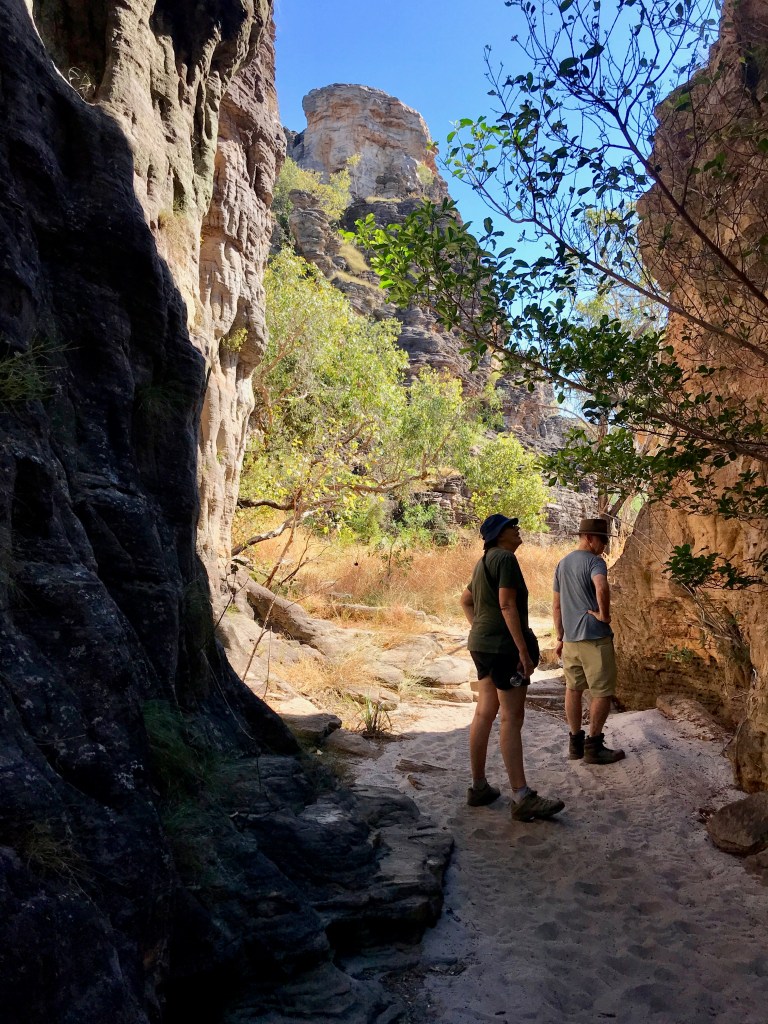
Seeing Kakadu from the air was a highlight. We flew from Cooinda, the major private camping/accommodation resort facility in the south over the Arnhem Plateau. It was spectacular with the plateau and outlying rock outcrops looming up from the plain. The scale of the extensive wetlands could also be appreciated as so much of these areas are inaccessible. However the presence of large numbers of feral animals, herds of buffaloes, horses and cows was very disappointing.
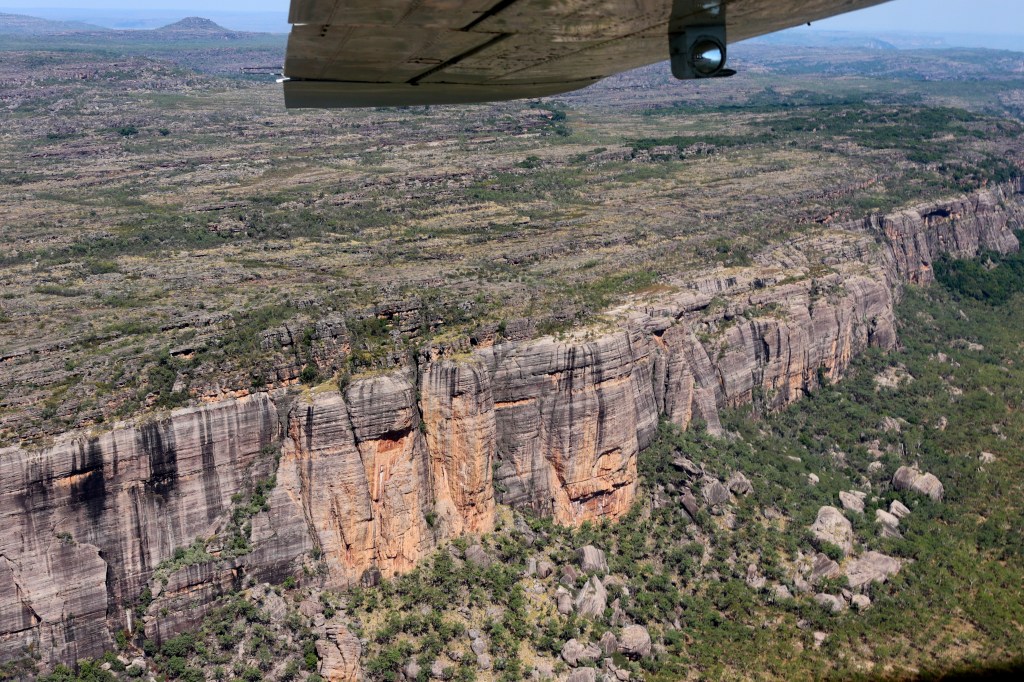
Arnhem Plateau Lightning Dreamin – the face in the rock 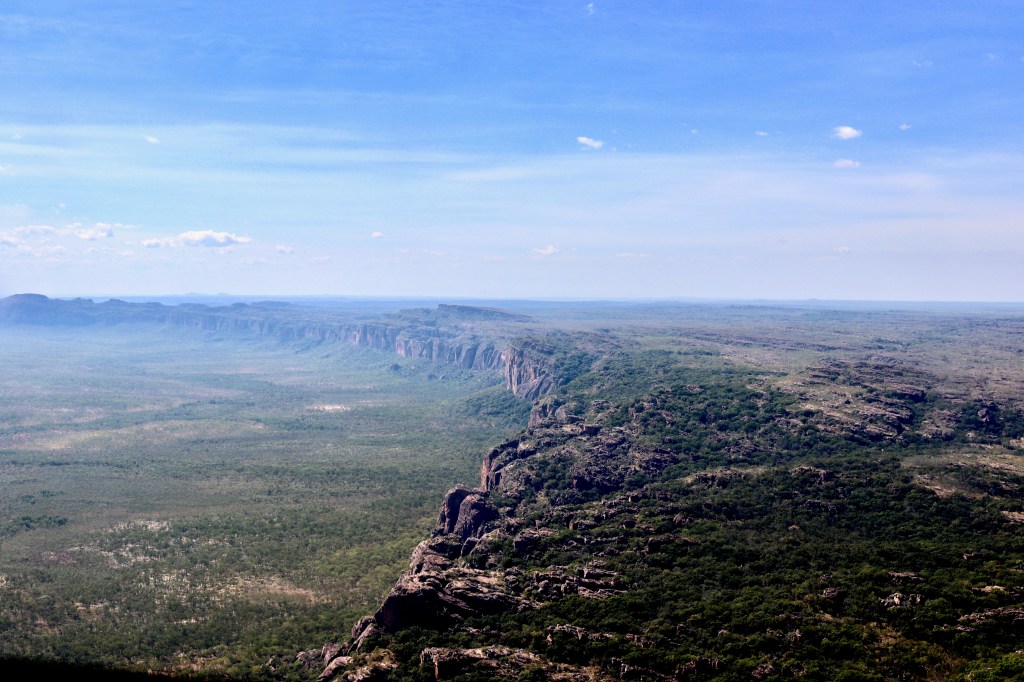
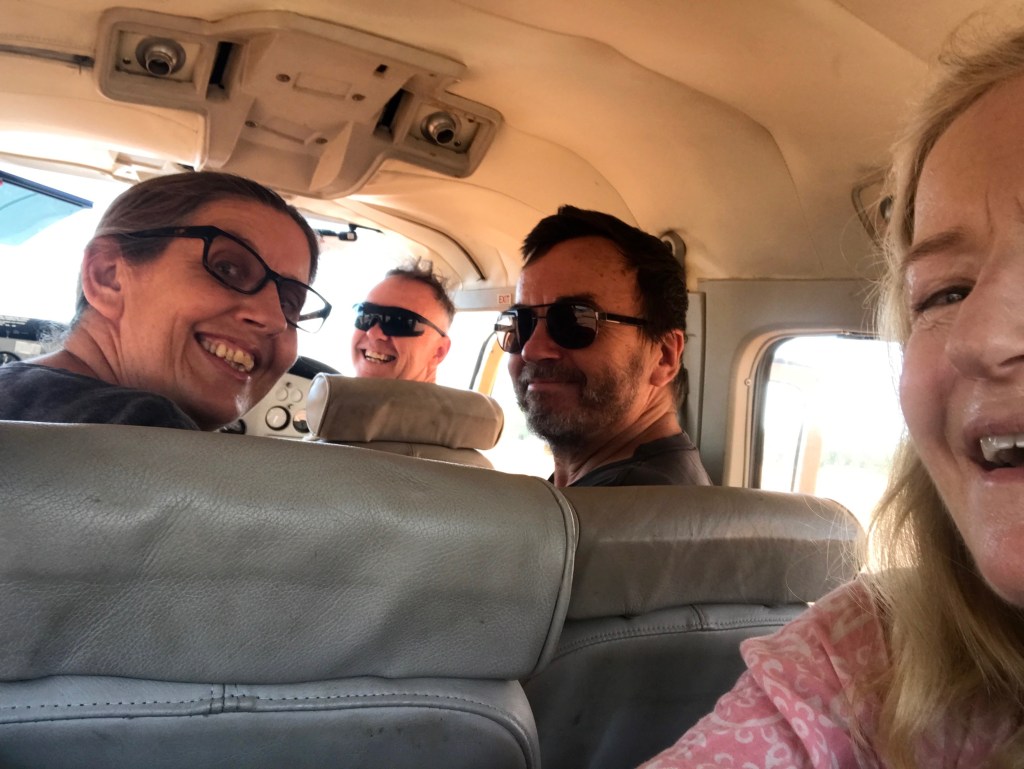
Up and away 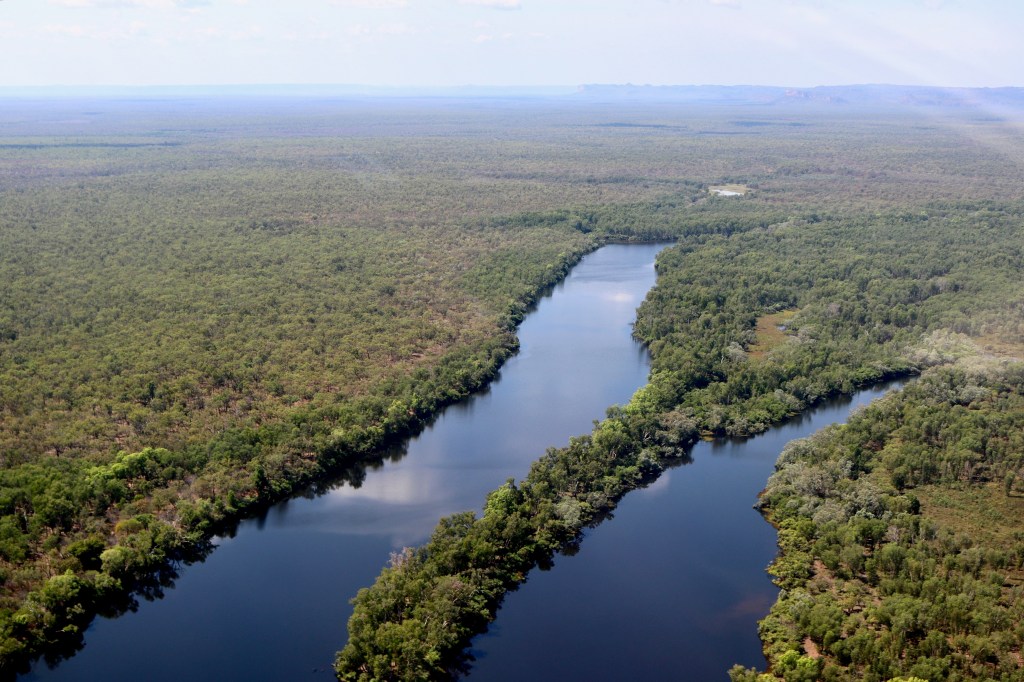
East Alligator River wetlands
It is quite difficult to access the Arnhem Plateau at present as the communities have been closed for a considerable period due to Covid concerns. There are also issues preventing access to several sites at the southern end of the park. Major road maintenance works are needed to one site and arguments are still being debated with the local community in regard to infrastructure designs and appropriateness at another. A large costly elevated walkway was constructed at one of the southern sites, which upset the local community, who have since closed down the site. Surely getting a design in a culturally sensitive area, negotiated and signed off on should happen before construction!!
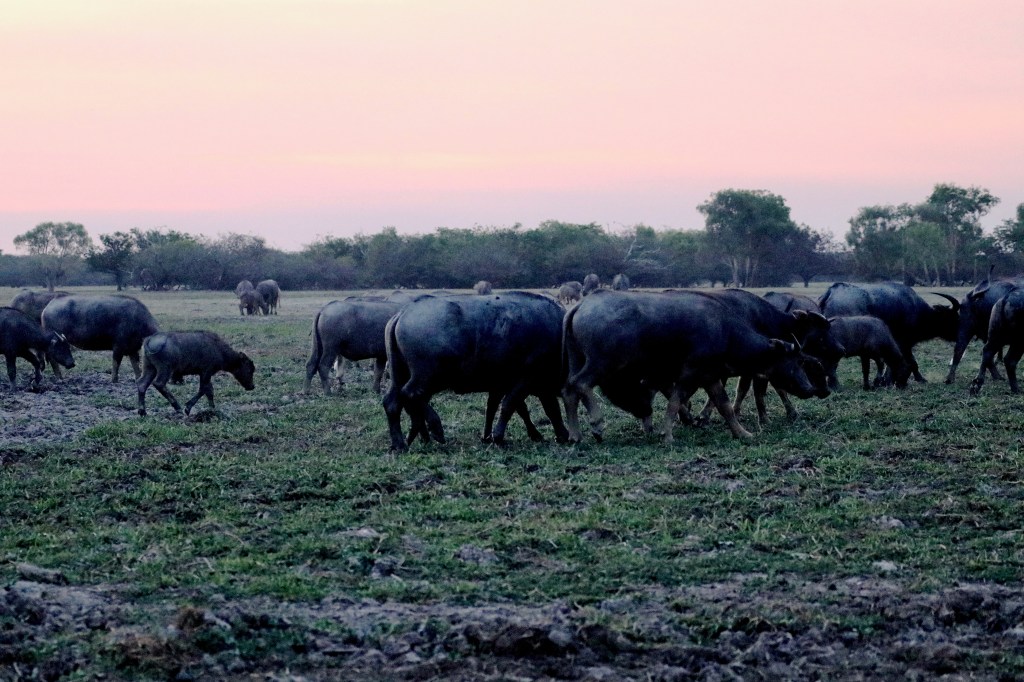
Water buffalo Yellow Water 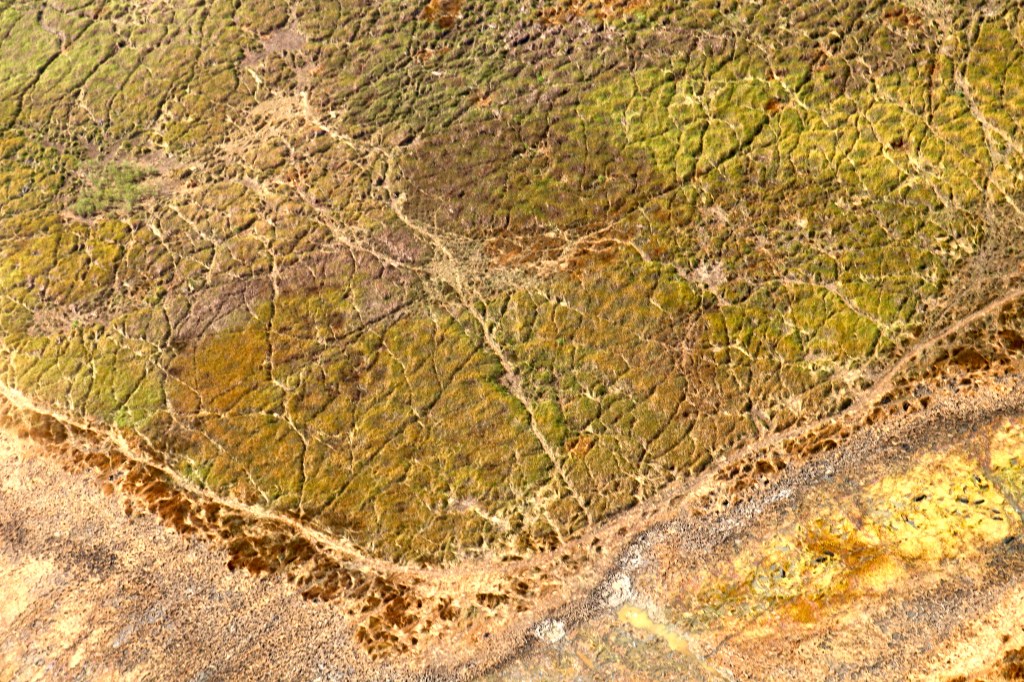
Tracks in wetlands from feral stock
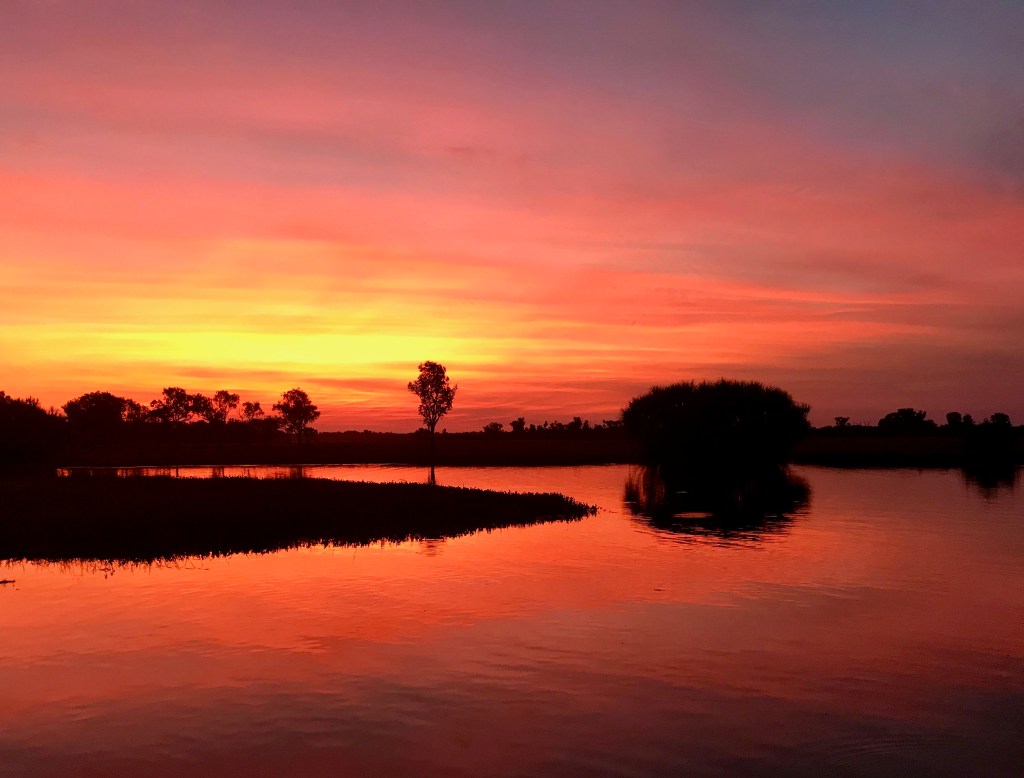
Sunset colours Yellow Water 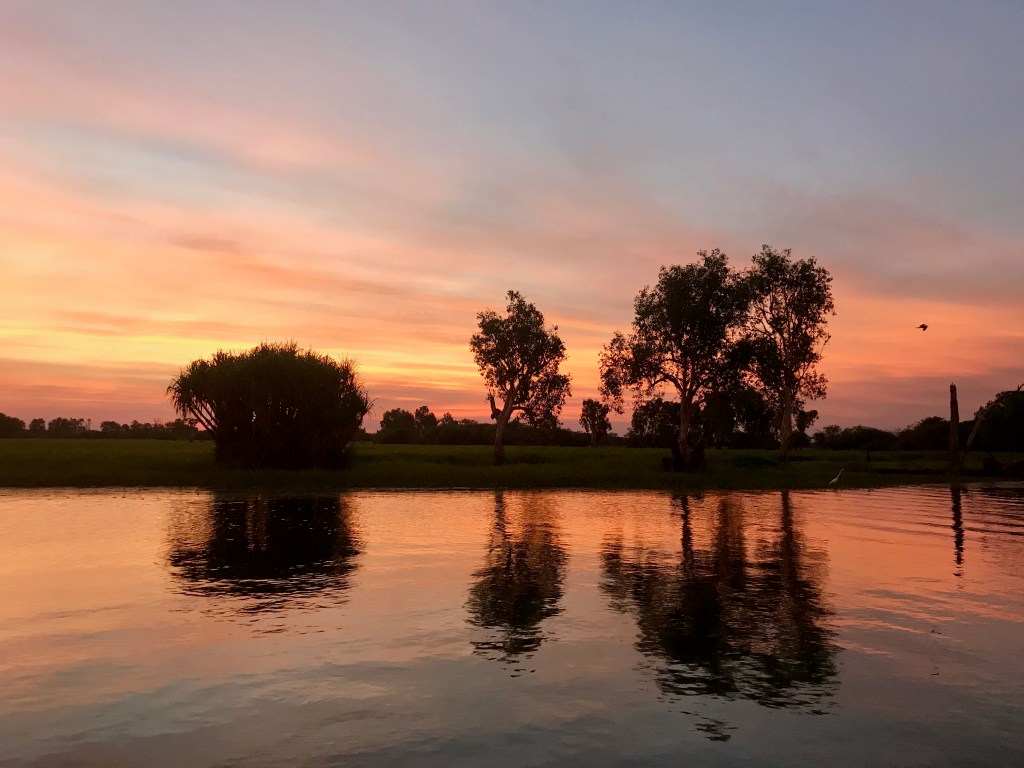
Feral animals are a very serious problem. On the Yellow Water cruise, one of the tourist highlights of the park, we saw over a hundred buffalo congregated at a singe meadow area. The hooves of buffalo, along with Kakadu’s significant populations of horses, donkeys and pigs destroy the delicate soil structure and plant life of these wetland ecosystems. Sadly, they are not likely to encounter crocodiles which do not venture far from the water. Cane toads, which have devastated other animal populations also sadly pose no threat to these herbivore pests. This is notwithstanding the impacts of feral carnivores of cats, dogs and foxes on local animal populations. It has been estimated that 80% of Kakadu’s small mammal populations have disappeared. Apart from birds and crocodiles, we certainly saw very few animals apart from feral species.
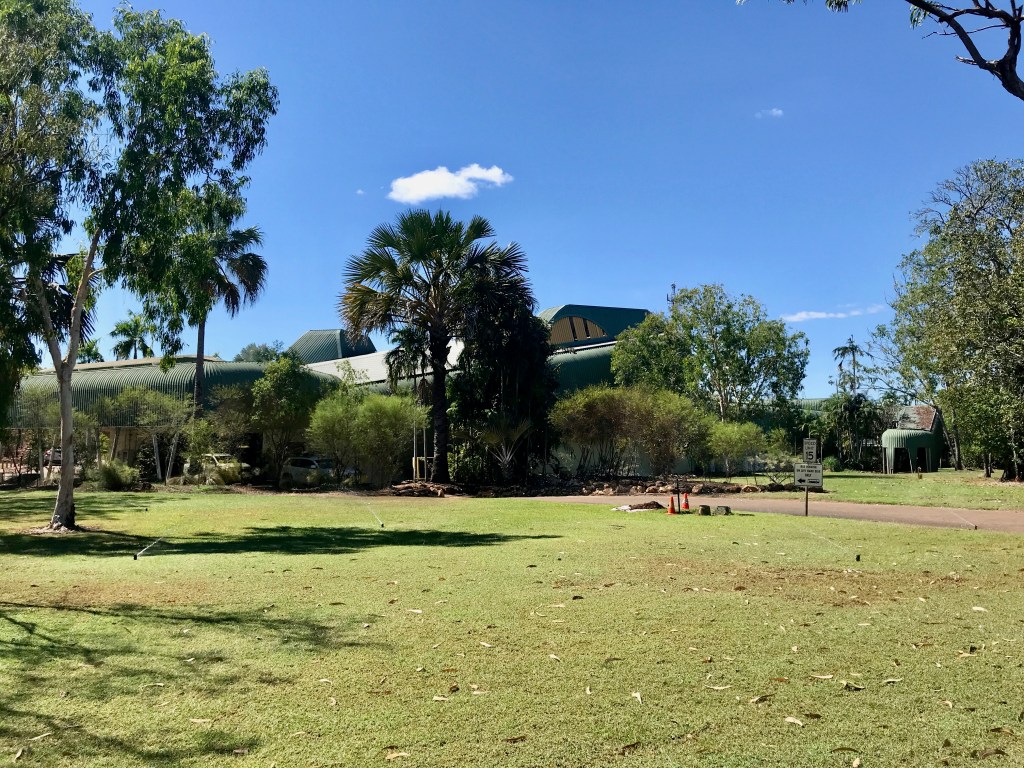
Crocodile shaped hotel, Jabiru, porte-cochere(left) is the snout, windows the eyes, side wing the feet …
There is a lack of effective management in Kakadu with this feral animal issue symptomatic of the range of problems. There was a Four Corners program recently about the Park and there is evidence everywhere of the issues. It is a very special place that deserves better stewardship.
 Marian's Travel Blog