
Heading 3 hours west on the National Highway from the Purnululu junction, Fitzroy Crossing close to Geikie Gorge is a popular stop. Stopping at the first caravan park we were surprised at the scale of facilities and the number of people. There were several tour groups and lots of independent visitors. The establishment (which was also a hotel) was thronging with locals (some watching Aussie Rules) and visitors. The evening Sunday roast deal in the cavernous bistro (recommended) also drew a big crowd of diners. There aren’t a lot of accommodation options in the town and Fitzroy Crossing is an obvious place to stop between Broome and Kununurra. However, it was a lot of people.
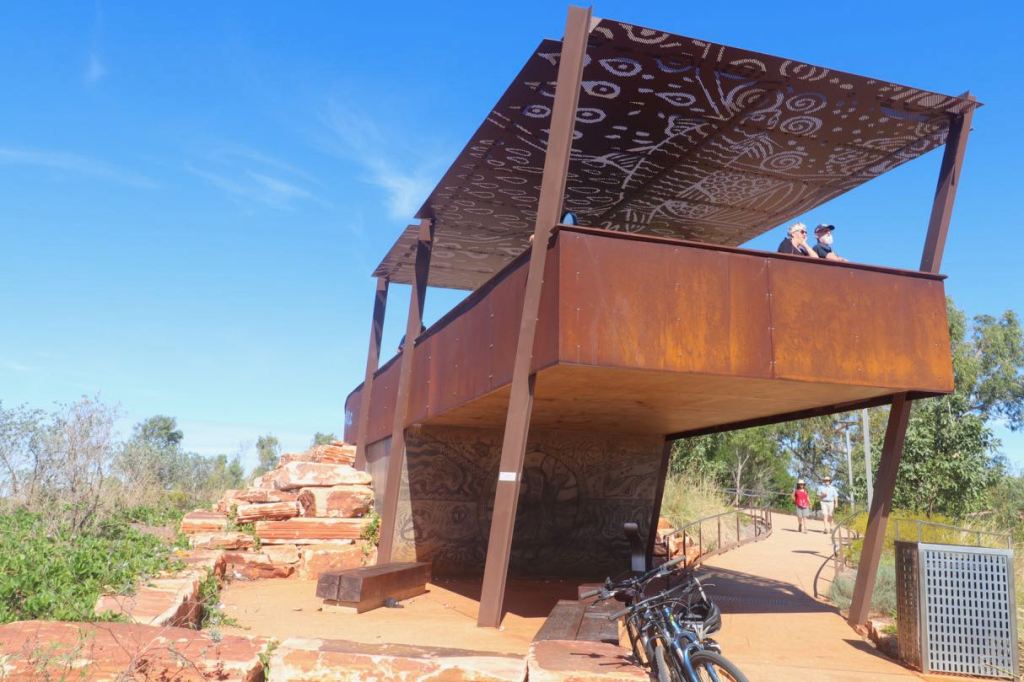
Broome Lookout 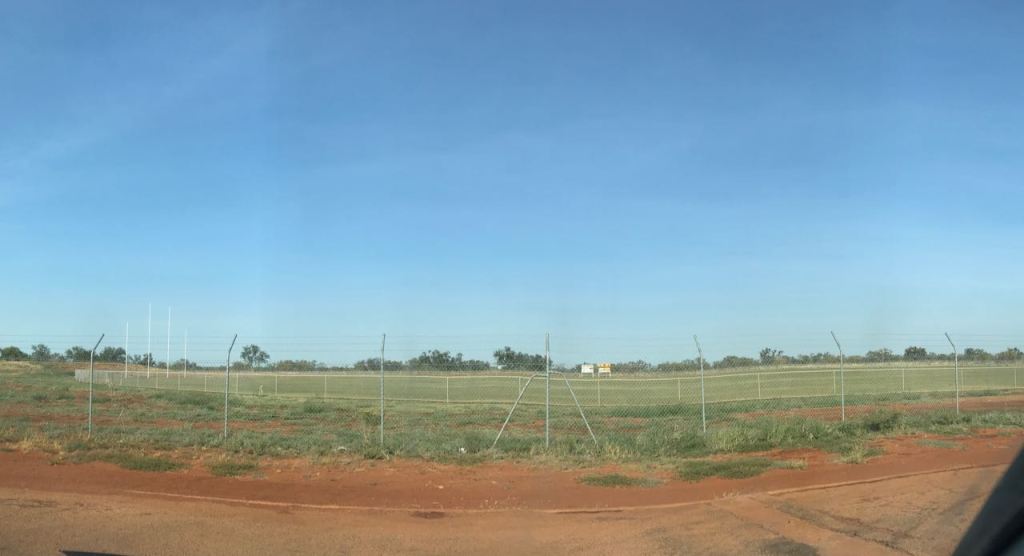
Elliot Aussie Rules field
Aussie Rules incidently, is important in the north west. Even the smallest communities seem to have a well maintained and watered field. Elliot in the NT was a classic. On the main street, there was the service station, but not much else. A nature trail was signposted behind the service station revealing a couple of discreet side streets and maybe 50 houses and a very impressive Aussie Rules field.
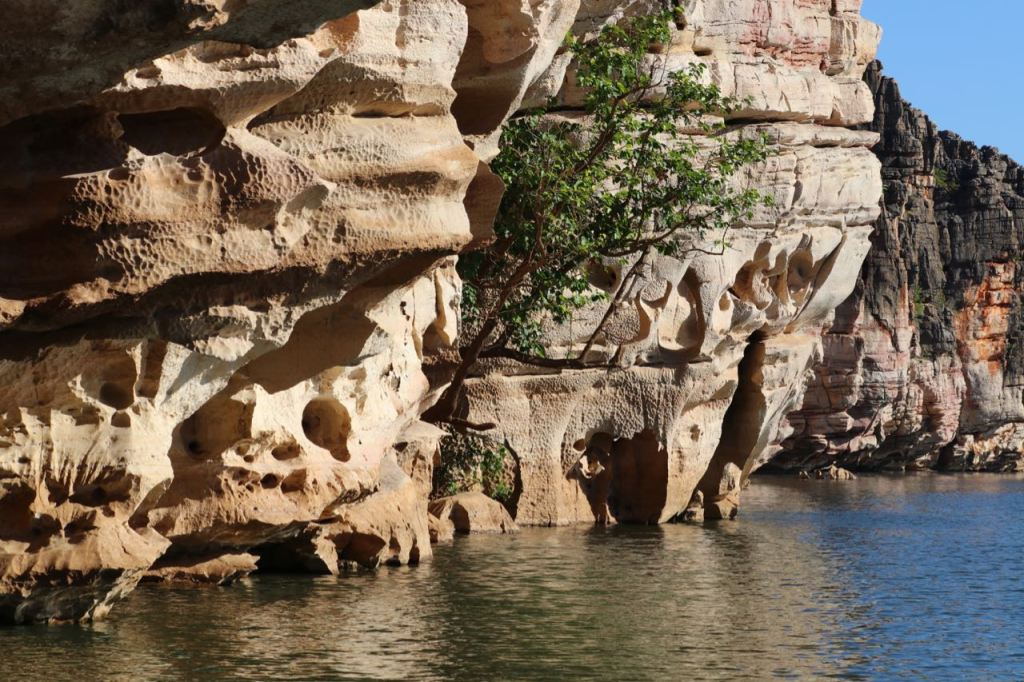
Geikie Gorge 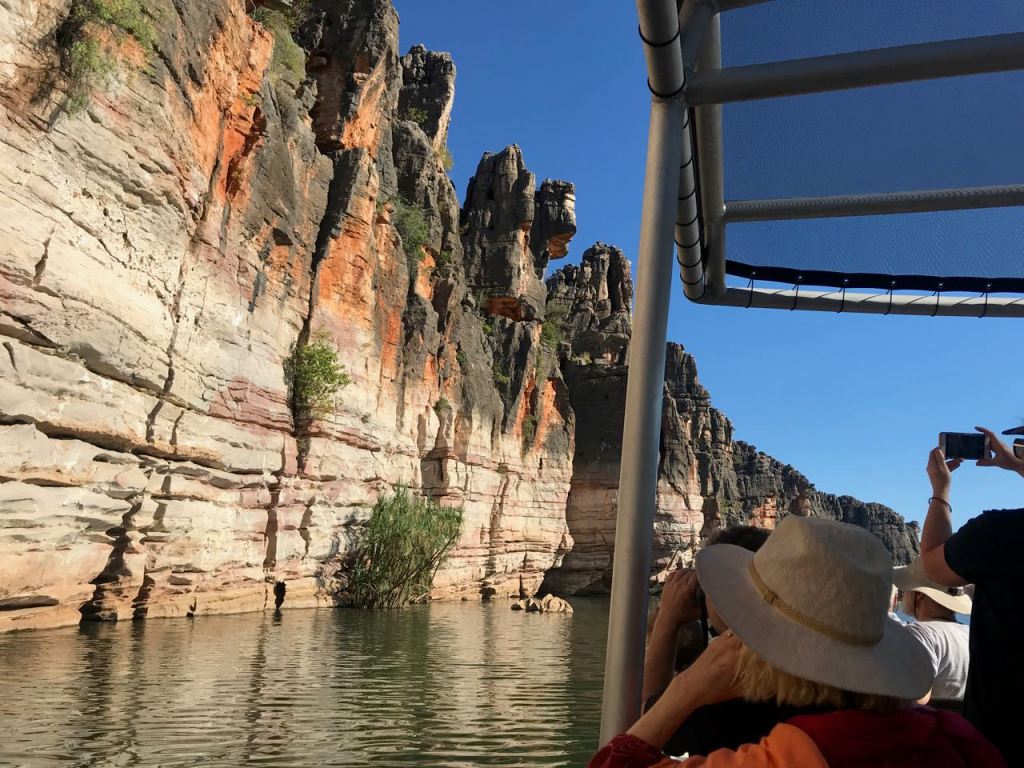
The boat trip at Geikie Gorge run by the NP people is the key local attraction. The gorge is spectacular with beautiful rock formations and we saw lots of basking crocodiles. There was discussion about some local environmental challenges with pressure from farmers to bring about the damming of the river (the seasonal flows of water in the region’s rivers in the wet season here are phenomenal with the Fitzroy River having one of the largest flows in the world), the introduction of passiflora (passionfruit) vines that had been introduced by local graziers as a food supplement that had now gone rampant in the NP and the arrival of cane toads, 18 months previously. Cane toads have killed a significant number of local crocodiles. They are trying remediation techniques including trying to teach the crocodiles and other wildlife not to eat the toads by collecting toads, killing them, removing their poison sacs and replacing it with a nausea inducing substance. These are left for the animals to eat so hopefully there will be learning about these being a bad choice. It is so sad these have arrived.
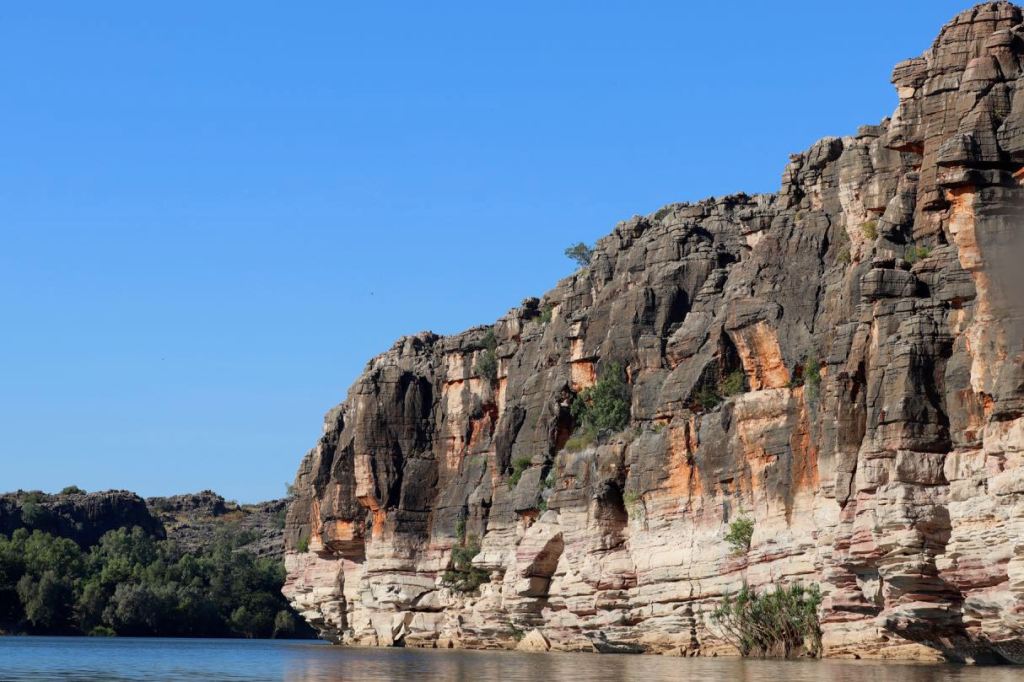
River levels reflect by cleaned stone 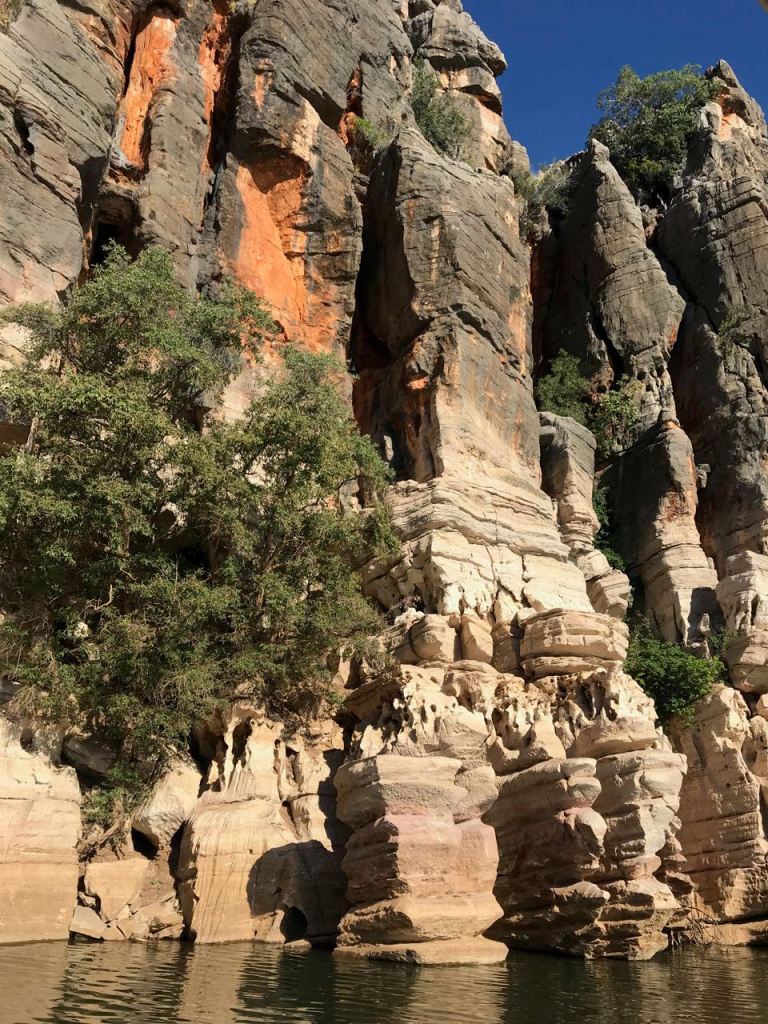
We went on a couple of short walks in the NP also along the river.
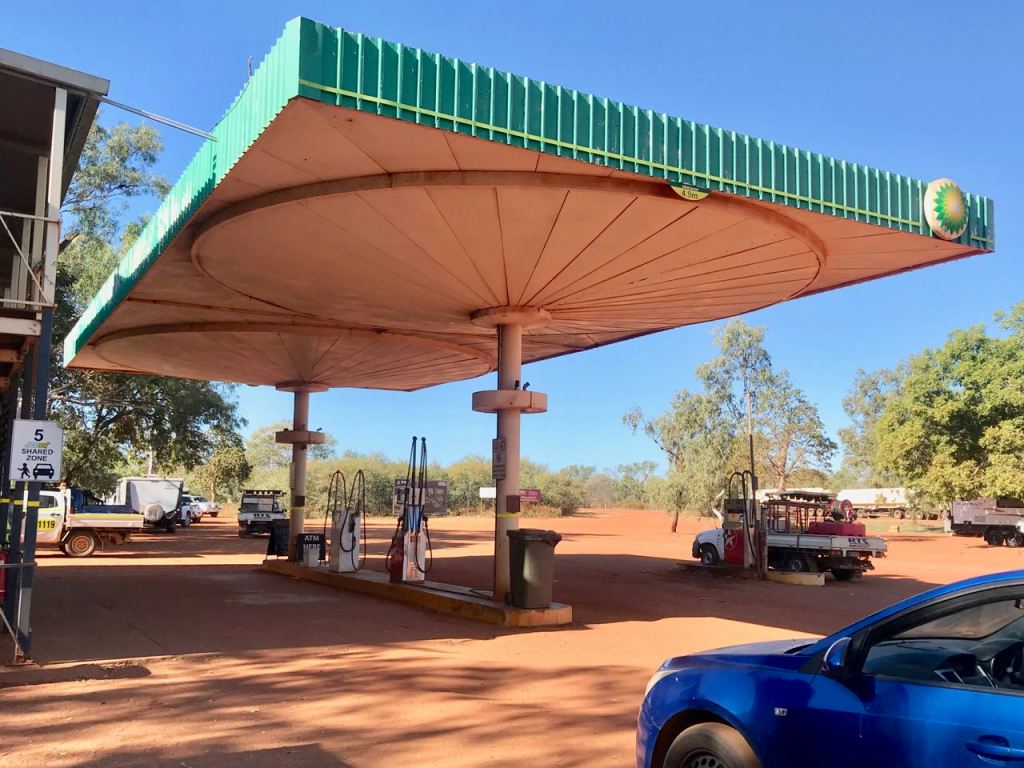
Iconic service station design 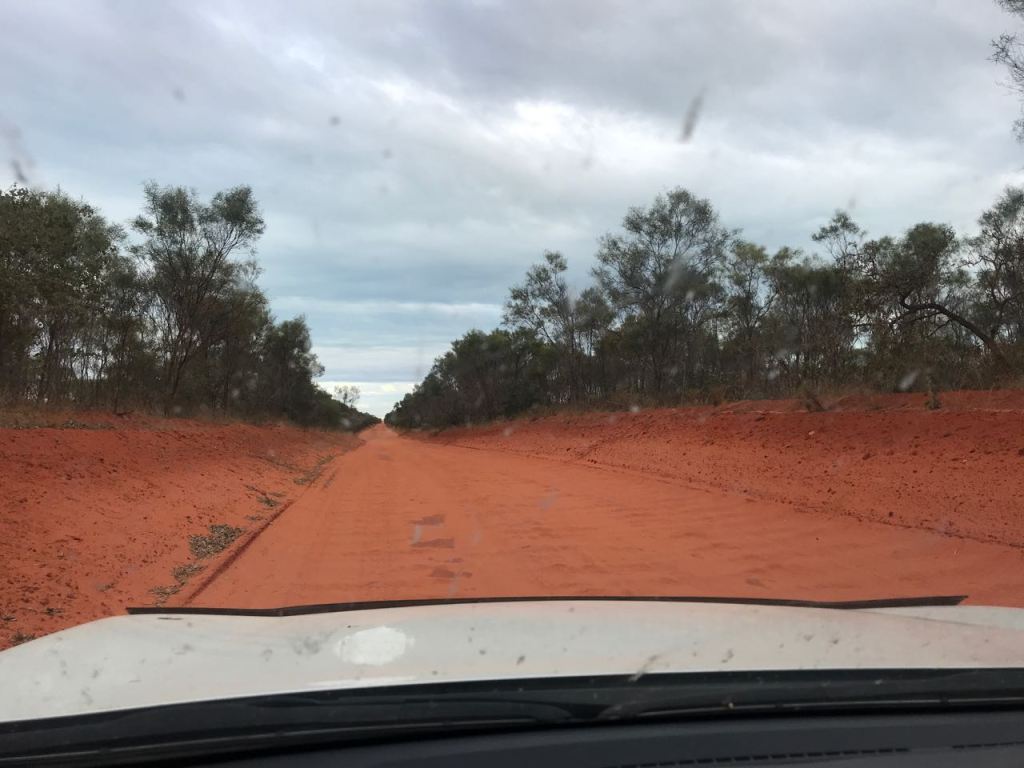
Road to Broome bird observatory
Brome Bird Observatory was our next stop run by Birdlife Australia, with the adjacent Roebuck Bay an internationally significant wader site. The beach and bay is picturesque with red sand and red cliffs, and areas of grey mudflats and almost pinkish extensive mudflats. Waders use the bay as a base permanently or for seasonal migratory visitation. The facility has a great camp kitchen (netted with views of agile wallabies from the dining area) but the condition of the access road isn’t ideal. It is an unexpectedly rough trip from the national highway and about 40 minutes from Broome. Our visions of a night time trip into town weren’t feasible with wallabies on the road and the challenging drive. Instead we did a mangrove tour the following day which involved walking through lots of squishy mud and stayed in town the following evening. The mud in the mangroves wasn’t too deep but it wouldn’t have been good to fall over. Fortunately the Observatory folk provided mud boots which made the outing feasible. The mud was amazing – oozy grey in areas but also lots of the sand was red, so there was beautiful pink hues of sand in the interface. It was great seeing a whole range of waders and experiencing the mangrove communities and interesting colours of sand and mud.
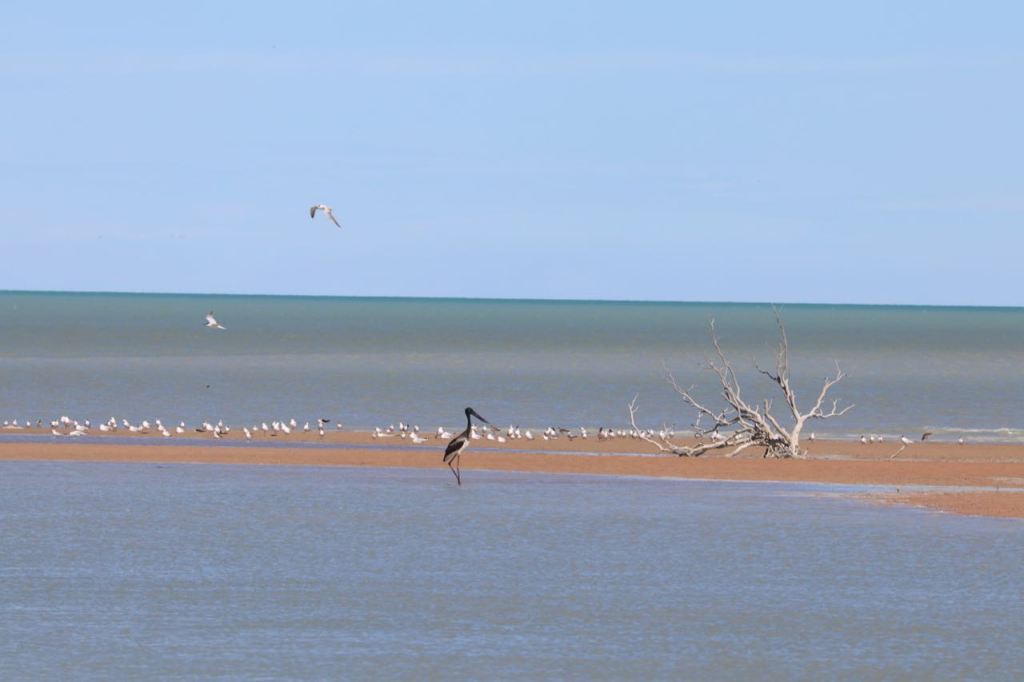
Black-necked stork Roebuck Bay 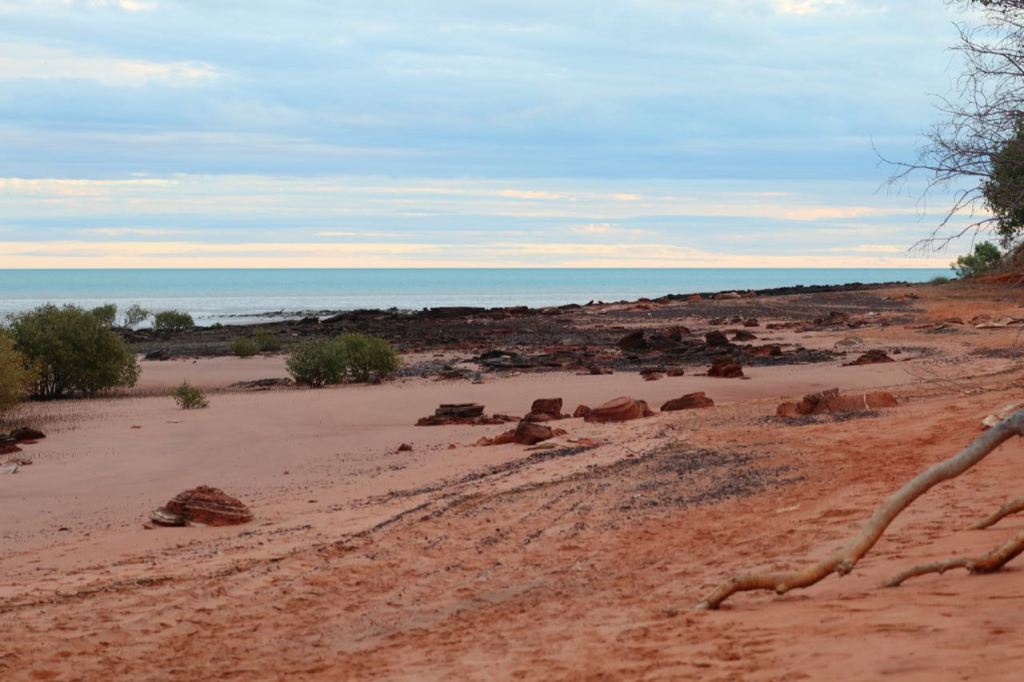
beach colours, Roebuck Bay
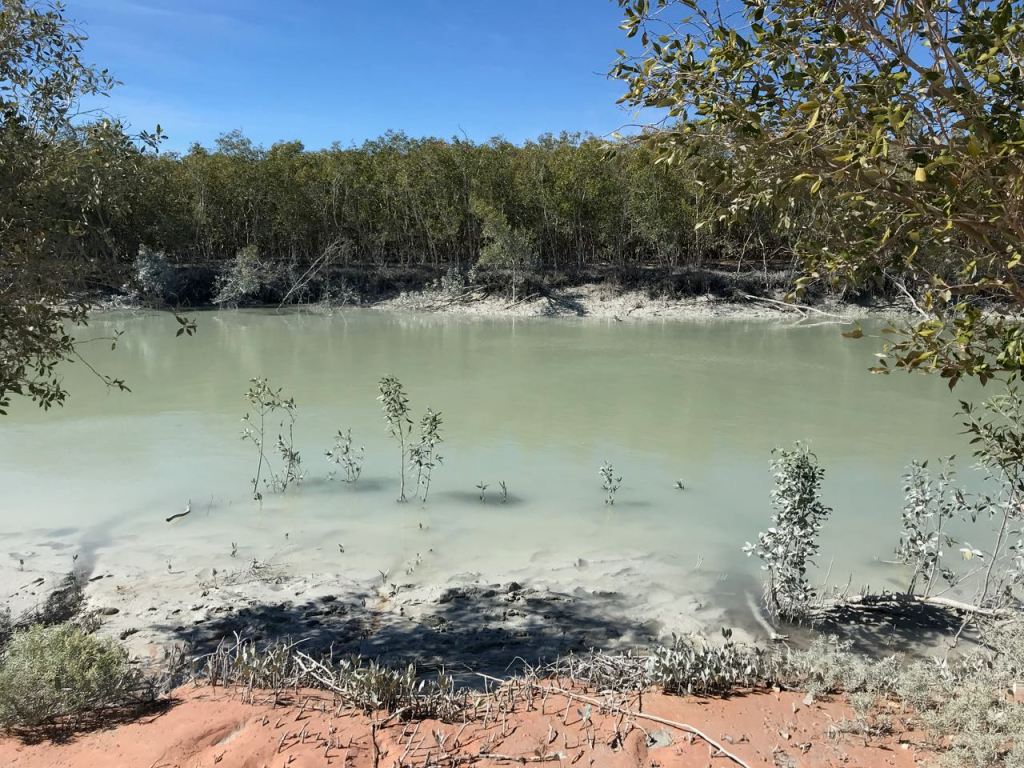
pink and grey underfoot for mangrove walk 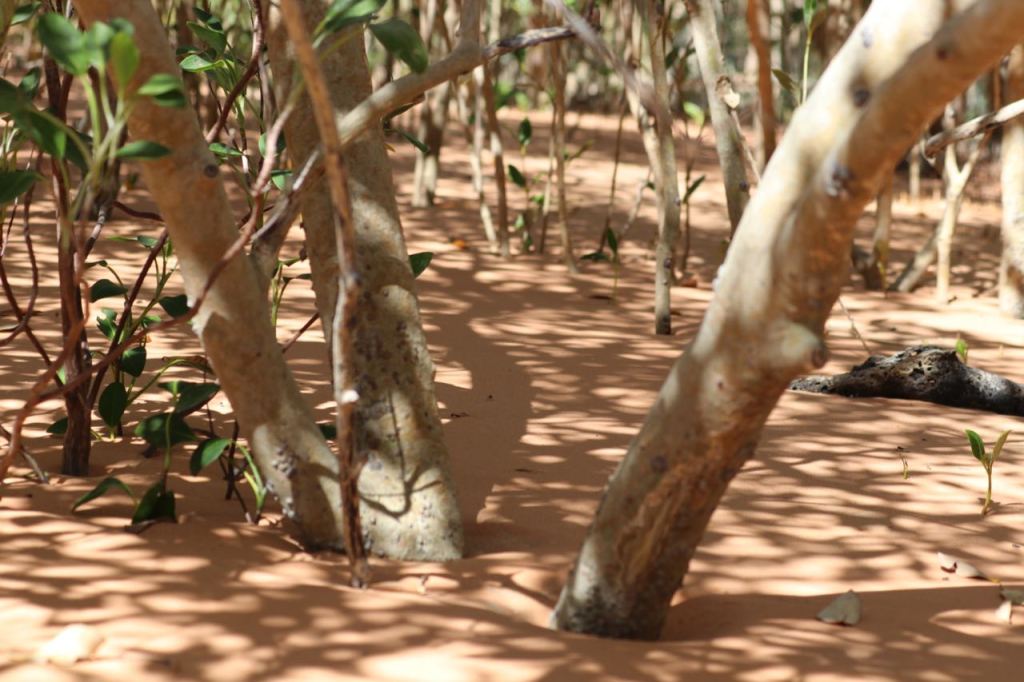
pink below the mangroves
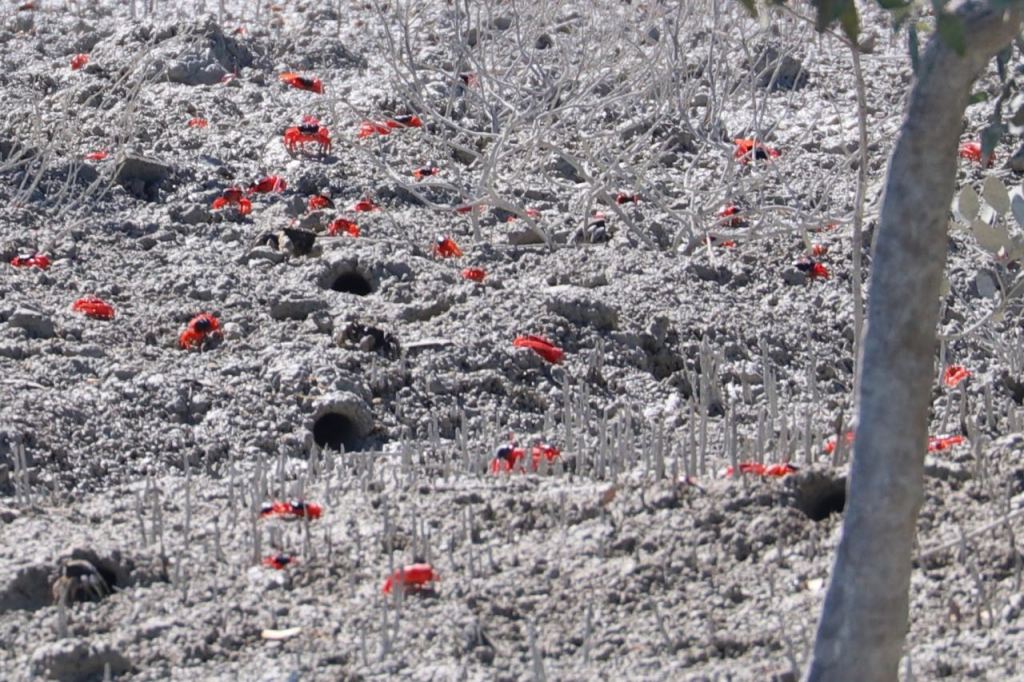
red crabs 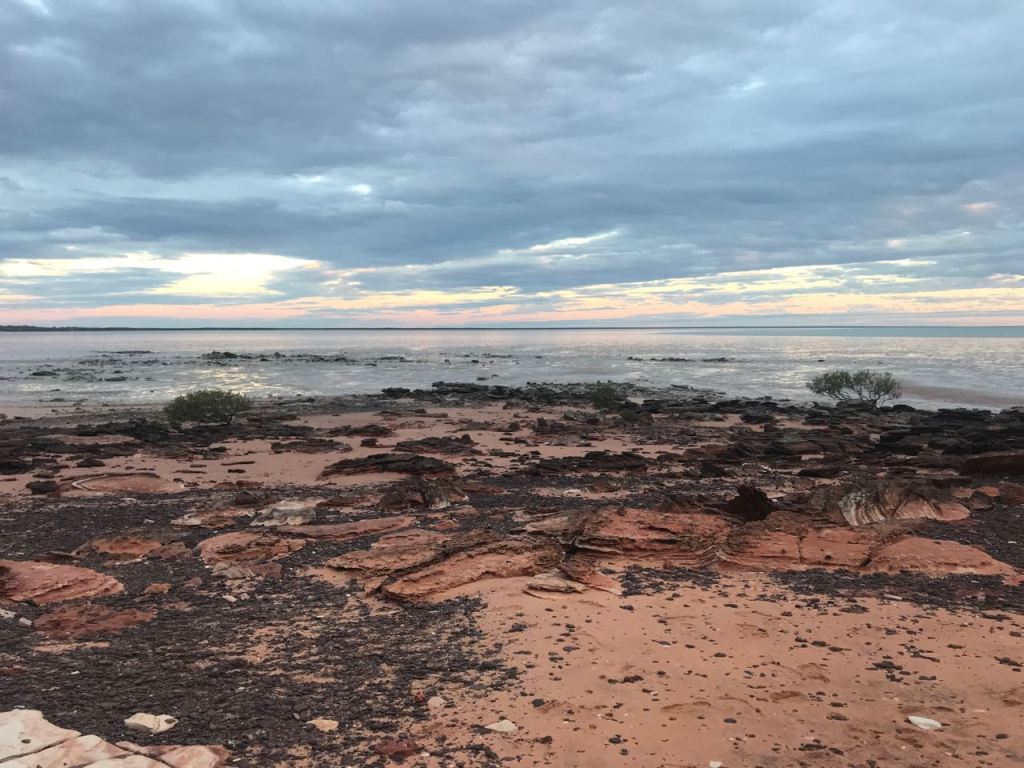
Roebuck bay
Broome has grown hugely in recent times. One guidebook from the 90’s referred to a town of 4000 people, but today’s population is 16,000 swelling to 45,000 in the peak times. There were a lot of people in the town, on the roads and enjoying the sights of Broome.
The museum was a highlight and showcases the centre’s difficult origins as a pearling centre, a trading port, its awful history of treatment of divers, its war experience and more recent events. There were huge casualties for the early divers, blackbirding of locals and cyclones that took out two separate fleets. There was also the bombing of many flying boats of Dutch evacuees from Indonesia by the Japanese in 1942. Many flying boat wrecks remain in the estuary. The town is also impacted by the region’s phenomenal tides and wet season inundation. There were lots of pictures of inundated buildings in Broome – patrons getting carried out of the local cinema … There was also a display about recent archaeological discoveries where the tracks of dinosaurs can be visited locally when the tides are low. An excellent effort.
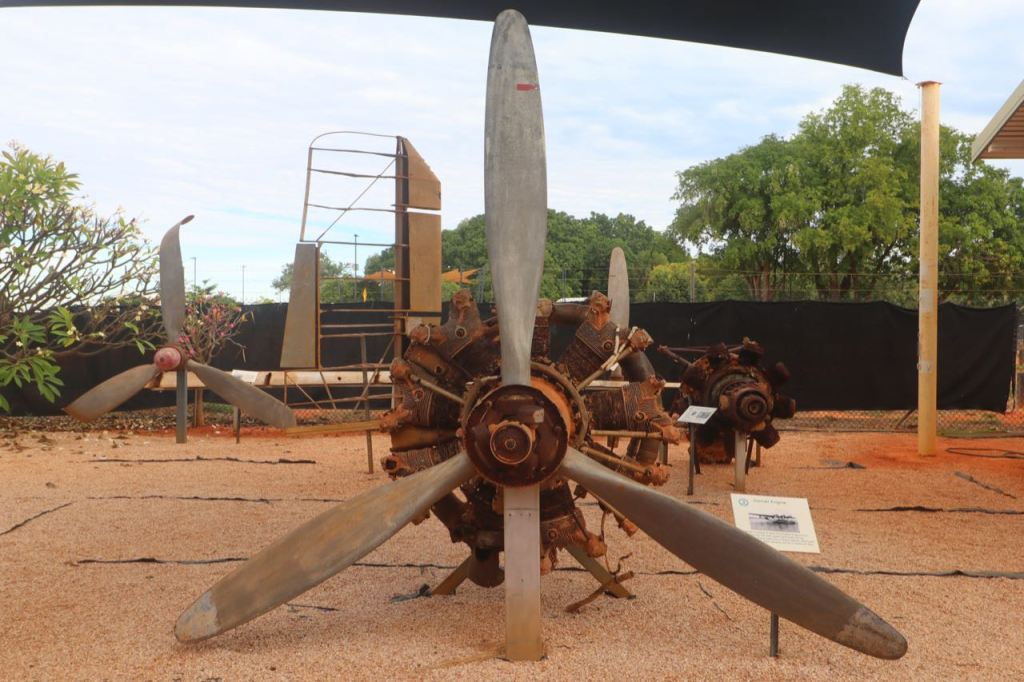
Broome museum 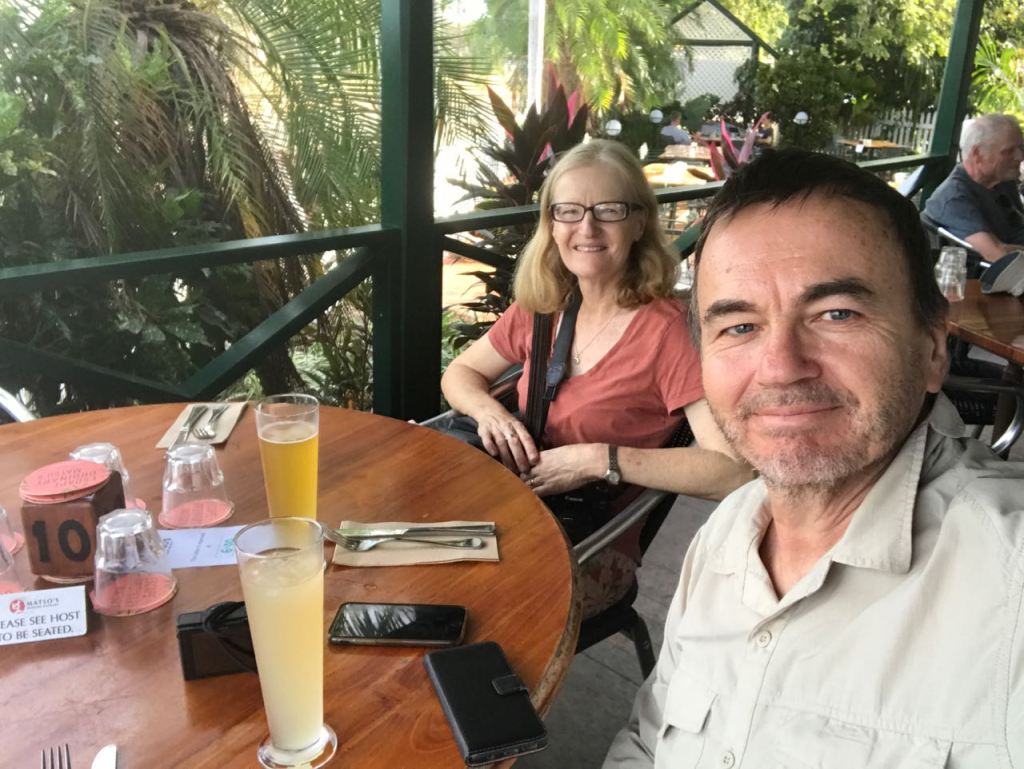
Matso’s
Matso’s brewery, a local institution, was a good stop for a ginger beer and the opportunity to try the recommended mango beer. It was delicious.
Cable Beach was our final destination for the sunset – the obligatory experience of Broome. It’s a beautiful foreshore but with a mass of folks and 4wd drives and camels, it was a circus. People on foot and in 4wds head down to the beach in large numbers. 4wds weave through an area of rocks to head to the northern end of the beach, while the pedestrian beach has frolickers including one with a long table, full party decorations, lights and sunset champagne.
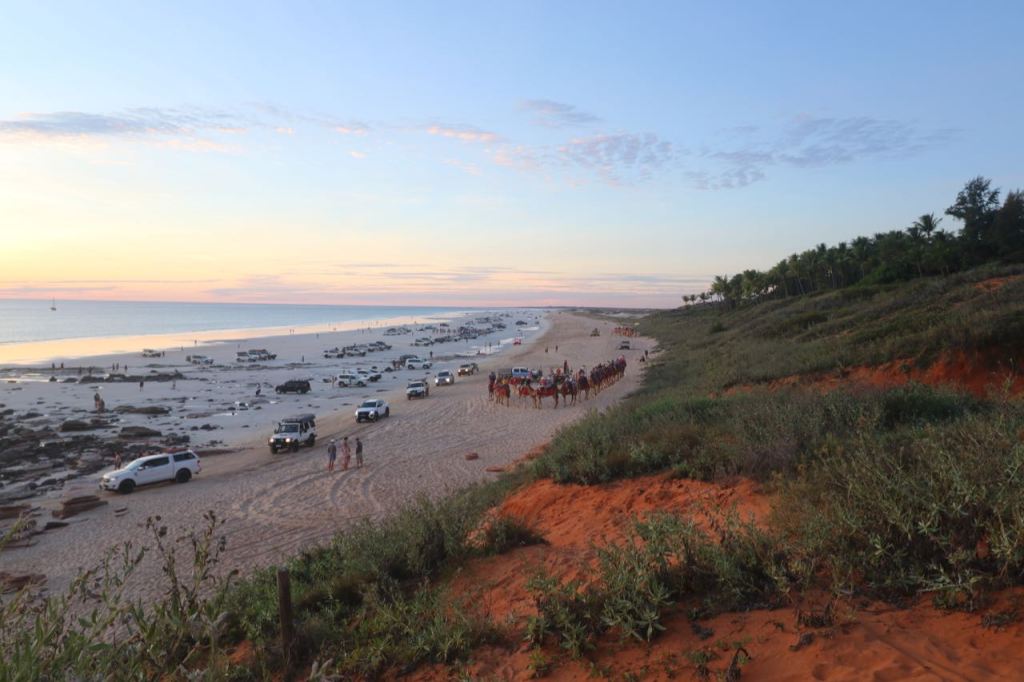
Cable Beach 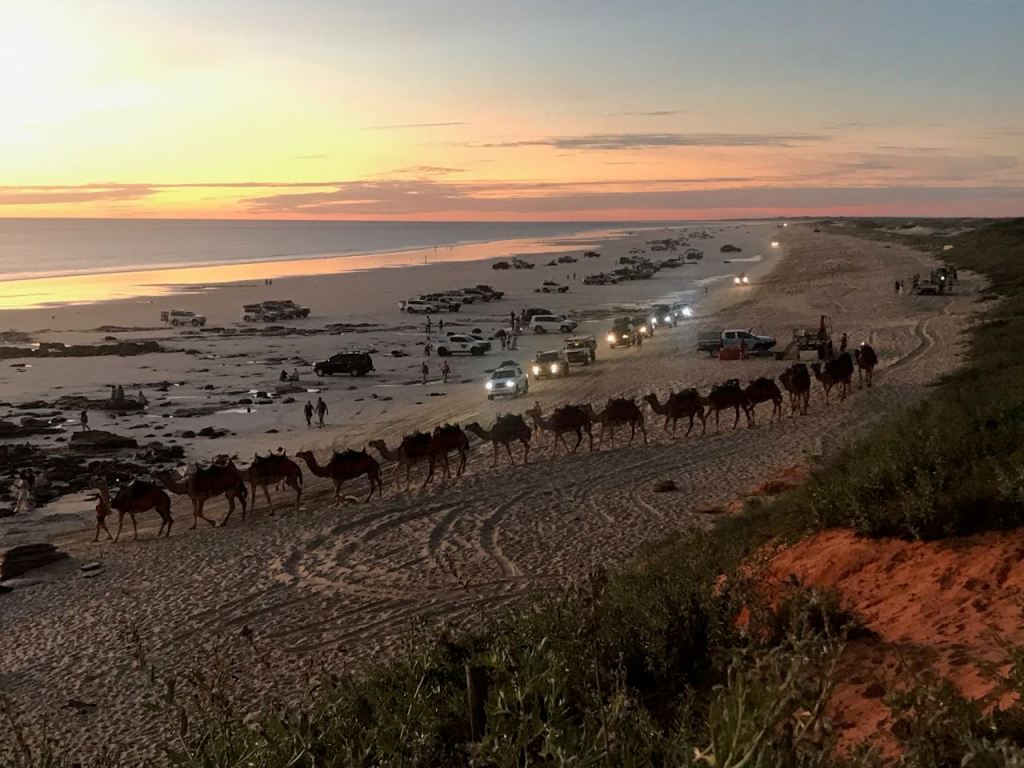
One of three camel teams
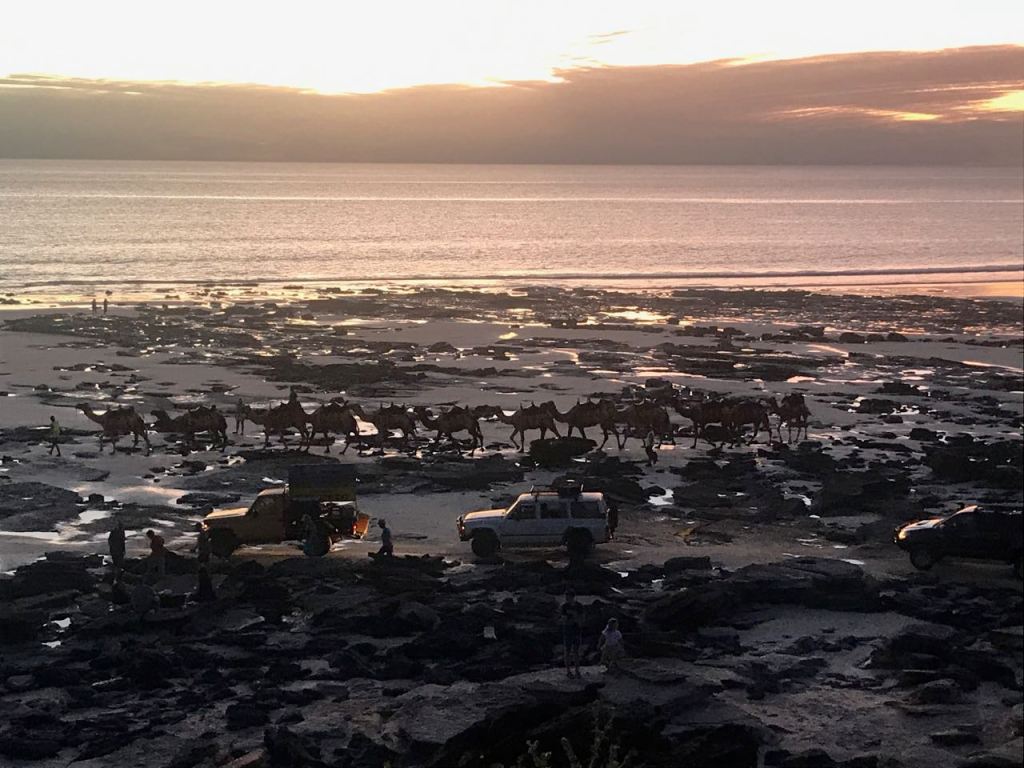
Then some 4wds try to exit the beach while others are trying to enter. All these vehicles must go through a narrow passageway through rocks, which later on has to get traversed by three separate caravans of about 50 camels. On the overlooking esplanade there are restaurants and bars and lots of people are siting on benches and relaxing watching the spectacle below. Many are drinking and in celebratory holiday mode. It was a spectacle, but it was not the serene sunset of subdued camels and a few onlookers I had in mind.
 Marian's Travel Blog