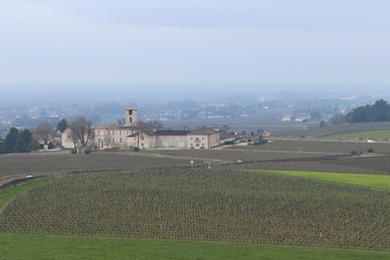
Heading to the south-west, soil conditions are all-important. Grape varieties are grown in huge volume in the Bordeaux region, famed for its wines. The circumstances of the sub-soil and the exposure of the fields make for exquisite variation in the grapes and resulting vintages. Its red wines especially are well loved. The growing medium for significant areas of the wine country appeared to be very rocky light coloured limestone. The furrows between the neat rows of vines showed fist-sized rocks comprising much of the elevated growing material. With all those rocks, drainage is presumably not an issue.
It is said the Brits in earlier times developed a taste for the red wines of the Bordeaux region renaming them claret and thereafter being interested in controlling the area. Known as ‘Gascony’, this area was all important in the One Hundred Years War which waged from the mid 14th century onwards with numerous conflicts in the south west of France.
The carefully tended vines are neatly trimmed in their winter guise to a short bare trunk and a few growing canes. The fields are tended by mini narrow tractors, with the width of the machines the size needed to fit between the rows. The tractors were being used to profile and weed the furrows and sides of the ordered banks of wires, posts and paraphernalia. The vines will emerge laden green with their magnificent bounty later in the year.
Bordeaux’s wine region is deserving of far more time than we spent there. St Emillion is a very attractive town we would target to use as a base for a subsequent visit. We managed a quick stop including a very nice lunch featuring a generous and delicious 3.50 Euros ($5.50) house Bordeaux red and a foray up the bell tower that looms over this UNESCO listed world heritage town. Upon climbing the 197 spiral stone steps, we got a spectacular view over the surrounding countryside. There are courtyards directly below with tables set out for intrepid diners (it was very cold and there weren’t any visible) and the surrounding uniform buildings of tile roofs, muted stone construction and vines extending right to the town’s edges. We had to lock ourselves into the bell tower too as the Tourist Office issues the key and doesn’t want other visitors to get in without paying. They insist. It felt very Alfred Hitchcockesque especially as we had to walk down nearly a flight of stairs into the ground to get to the heavy ancient timber entrance door. It was dark inside.


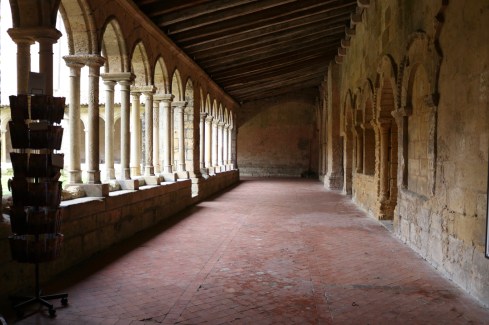
There is also a chapel carved direct into rock under the main town square that can be visited. Unfortunately our timing didn’t allow for this. There are many buildings of historic interest in the town including two large cloisters attached to the prominent churches of the town. There are a large number of specialist wine outlets, restaurants and eateries. In the surrounding appellation ‘specified local wine’ area, there are also 127 wineries open to the public where you can visit and learn of the wine-making craft of individual establishments. These premises range from historic chateaus through to modern architectural gems. Walking, cycling and bus tours are also options offered by the local Tourist Office. This is a stunning area.
 To the south of Bordeaux, the area is very sandy with attractive beaches and even Europe’s largest sand dune. Extensive construction work is taking place adding extra lanes to the motorway to north east Spain. Though several kilometres inland, the motorway works were clearly taking place on sand in many places. Yet much of the coastline is craggy rocky headlands interspersed with attractive sand beaches. There are major rivers in the vicinity, so perhaps all the sand has been deposited and relocated from the Central Massif over the ages, given the good rainfall of the southern France. It is interesting geology.
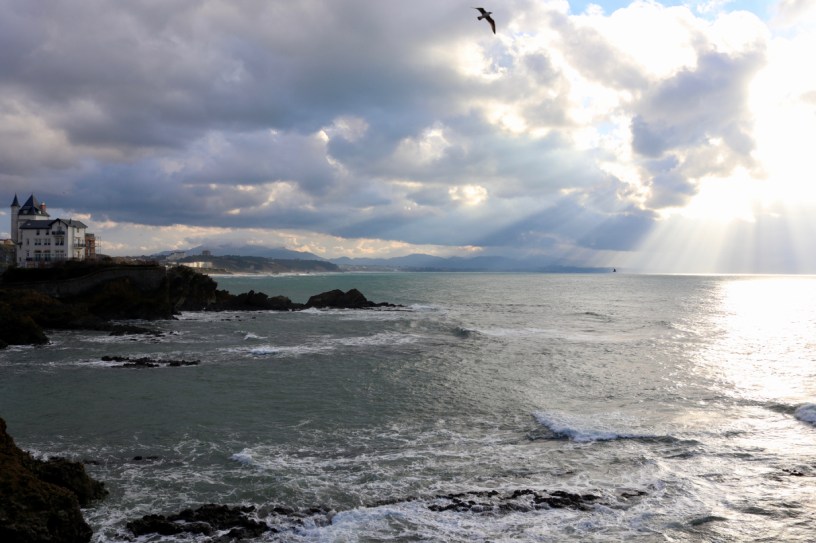
The coastal resorts to the south reflect the glory of past times. Biarritz has a beautiful position on rugged rocky coastline and a number of gracious historic hotels exuding dignity and grandeur. The shopping options of the main street are extensive with exclusive shops, boutiques and even a Galleries Lafayette. There was even a Spanish shoe shop with its after Christmas sales not yet finished that required a stop for everyone to try some footwear. There were also surfers, with at least a dozen in full wetsuits in action in the late afternoons on the main beach. The water would have been unbelievably cold. The surf looked high quality with waves rolling into the beach over a long distance. A sizable Ripcurl industrial enterprise was spotted on the city outskirts.


The influence of Basque culture is noteworthy in both south-west France and neighbouring Spain. San Sebastian is the traditional Basque capital and has attractive sand beaches in the middle of the city. It has emerged as a vibrant city attracting tourists in large numbers during the warmer months and was a recent European City of Culture. There is a Redeemer style statue looming over the city and a rocky island close to the main beach framed by attractive rocky headlands. The traditional buildings of the city feature shutters with a distinctive muted red colours against pale stone with red roof tiles. The cessation of Basque separatist violence has brought economic rewards to this area though separatist sentiments remain strong, especially in light of Barcelona’s recent plebiscite for independence. Grafitti in the local language is visible rather than in Spanish. The Basque influence is evident in the towns across the border in France with the colourful shutters and light buildings and tiled roofs in the coastal towns, including Biarritz and Bayonne.


There is also pride in the work of their artists, with the Bilbao Guggenheim especially featuring the work of two local Basque sculptures amongst its largely international collection. This museum has my favourite sculpture by Jeff Koons outside: Puppy.
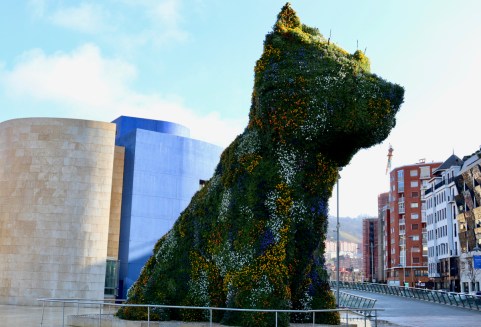 The building was spectacular in a brief period of sunshine upon our arrival with its gleaming folds of warm burnished silver/gold in an austere setting of concrete and bare vegetation (apart from the enormous dog). Rain featured afterwards, as well as snow on our return drive back to Biarritz.
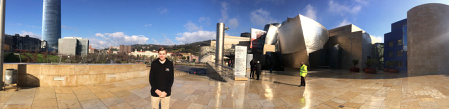
The south west and Basque country has much to offer.
 Marian's Travel Blog