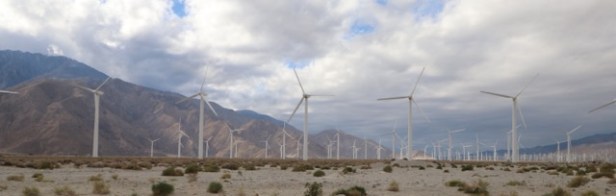
The desert town of Palm Springs has an impressive mountain backdrop and a sea of wind turbines along the entry road.
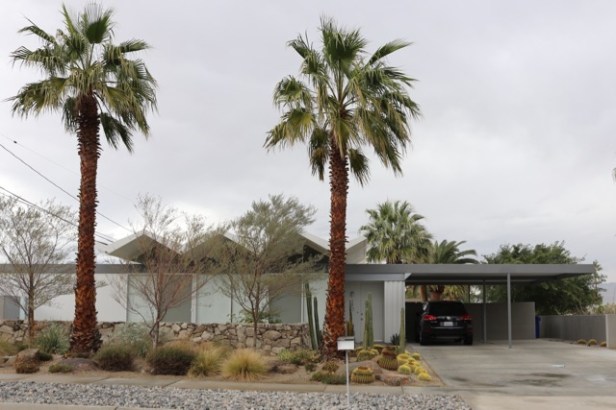
With its hey day in the 1950’s (Frank Sinatra and the Rat Pack), modernist architecture is its key attribute. There are many architectural tour options on offer and we managed a self-guided tour. Highlights included the house where Elvis Presley spent his honeymoon, a Council building with a cutout hole for palm trees, a great looking bank and a house that had recently been marketed for $15 million (the highest price for a Palm Springs house). The house was designed by Gordon Kaufmann. This architect was responsible for exterior design work at Hoover Dam we saw a few days later. Just driving around the suburbs, residential architecture was all single storey, ranch style and predominantly from the 1950’s-60’s. Garden landscaping, including footpaths seemed generally to be cactuses, desert plantings (including palms obviously), pebbles, boulders and plastic grass featured in a few places!
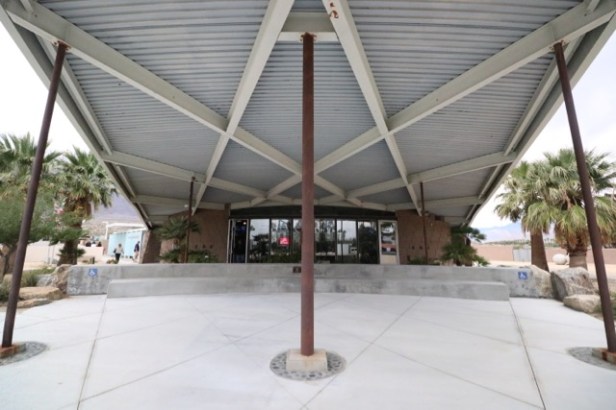
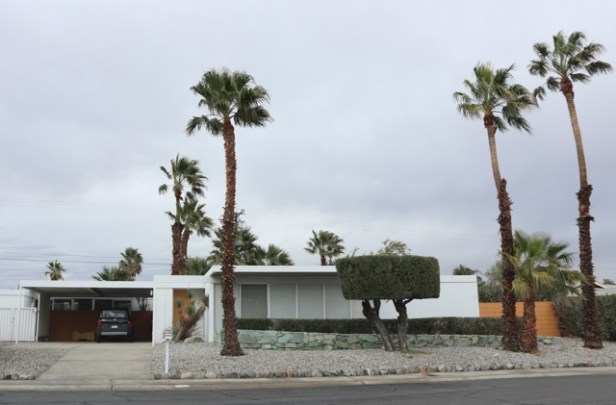
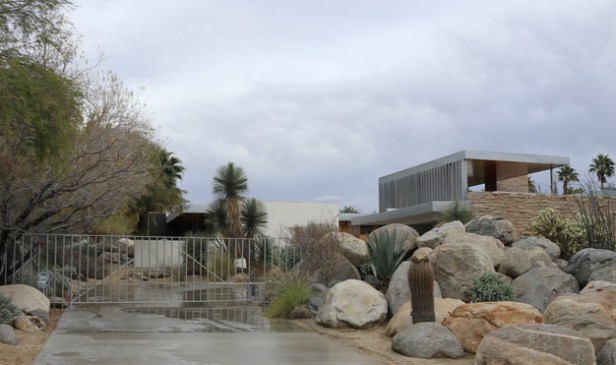
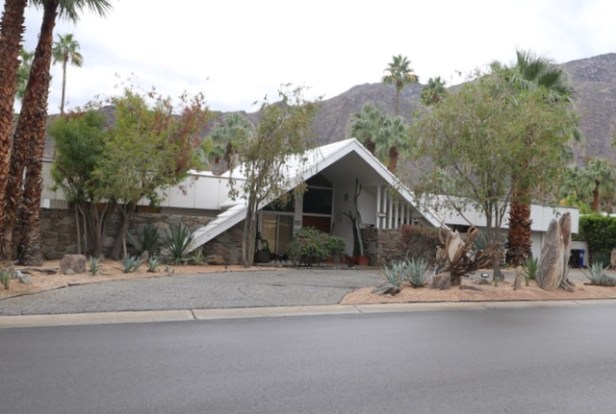
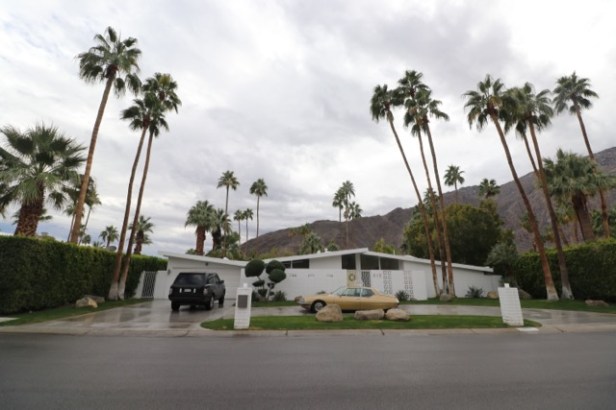
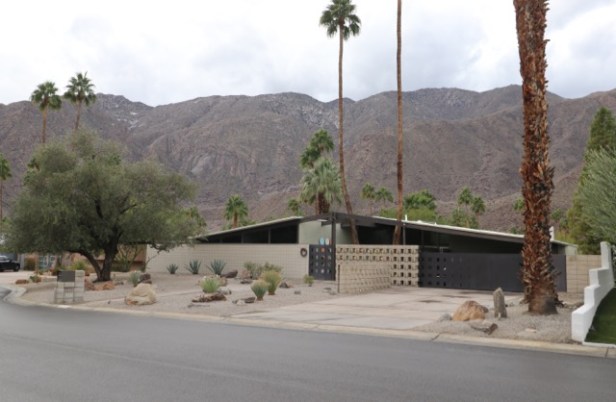
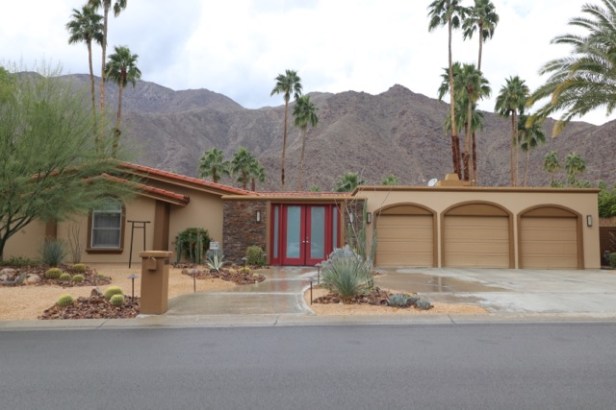
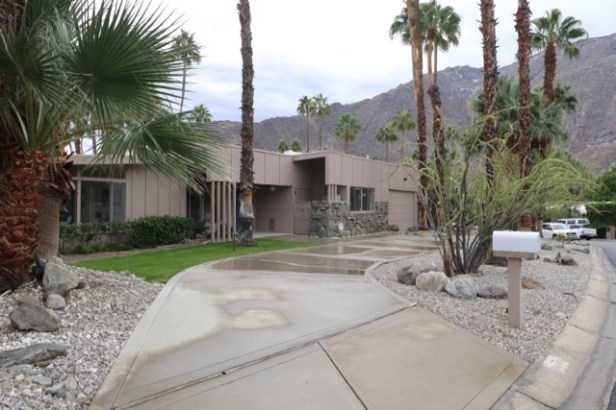
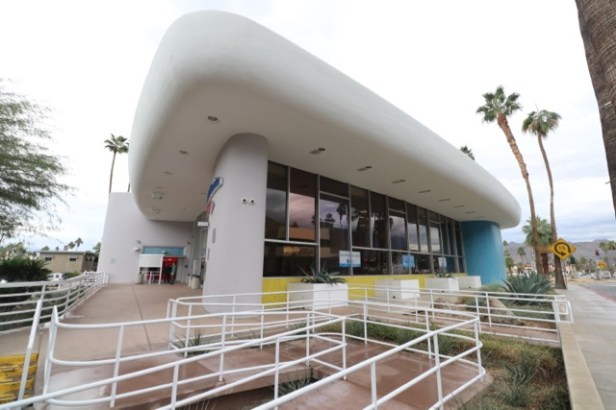
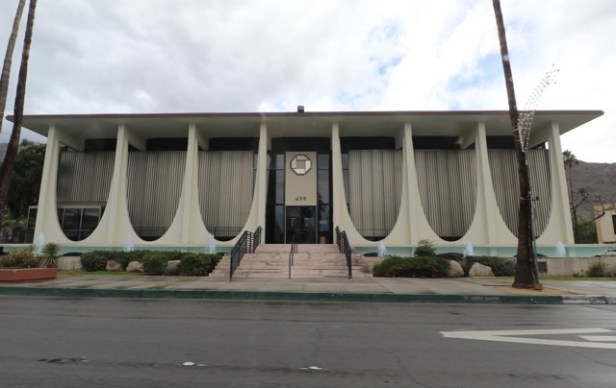
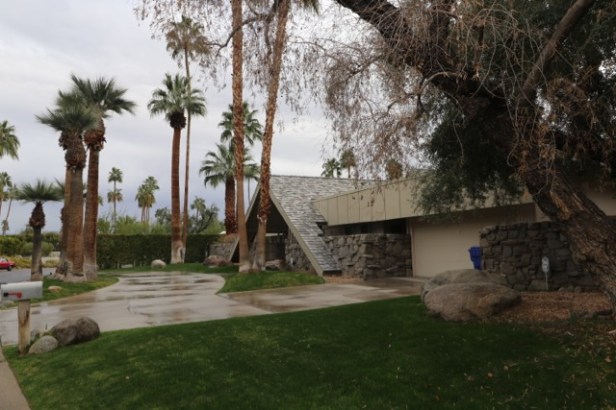
Palm Springs was a very impressive place though it must be baking in the hot months. The golf courses were less evident than I expected as we didn’t see one! Looking at Google Earth, lots of areas were designed so the housing backed onto complex golf course layouts. I’d expected them to be more visible … (thoughts of Sammy Davis Junior, plus fours, etc. )
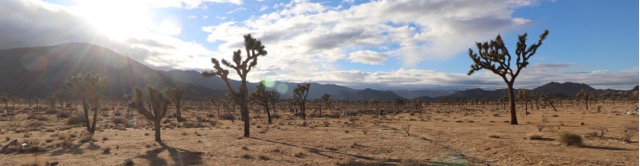
Joshua Tree National Park was our next destination at its junction of deserts. Along the major entry road in the Mojave Desert, enormous boulder formations and Joshua trees dominated the landscape. Spectacular outcrop after spectacular outcrop could be seen. These formations were very popular with climbers.
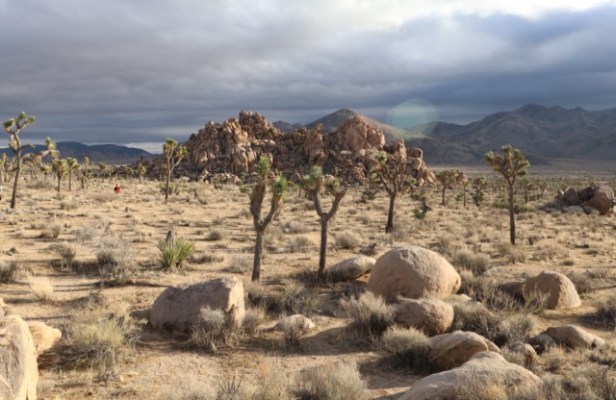
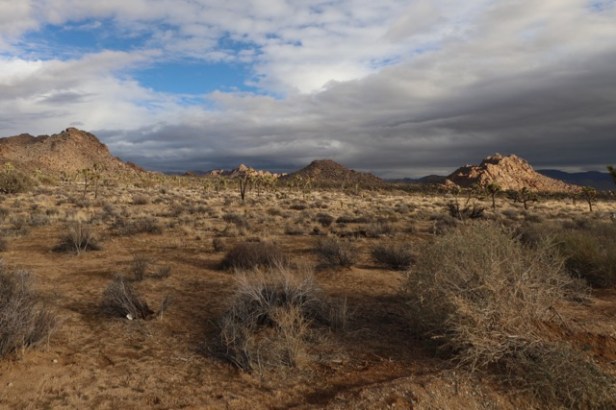
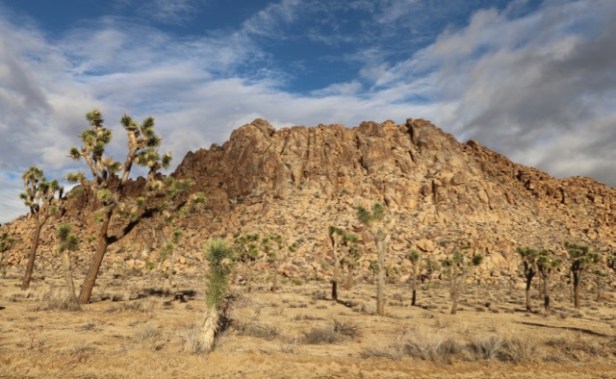
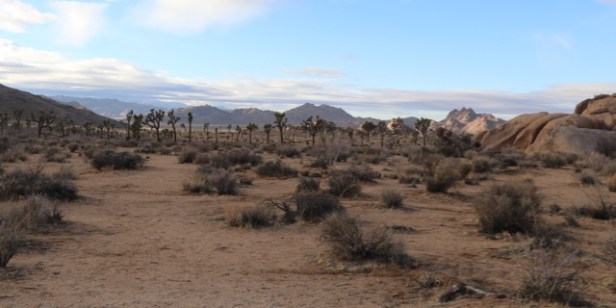
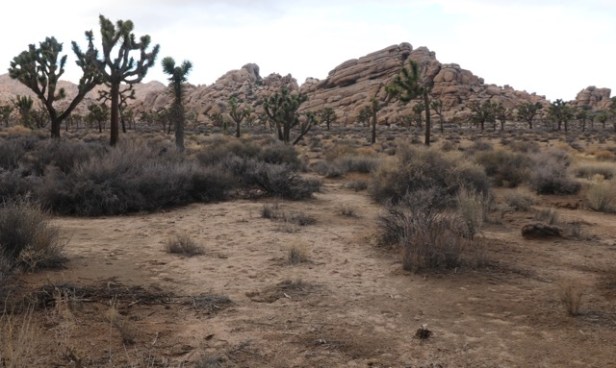
The San Andreas fault was visible from an escarpment within the park. The eastern area of the park was part of the Colorado desert and sandy with more spinifex trees (and less extraordinary). We could appreciate the attributes that registered for U2. The Mojave desert landscapes were awesome.
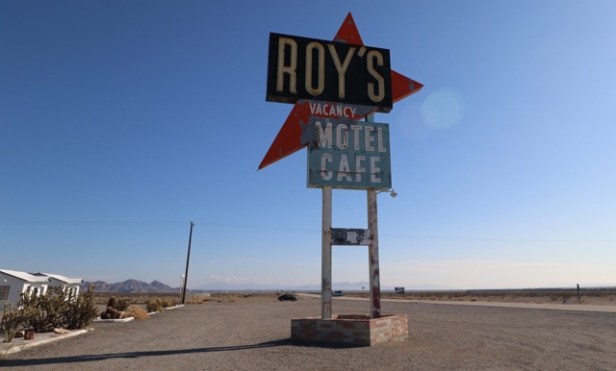
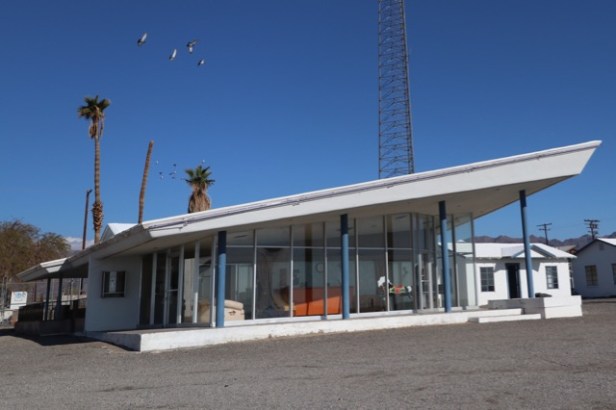
Stopping for fuel on Route 66, en route to the main interstate highway, we came across a fabulous 40’s service station, motel and diner: ‘Roy’s’. The proprietor, however, was carrying a gun in a holster which was rather unsettling. I wanted to take a picture of the diner interior but it didn’t feel the right thing to do. His fuel prices were a bit interesting too as a half tank of fuel cost more than a full tank fill-up in Las Vegas. We hadn’t thought to ask.
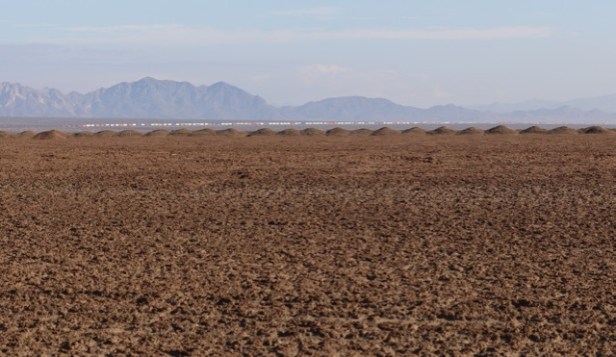
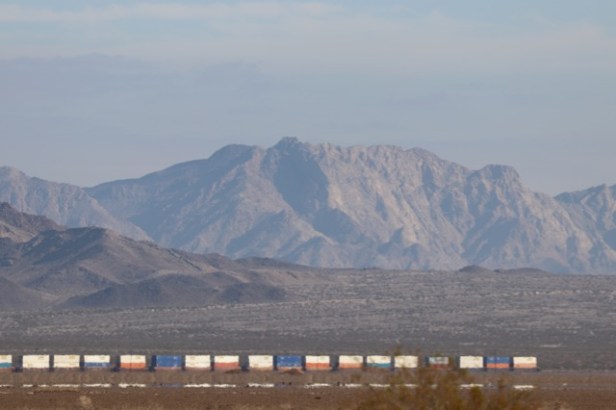
There were also a number of double height container freight trains visible on the east west rail route across Nevada (following a similar alignment to the old vehicle Route 66).
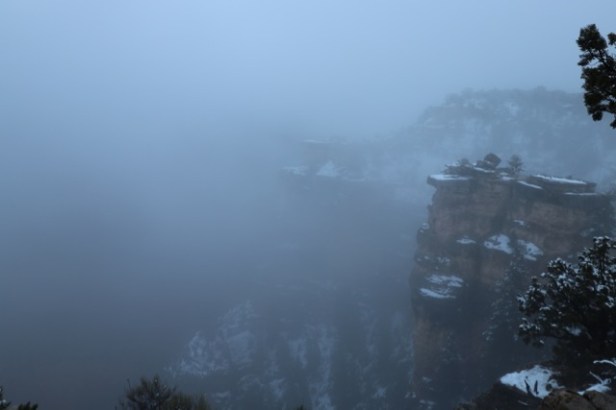
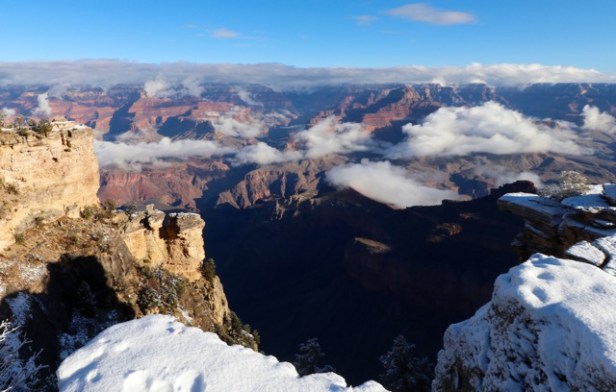
The Grand Canyon from the south rim was not visible on our initial visit. It was full of clouds and mist with snow all around and we could only see a few cliffs looming on the sides.
The following morning (New Year’s Day) we could see the canyon properly, with snow at the rim only extending downwards a few hundred metres. Glimpses of the Colorado River were visible way below in a few places where the canyon sides allowed visibility to the bottom. The range of colours of the different rock layers of the canyon sides was extraordinary. The colours were delicate and muted shades under the overcast conditions. It would look dazzling under bright skies. Clouds and mist increased during the day until it started snowing mid-afternoon.
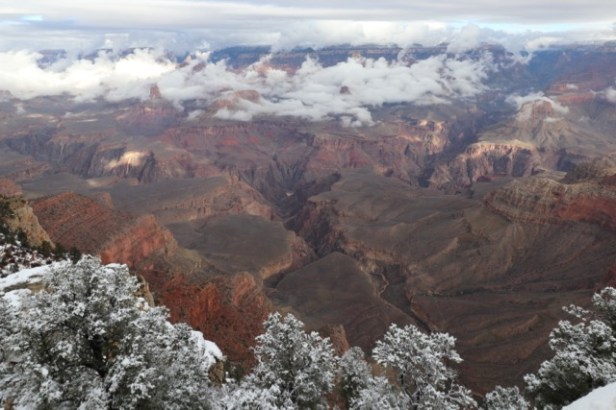
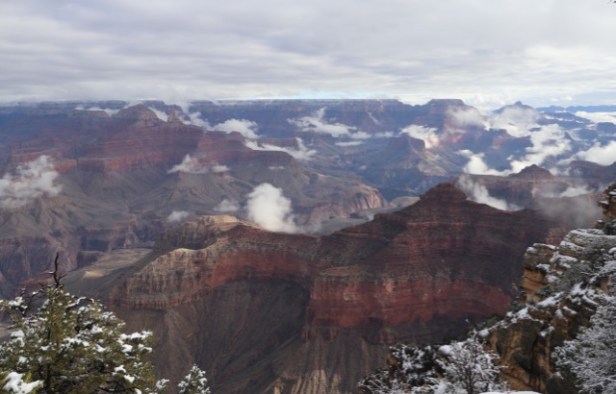
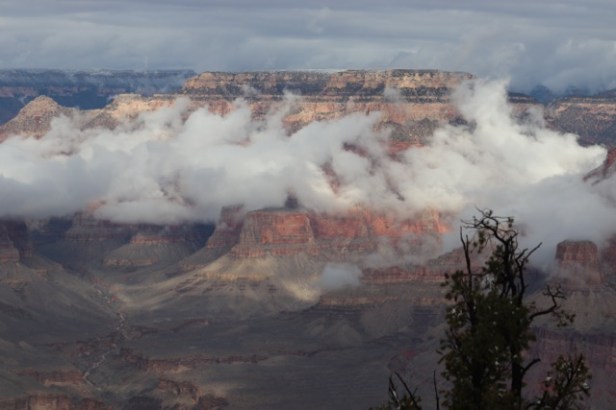
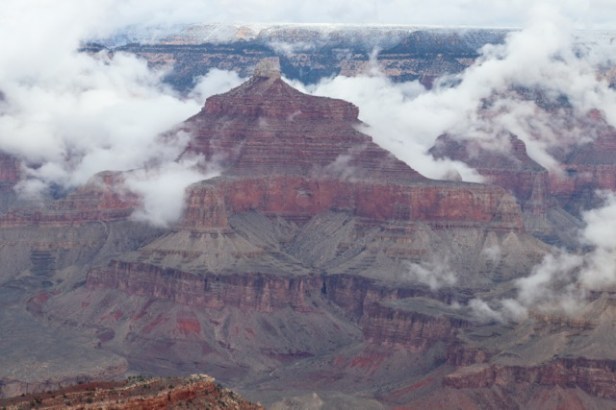
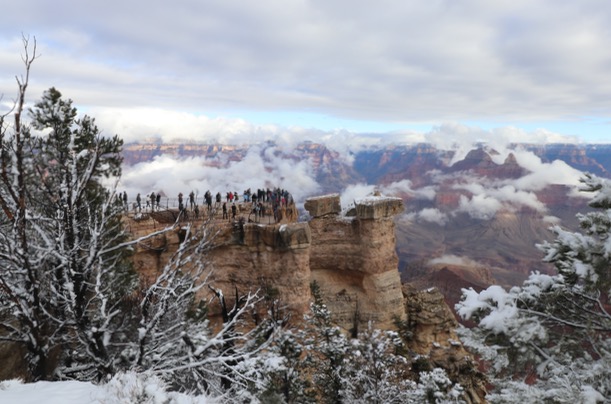
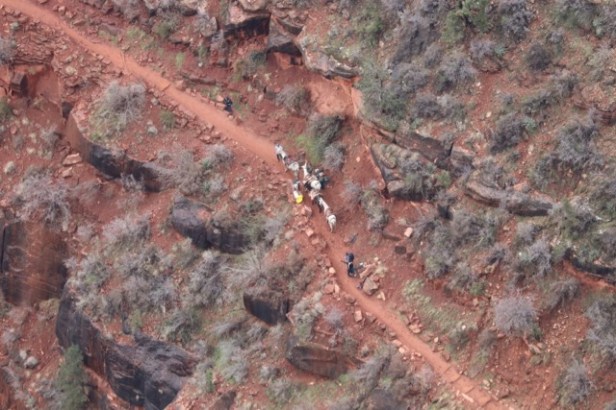
The Bright Angel path into the canyon could be seen from various points where we walked on the south rim. The diminishing size of hikers and mule groups on the path provided some scale to appreciate the size of the chasm. It was a vertical depth of 1500m to the Colorado River.
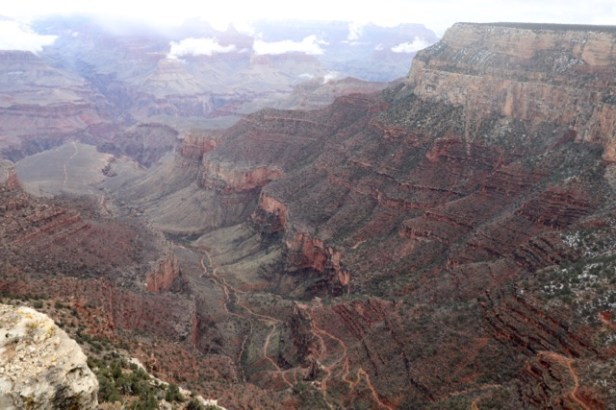
I was surprised the Grand Canyon was only 6 million years old. There are also lots of sections of the geological record (unconformities) that are missing within the canyon as parts have eroded away.
There were lots of books about facts regarding the canyon including its record for casualties. It was the scene of the deadliest commercial aviation disaster in history in 1956 when 2 planes that had come from Los Angeles airport collided over the canyon. 128 people were killed. The airspace was unmonitored and it led to control by air traffic personnel and air corridors.
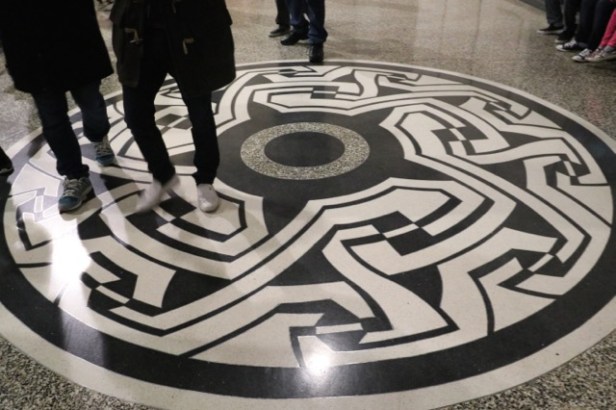
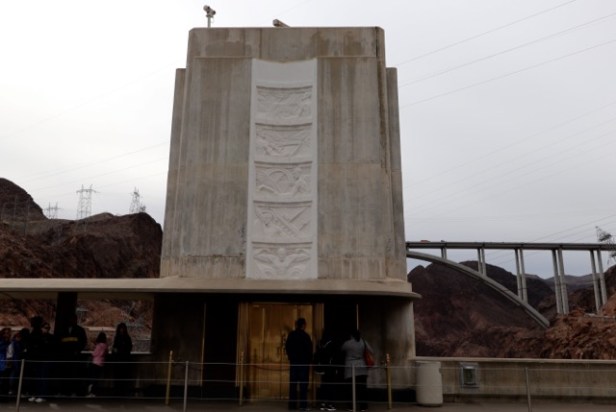
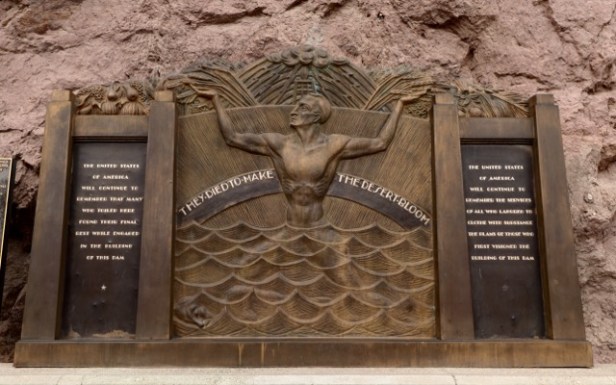
The Colorado River again featured at the Hoover Dam that holds back its diminishing waters. This structure was constructed in the 1930’s and was Art Deco in its design and features. The architect responsible for designing the exterior appearance of the dam appointed an artist to undertake the design of various monuments, sculptures and the flooring for the dam and power station. It was a really aesthetic dam. The tour inside the power station and dam wall was fascinating. We got to look out at a range of the architect and artist’s contributions to the design and appearance of aspects of the project. The structure had amazing terrazzo floors. The clock towers, hydro electric water intake towers, the dam’s lift interiors and towers, the monuments and sculptures of the project were all styled from that period. The clock towers at either end of the dam show the hour time difference of Nevada and Arizona with the state border in the middle of the dam. From within the face of the dam a ventilation structure part way up the wall gave a dizzying view both up and down its face.
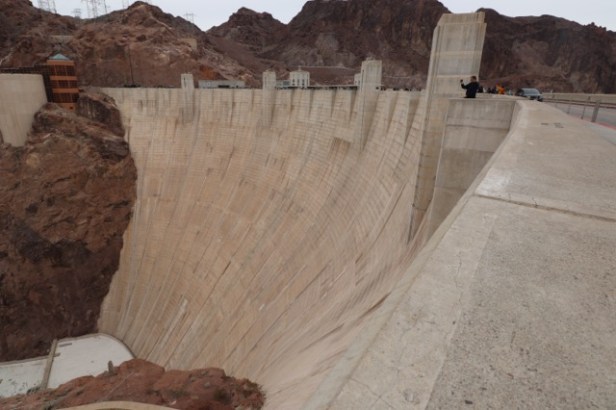
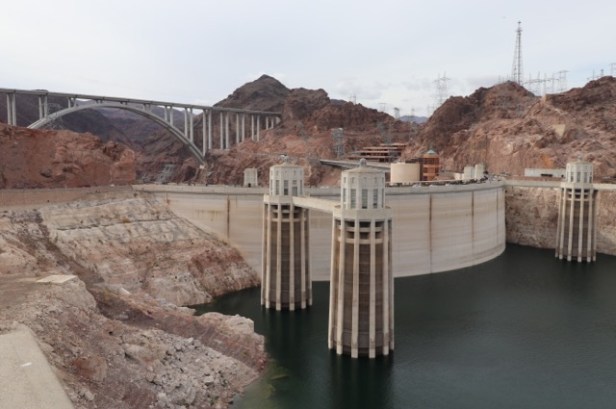
The Hoover Dam used to be a part of a highway leading south from Las Vegas. An impressive bridge was completed in 2010 to provide a replacement roadway. Before the new highway opened, delays of several hours could be experienced on the road over the dam.
Water levels held by the dam have been going down over the last decade and sadly reached their lowest levels late in 2016.
We saw a herd of big horned sheep on the way to Hoover Dam grazing on a park with a nice green lawn in the outer suburbs of Boulder City, (the town established to enable the original construction of the dam). It was quite ironic because we’d been reading about these sheep at the Grand Canyon and then on the approach highway where large animal bridges were constructed to enable these sheep to cross over the roadway. We’d been hoping to see some. Here they were happily in a park. Unfortunately we weren’t able to photograph them as we sped past but one of the lads also spotted them to corroborate the sighting. They looked a bit like goats with very big horns.
Las Vegas was all about lights, crazy architecture and hordes of people taking a bit of time out from their normal lives. There were lots of people around at all hours of the day and night. We stayed at the ‘Paris’ Hotel and Casino which is pretty out there. The porte cochere arrangement circulates around a replica Arc de Triumphe with the covered area like the metal interiors of a Parisian railway station.
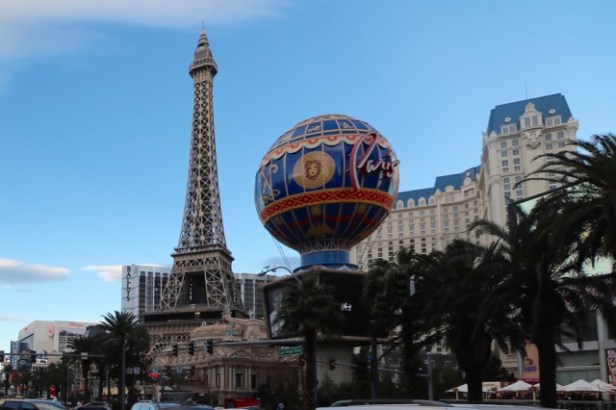
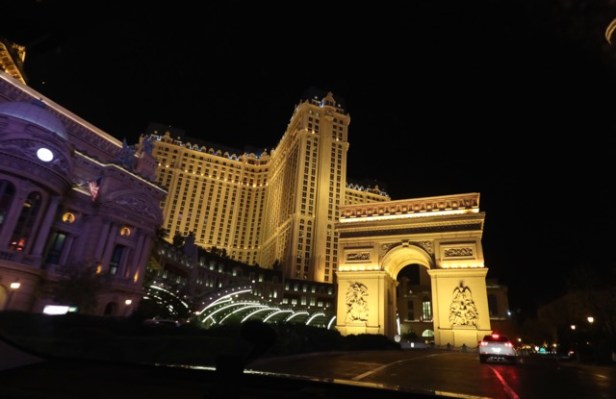
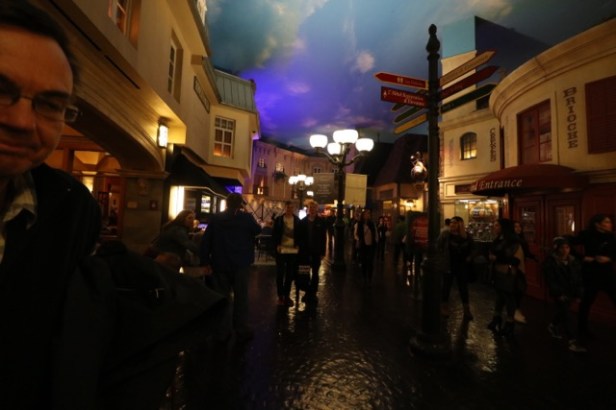
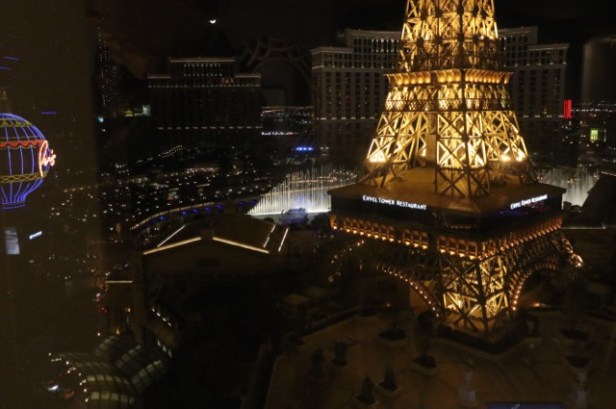
There were beautiful interiors recreating Parisian streets, with lots of eateries and small shops while the casino floor was behind with all its gaudy machines and gaming tables. We had a view over the street (through that pesky Eiffel Tower replica) to the Bellagio fountains that featured lots of shows during the evenings.
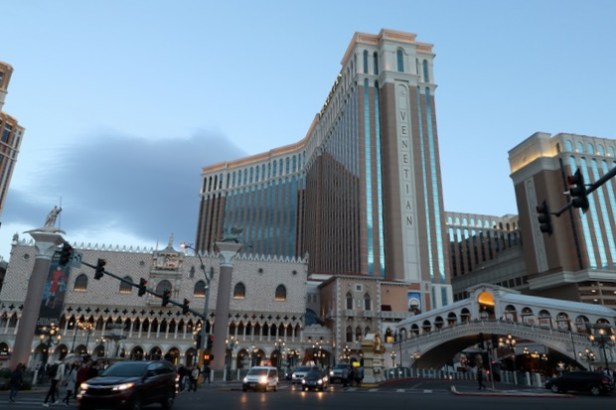
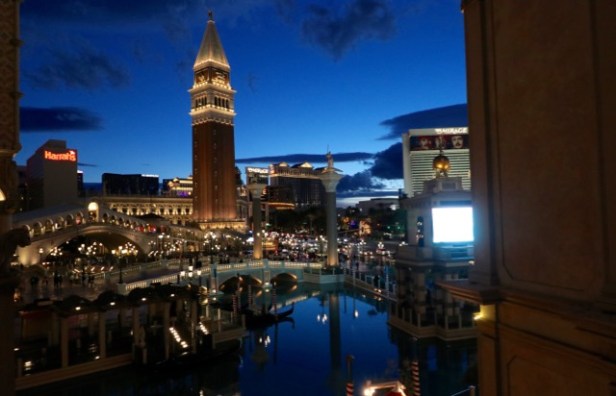
We walked to several different casinos including the Venetian with its replica Rialto Bridge (with a curved travelator!), the Doges Palace, Bridge of Sighs and the Campanile.
We noticed lots of Asian patrons on our various casino walk-throughs. We saw a couple of shows – a wonderful Cirque Soleil show and a magic act, Penn & Teller. We drove past a mob museum too that must attract some interesting clientele. All in all it was a fun visit.
 Marian's Travel Blog
I’m glad you got a good look at the canyon– it is an awesome sight down to the bottom!
LikeLiked by 1 person
You have certainly covered all the interesting sights,
Love your fantastic photos.
LikeLiked by 1 person