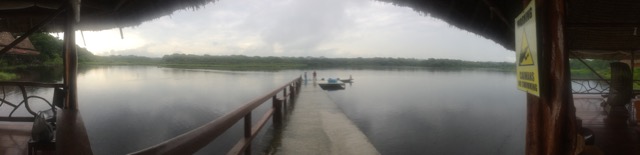
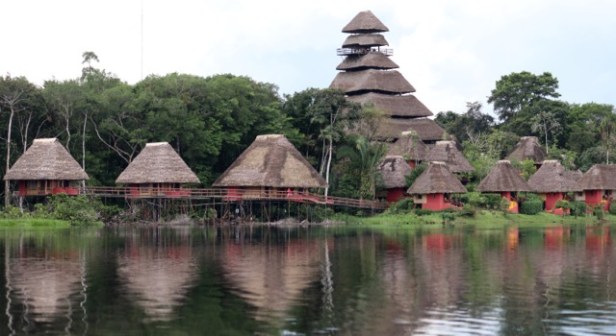
Napo Wildlife Centre (NWC) is a very special place. It is an architectural gem in a picturesque rainforest setting on an ox bow lake. The lodge is in the heart of the Ecuadorian Amazon in Yasuni National Park, which borders Peru.
The place has a remarkable back story. It was developed through the foresight and initiative of the local Kichwa Anangu people.
The area (and the Amazon basin generally) remains under huge pressure for petroleum exploration and mining. Coca, the access town for the lodge, is the centre of the petroleum industry in Ecuador, the country’s largest money earner. Finding petroleum in the Amazon is understandable with the rainforest’s immense carbon cycling over the eons. Many mining enterprises have established and vast areas of rainforest have been opened up directly or indirectly by the construction of roads, pipeline infrastructure and mining-related activity. On the boat trip downriver to Napo, many were visible with a couple with gas flames burning the methane gas by-product. It was sad to see.
The Kichwa Anangu people saw the problems of the mining industry in its destruction of the environment and the negative impacts on family life and indigenous communities. Communities often sold their rights allowing the industry in and were given remuneration in the form of payments or goods. However their way of life and rainforest home environment were destroyed. The people were also left without meaningful activity as their productive lands were gone and many adults, particularly the men had to move away from their communities to work. Short term gains came at the cost of long term destruction of their lands and culture. A new engine only lasts so long as one person put it.
So this community resolved to undertake an ecotourism enterprise. They wanted to provide jobs for their people and enable workers to stay with their families, retain their culture and to provide a better life into the future.
People from the community had worked in tourism enterprises and presumably some had worked for a couple of local lodges, one German-owned and one Swiss-owned. Their ideas and ambitions in the tourism industry were nurtured. They also must have gained a capacity and understanding of the high order management and practical skills to bring about and operate such an enterprise.
The Anungu community worked initially on the project with a US based non-government agency that provided technical, logistics and financial support. An enormous range of challenges had to be overcome. Access to the site involved a two hour boat trip followed by an hour and a half canoe trip. Everything had to be brought in by the water. The community constructed three cabins initially in the forest, in a location that the government objected to. These were demolished and had to be re-built in the current, far better location on the lake. The community did not own the land so that meant they couldn’t borrow money. This issue was only resolved when the current enlightened President came into office providing for indigenous land rights in 2008. The community gained control of 24,000ha of national park lands.
The community (with the help of the NGO) brought in expertise where and when required and sought to train their people, be it for infrastructure services, high calibre cuisine and presumably fiscal management. After operating for 5 years, the community took over management and have successfully run the facility for the last 6 years. It is a very slick operation and recently expanded to cater from 32 to now 40 guests.
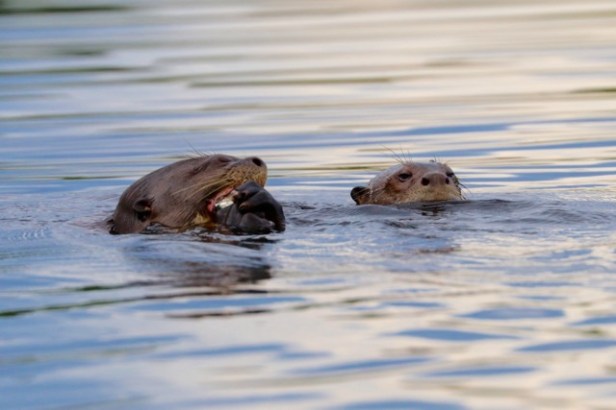
We stayed in a thatch roofed cabin constructed over water (made me think of pictures of the cabins built over the blue waters of Bora Bora) and were serenaded at night by raucous howler monkeys and frogs. The lodge was built using the building style of the local community with the help of a Quito architect. It included an enormous tower complex with the dining room and bar. The tower had great views of the jungle for bird watching and animal spotting. All the guest cabanas (I love the word cabanas – sounds like you’re having a good time before you even start) were constructed over the water or had views directly of the lake. The lake looked so idyllic with canoes coming and going. Sometimes cruising caiman up to 4m in length on the far side could be seen providing a reality check. There were also giant otters (carnivorous and aggressive, but fantastic to watch at a distance). Lurking below to further deter thoughts of swimming were electric eels and piranhas (though we were assured they were victims of bad press and weren’t as lethal as film depictions make out).
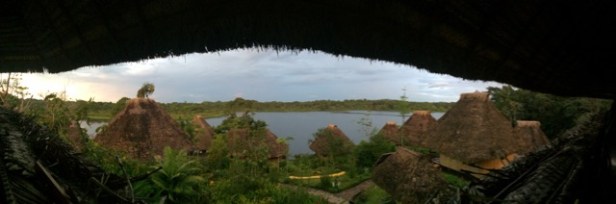
The furniture and fittings were made on site in a carpenter’s workshop at the back of the resort. The cabanas all had modern facilities. The complex incorporated staff accommodation, solar electricity, water treatment on-site etc.
Getting there was an adventure in itself. We flew from Quito on a 35 minute flight. A 9 hour bus ride was the alternative. The plane went up past a few snow-capped volcanoes and then down over a huge river and jungle to Coca airport. The flight went from 2700m altitude at Quito in the Andes to around 250m. It is hard to imagine the 6000km or so remaining journey of the waterway to the mouth of the Amazon involves a fall of only 250m. A two hour motor boat trip then took us 75 kilometres down the wide fast-flowing Napa River. This was followed by a 6km canoe trip of an hour and a half up a stream propelled by very fit looking locals wielding carved paddles. We encountered a downpour en-route (we were issued with very functional rain ponchos) and our guide was concerned at branches potentially crashing down on us from trees above as the wind picked up. They paddled at high speed through a section of rainforest with a towering canopy. At one point we stopped at a corner where anacondas (two different species) could be seen lying in wood debris, one on either side of the stream.
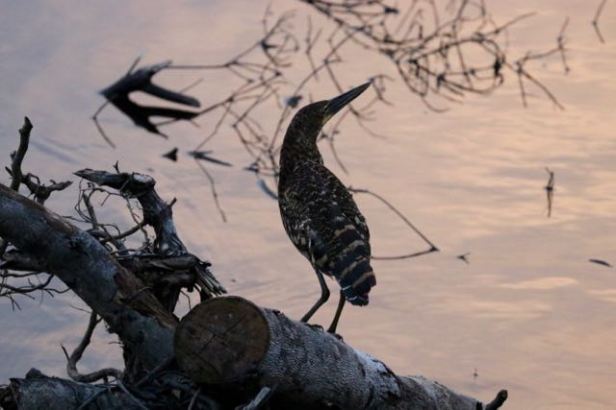
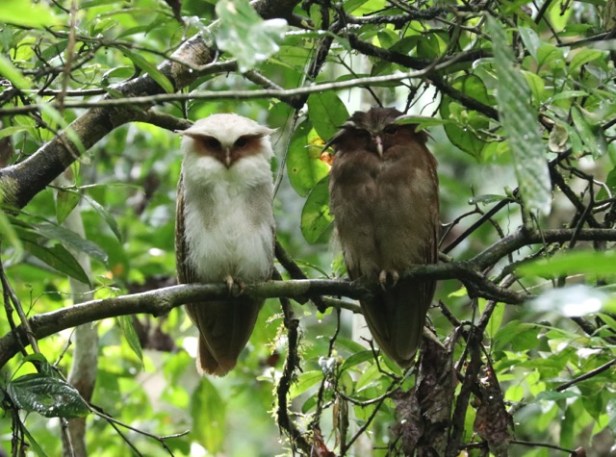
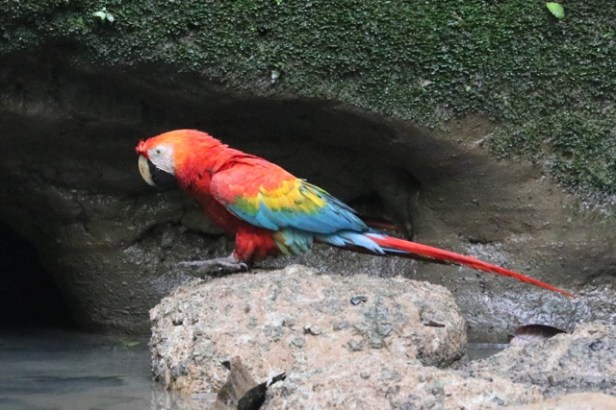
Regarding creatures, monkeys were the highlight with us having spotted 8 of 9 species in the park. We saw lots of birds and got to visit a salt lick and saw many species of parrots and macaws. We also met a ginormous toad on a night walk. Giant otters feeding at close quarters were just magic. We didn’t get a good view of the otters until our last canoe trip and Sam took some excellent shots of a fish being munched.
 The skills developed in the local community were remarkable with all staff now locals, apart from some guides. These guides were nature experts and translated for the locals who speak their indigenous language and Spanish. The catering was excellent too with tasty interesting food including local food and drink offerings with every meal. They used manioc, cassava, plantains and quinoa (I think) as ingredients for many of the local dishes plus an especially memorable drink made from the local plant guarana (the energy drink comes from this)! It was delicious. The desserts were fantastic too being seriously decadent and not local fare at all.
It was so well operated. The men provided the staffing for the resort with their village situated on the Napa River, a couple of hours travel from the resort. They had a roster of staff, so men leave their families for 10 days then have a week back with their families (or something similar). Because it was an enterprise undertaken by the village men, the women remained in their homes raising their families, making handicrafts and more home-based activity looking after crops. However, they were an enterprising group and set up their own women-run resort at their village about five years ago. It is a more of an immersion style enterprise – Yusani Eco-lodge. This has been a success also and means the women stay in the village for their work.
We went on walks through the jungle during the day and night, visited an observation tower and at least two daily canoe trips to observe nature. Another highlight was visiting the community. We saw our local guide Freddy’s family house, the recently constructed local school, the medical centre, the cultivation close to the river, a cultural centre where they sell local crafts and a restaurant where they feed their visitors and presumably the eco-lodge guests. Sam made a particular impact with a group of young lads playing football flawlessly juggling the football in wellington boots. It went a bit wrong after that though with a goal kick entering part of the restaurant. Fortunately a lady guest was paying attention. Note for Sam – Don’t do tricky shots in wellies!
It was an idyllic and fascinating visit to Napo. A great time was had by all and our visit went way too quickly.
 Marian's Travel Blog
Marian,a wonderful description and helpful info.the frogs
and toad,sound VERY scary!! So pleased that the adventure
went so well and plenty of bird sighting.
LikeLike
I cannot imagine the Amazon going for all that distance either.
You are certainly seeing a lot of the area close up in your canoes.
LikeLike
Envious you saw an anaconda. What a fantastic experience. Getting there and away sounds a great part of the experience.And what a wonderful complex – that tall building. Do they have earthquakes in the jungle? I know Quito does.Did you fish for piranha? And then eat your catch?
LikeLike
They said there aren’t earthquakes there. It’s a bit of a topical subject given recent events. We had a guy try fishing for piranha and the bait got taken immediately every time – no luck with actual catching though. It would have been great to see one.
LikeLike